
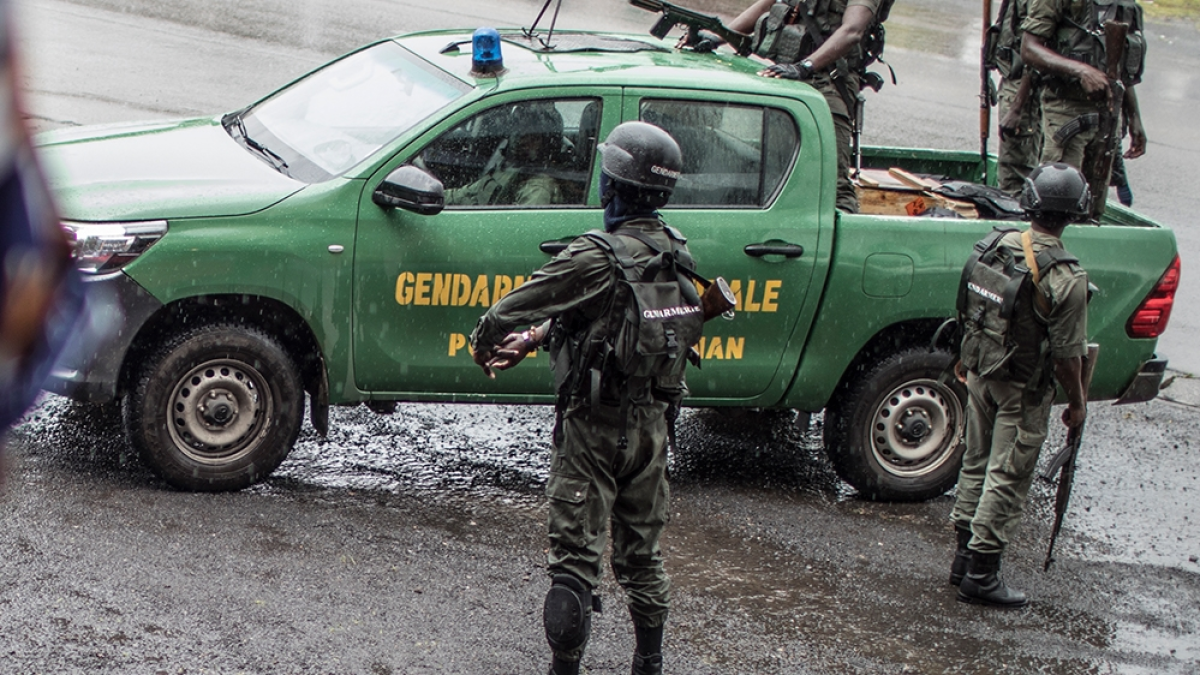
Three Cameroonian soldiers have been sentenced to prison terms of between five and 10 years for their role in the killing of at least 21 civilians in the country’s conflict-hit Anglophone Northwest region, in a rare case of military personnel being convicted for crimes against civilians.
A military court found the soldiers guilty of murder, arson and destruction in connection with a February 2020 attack on the village of Ngarbuh. A member of a local militia involved in the raid was also sentenced on similar charges.
The killings, carried out with the support of a militia drawn from the ethnic Fulani community, left at least 21 civilians dead, including 13 children, according to Human Rights Watch. Homes were burned and residents beaten during the assault.
While the convictions marked an unusual acknowledgment of abuses by government forces, lawyers representing the victims said the sentences were far too lenient. One of the lawyers, Sother Menkem, described the punishment as “insignificant,” noting that Cameroonian law provides for a minimum 10-year sentence for serious felonies such as murder and arson.
“We are talking about a massacre,” Menkem said, adding that he had expected much longer prison terms.
Another lawyer, Richard Tamfu, criticised the court’s decision to reject compensation claims for victims’ families, calling it a further injustice.
The government initially denied responsibility for the Ngarbuh killings but later reversed its position following international pressure and the findings of an investigation ordered by President Paul Biya. The case took six years to conclude, with proceedings repeatedly delayed.
Human rights groups have also criticised the trial for failing to prosecute senior military officers, arguing that the soldiers acted under orders. Defence lawyers maintained that their clients were carrying out their duties at the time of the attack.
A survivor who lost several relatives in the raid said he needed time to absorb the court’s ruling. He has since left the region for safety reasons.
Cameroon’s Anglophone crisis began in 2017, when separatist groups in the country’s two English-speaking regions launched an armed campaign seeking independence. The conflict has been marked by widespread abuses by both separatist fighters and state forces.
The United Nations estimates that at least 6,000 people have been killed and more than half a million displaced during nearly a decade of fighting.