
The announcement came as leaders from the Economic Community of West African States (ECOWAS), led by Sierra Leone President Julius Maada Bio, met with the military officers who seized power, urging them to respect the results of the country’s disputed presidential election.
“ECOWAS demands the restoration of constitutional order, as well as the continuation and logical conclusion of the electoral process,” Sierra Leone’s Foreign Minister Timothy Musa Kabba said after the meeting, adding that a final decision on Guinea-Bissau’s future will be made at the ECOWAS heads of state conference on 14 December. ECOWAS has warned of possible sanctions if the military refuses to comply.
The interim president installed by the coup, Major-General Horta Inta-a, defended the takeover as necessary to prevent a plot by “narcotraffickers” from undermining democracy, pledging a one-year transition period.
Protection for Dias
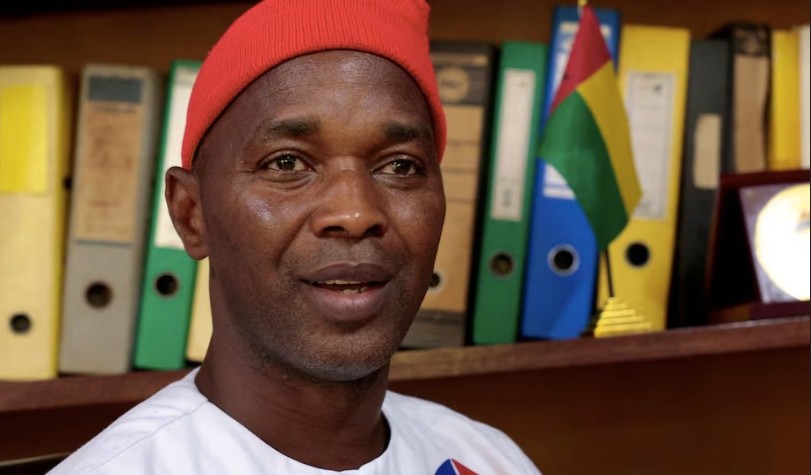
Dias, 47, a relative newcomer to national politics, had claimed he was on course to win the November 23 presidential election before the military intervened. His opposition coalition condemned the coup as an attempt by President Umaro Sissoco Embalo and his allies to block the confirmation of the election outcome.
In a statement on 30 November, Nigeria’s foreign ministry said President Bola Tinubu approved Dias’s protection in response to threats to his life. The ministry also requested that the ECOWAS stabilisation force deploy troops to ensure his safety. The military rulers have banned protests, strikes, and other public gatherings as they consolidate control.
The announcement followed demonstrations in Bissau on Saturday, during which hundreds of mainly young protesters demanded the release of detained opposition leaders and the official announcement of election results. The coup highlights ongoing political instability in Guinea-Bissau, a key cocaine transit country with a long history of military interventions in governance.