
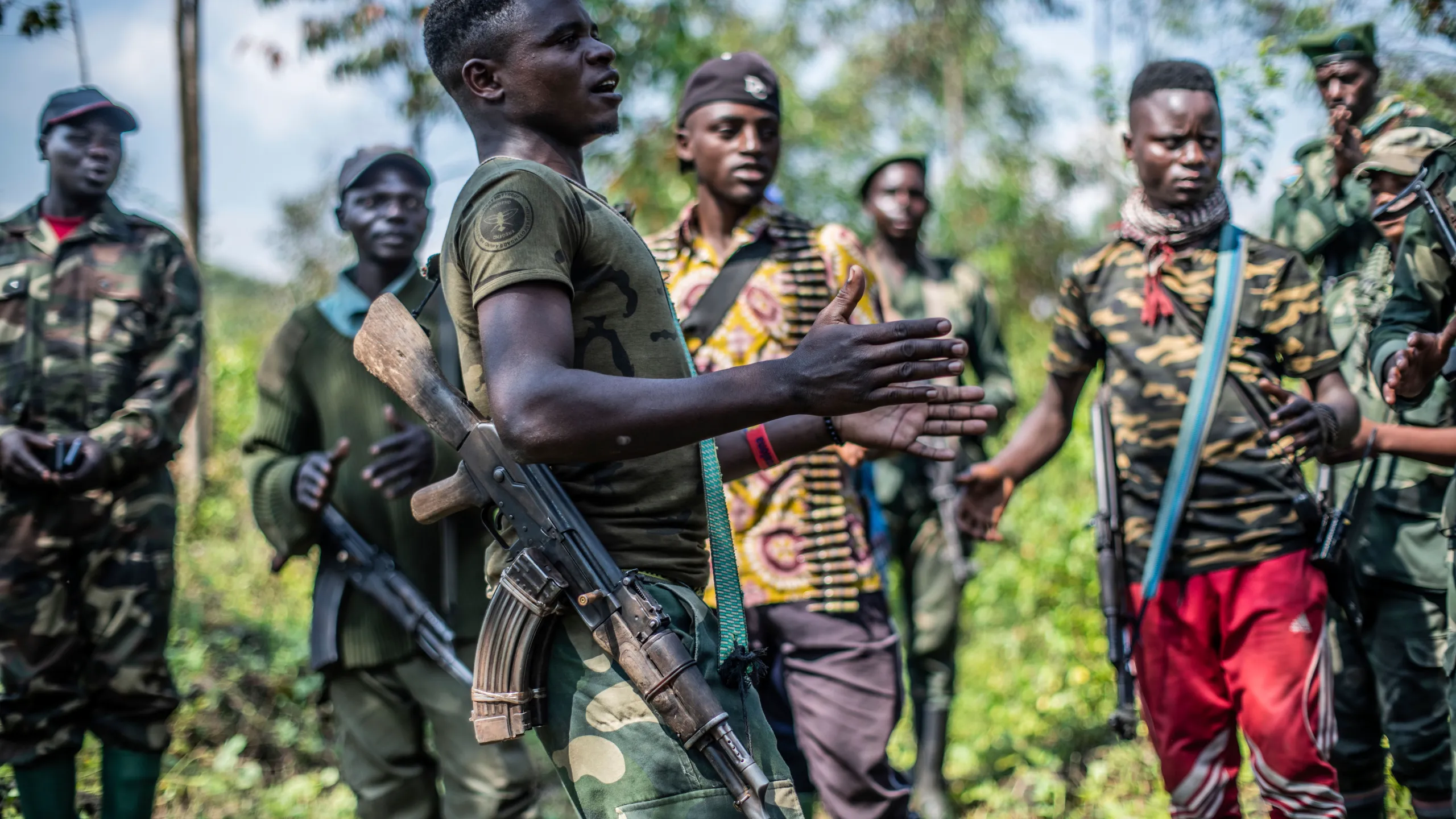
The M23 rebel group pressed deeper into eastern Democratic Republic of Congo on Saturday, defying a US-brokered peace deal.
Top US diplomat Marco Rubio condemned Rwanda for clearly breaching the agreement signed in Washington last week, aimed at ending decades of conflict.
The accord, hailed by President Donald Trump as a “miracle,” was inked on December 4, but M23 swiftly seized the key city of Uvira.
Uvira, a bustling city along the Burundi border, allows M23 to control trade routes and isolate the DRC from regional military support.
After taking Uvira on Wednesday, M23 advanced westward, capturing Kipupu without resistance following Burundian troop withdrawals, the group’s momentum unbroken.
Thousands of Burundian soldiers had been deployed to defend Uvira, but the city’s fall forced a retreat toward Baraka amid harassment by local militias.
South of Kipupu, M23 clashed with Congolese government-aligned forces near Fizi and Baraka, threatening to link with Twirwaneho militia in South Kivu province.
US Ambassador to the UN Mike Waltz accused Rwanda of fuelling regional instability, supplying M23 with troops, weapons, and tactical support.
UN peacekeeping chief Jean-Pierre Lacroix warned M23’s advance risks the fragmentation of eastern DRC and a broader regional conflict with “incalculable consequences.”
Since resuming hostilities in 2021, M23 has seized large swathes of territory, displacing more than 200,000 civilians and causing widespread humanitarian suffering.
UN experts reported Rwanda and M23 forces have committed summary executions and forced mass displacements, though Kigali denies direct military involvement.
Rwanda justifies its actions by citing threats from ethnic Hutu militants linked to the 1994 genocide, claiming existential security concerns along the border.
The DRC’s eastern provinces remain perilously unstable, as M23’s territorial gains threaten both regional security and the livelihoods of countless civilians.