
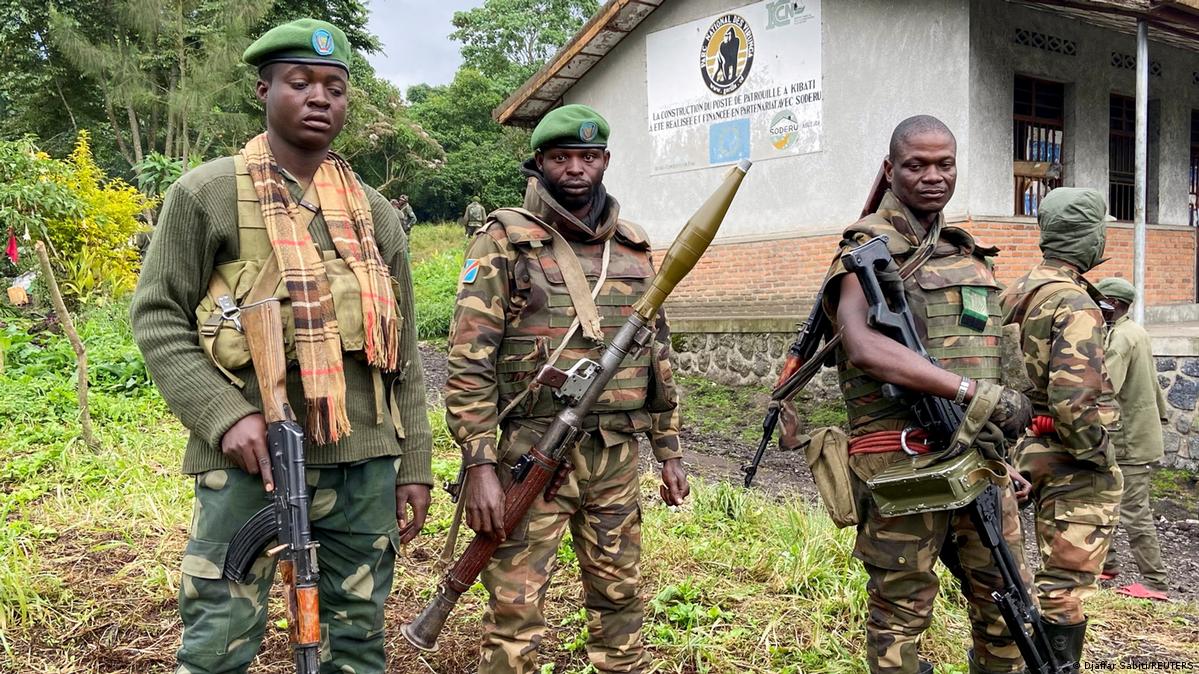
The Rwanda backed M23 movement says it has captured hundreds of Burundian soldiers during its latest offensive in eastern DRC, as fighting continues despite international warnings and renewed diplomatic pressure. An M23 official said the captures took place during recent clashes in South Kivu, following the group’s seizure last week of the strategic town of Uvira near the Burundi border.
The advance came less than a week after the presidents of DRC and Rwanda met in Washington with US President Donald Trump, where they reaffirmed their commitment to a peace framework known as the Washington Accords. Despite those assurances, violence has persisted. The US Secretary of State said on Saturday that Rwanda’s actions in eastern DRC violated the Washington Accords and warned that steps would be taken to ensure commitments made to Washington were upheld.
Rwanda has denied backing M23 and has instead blamed DRC and Burundian forces for the renewed fighting. However, a UN panel of experts reported in July that Rwanda exercises command and control over the rebel group. “We have several hundred Burundian soldiers in our custody who were captured during combat, and we intend to return them to their country,” Patrick Busu Bwa Ngwi, the M23 appointed governor of South Kivu, said at a press conference on Saturday.
He added that Burundi should formally request their return, stressing that M23 wants all Burundian forces to leave what he described as its territory and return home peacefully. There was no immediate response from Burundian authorities, who have maintained a military presence in eastern DRC for several years.
Rebels threaten to push further south
M23 launched a rapid offensive in January, seizing eastern DRC’s two largest cities in fighting that killed thousands and displaced hundreds of thousands of civilians. Since then, the group has moved to establish parallel administrative structures in areas under its control, raising fears of a long term fragmentation of the vast Central African country.
DRC is rich in natural resources, supplying around 70 percent of the world’s cobalt, as well as significant quantities of tin, tantalum, and tungsten. Officials in Washington have indicated that a future peace deal could open the door to major Western investment in mining projects in eastern DRC.
Busu Bwa Ngwi said M23 would not hesitate to push further south toward Katanga province, which holds large cobalt and copper deposits, claiming the move would be aimed at stopping alleged abuses against civilians by DRC forces. A local official appointed by the government in Kinshasa told media on Monday that DRC’s army and allied forces had withdrawn from Makobola, about 12 kilometres south of Uvira, to reorganise in an effort to retake lost territory. An M23 source told media that its fighters were already present in Makobola.
Meanwhile, the international medical organisation Doctors Without Borders said it had suspended operations in the town of Baraka, roughly 100 kilometres south of Uvira, citing escalating violence and growing security threats linked to the conflict.