
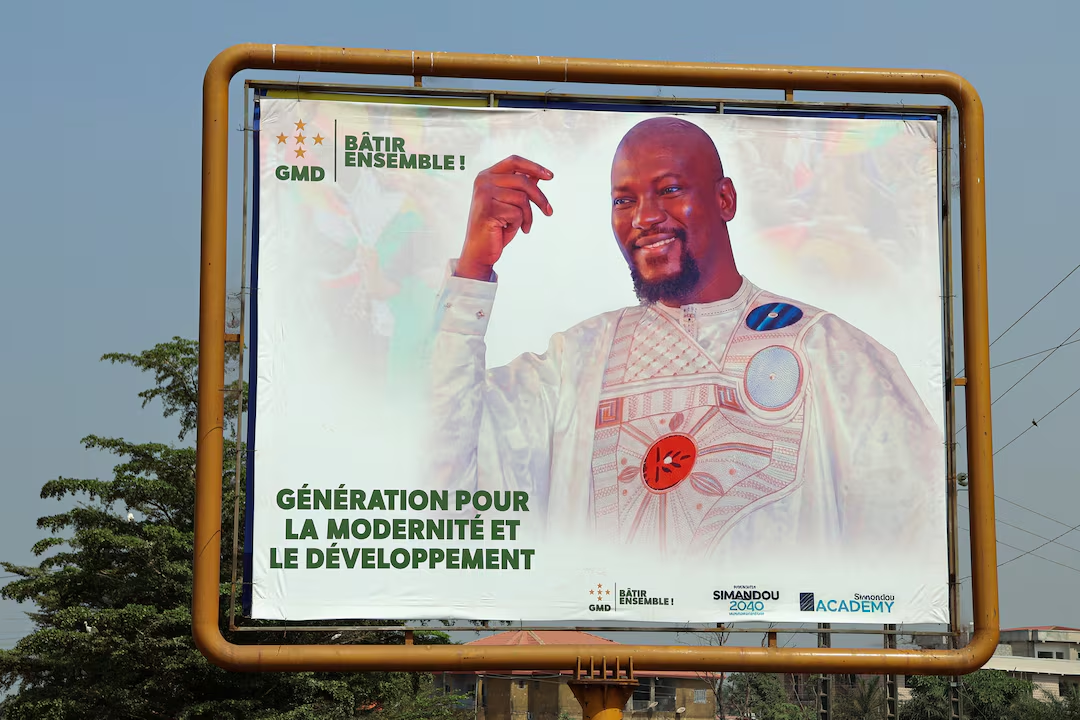
Guinea’s military leader Mamadi Doumbouya is seeking to convert his grip on power into an electoral mandate as the country heads towards a presidential vote later this month, a move widely seen as entrenching military rule rather than restoring civilian governance.
Doumbouya, who seized power in a 2021 coup, is expected to dominate the December 28 election after key rivals were sidelined, despite earlier promises that he would not stand. Critics say the vote is designed to legitimise a transition already tightly controlled by the ruling junta.
A former special forces commander, Doumbouya initially enjoyed public support after overthrowing former president Alpha Condé, whose attempt to secure a third term triggered widespread unrest. Since then, Guinea has avoided the coups and insurgencies seen elsewhere in the Sahel, while pushing through economic reforms and attracting new investment in the mining sector.
Guinea holds the world’s largest bauxite reserves and one of the richest untapped iron ore deposits at Simandou, where a long-delayed mega project was formally launched last month. The junta has moved to tighten state control over strategic resources, including revoking a foreign-owned bauxite refinery licence and transferring assets to a state firm following a dispute.
Western governments have taken a cautious approach, weighing concerns over democratic backsliding against fears that stronger pressure could push Guinea closer to China and other non-Western partners. Analysts warn that allowing Doumbouya to rebrand himself as an elected president could set a troubling precedent across West Africa.
The election marks a clear reversal of the post-coup transition framework, which originally barred junta members from running for office. Those restrictions were removed after a new constitution was approved in a referendum earlier this year, clearing the way for Doumbouya’s candidacy.
Doumbouya has campaigned on infrastructure projects, mining reform and pledges to tackle poverty and corruption. However, civil society groups accuse his government of banning protests, restricting opposition activity and tightening controls on the media.
Several prominent opponents have been neutralised. Opposition leader Cellou Dalein Diallo remains in exile over a corruption case, while former president Condé was disqualified under a newly imposed age limit. Critics also point to pressure on courts and institutions to shape the political field in the junta’s favour.
Guinea missed an initial two-year deadline for returning to civilian rule, and observers say the election is unlikely to alter the balance of power. Instead, it is expected to formalise Doumbouya’s rule while leaving the military firmly at the centre of Guinea’s political system.