
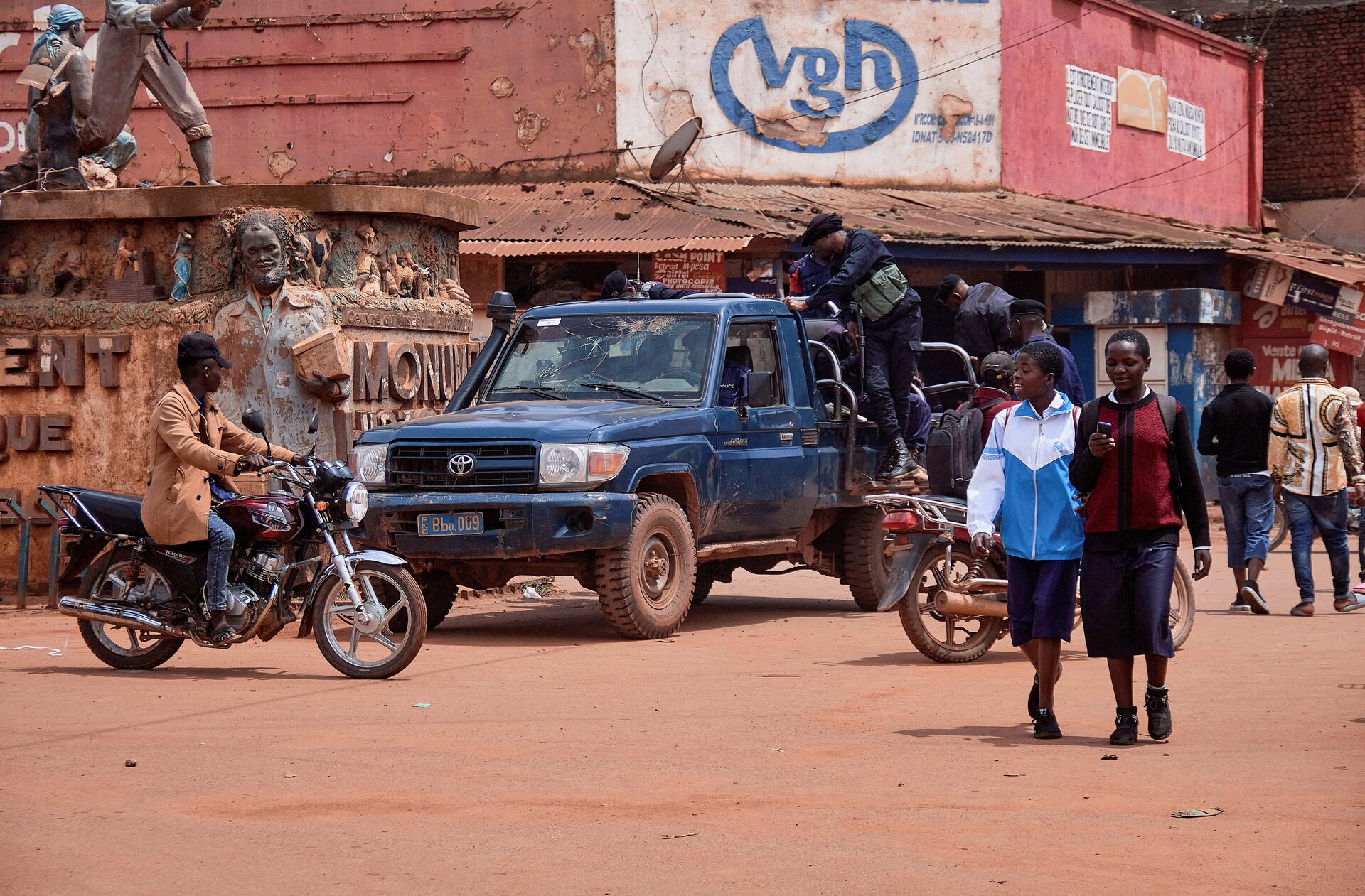
The US has said it is not satisfied with the Rwanda-backed M23 group’s withdrawal from the eastern DRC town of Uvira, amid reports of continued fighting in surrounding areas.
A senior US official told media that while some M23 fighters had left the town, Washington did not believe the withdrawal amounted to a full handover. Residents reported sporadic clashes near Uvira on Tuesday, raising doubts about the durability of the pullback.
M23 seized Uvira, near the Burundi border, on December 10, marking its most significant advance in months. The capture came shortly after DRC President Félix Tshisekedi and Rwandan President Paul Kagame met US President Donald Trump in Washington, where they reaffirmed a US-brokered peace framework.
The advance intensified fears of a wider regional conflict in eastern DRC, where fighting since January has killed thousands and displaced hundreds of thousands. After US Secretary of State Marco Rubio accused Rwanda of violating the peace deal, M23 announced last week that it would withdraw to allow peace talks to proceed.
Despite that pledge, the US official said M23 forces appeared to remain positioned around Uvira. “There has been some movement, but we do not believe it amounts to a complete liberation of the town,” the official said.
Two residents said some fighters were still present inside Uvira, wearing police uniforms rather than military attire. Others reported gunfire from nearby hills overlooking the Kalundu neighbourhood. Both M23 and the Congolese army have blamed each other for recent violence.
Rwanda denies backing M23 and has accused Congolese and Burundian forces of provoking renewed clashes. However, a UN experts’ report released in July said Rwanda exercised command and control over the group.
M23 is not part of the Washington-mediated negotiations, but is holding separate talks with the Congolese government in Qatar.
The renewed fighting has triggered a growing humanitarian crisis. More than 84,000 people have fled into Burundi this month, according to the UN refugee agency, while around 500,000 people have been displaced in South Kivu since early December. The World Food Programme says it is scaling up assistance for more than 200,000 vulnerable people.
The conflict is also placing severe strain on the DRC’s economy. The IMF said M23’s rapid advances in North and South Kivu have already cost the country an estimated 0.4 percent of GDP, with extraordinary security spending approaching $3 billion. IMF officials warned that prolonged insecurity could force cuts to investment and social programmes, undermining long-term grow