
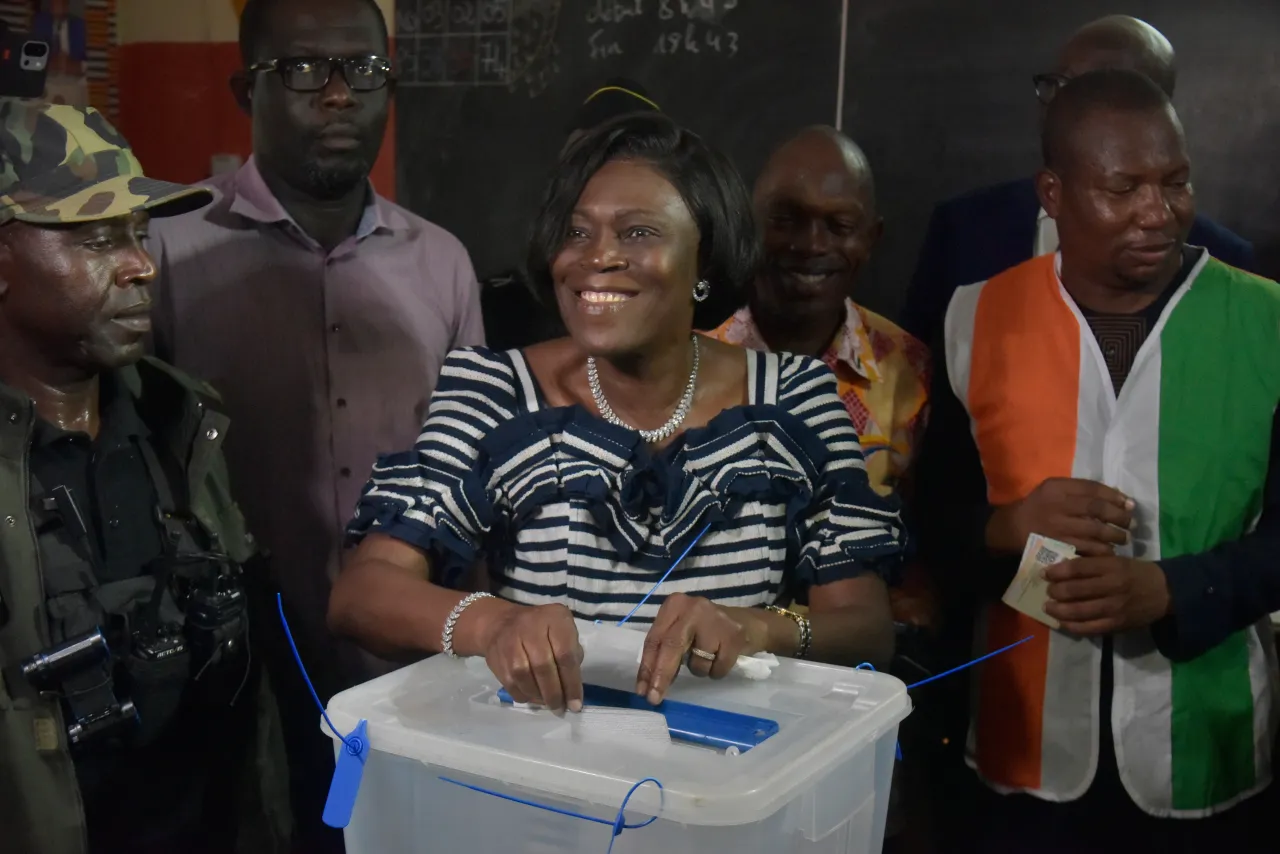
Voting concluded Saturday in Ivory Coast’s parliamentary elections amid low turnout and minor scuffles across Abidjan, reflecting a tense political climate.
The polls follow President Alassane Ouattara’s re-election two months ago, extending his 14-year rule and sparking opposition boycotts of the legislature vote.
In Yopougon and Plateau districts, fewer than 100 people voted at stations registering 400, according to AFP journalists observing the slow turnout.
The Independent Electoral Commission (CEI) said provisional results would be released Saturday evening, with more than eight million Ivorians registered to vote.
Security forces remained heavily deployed from the presidential election, exceeding 40,000 personnel, to prevent unrest and maintain order across the nation.
“There have been scuffles, but law enforcement brought them under control,” CEI head Ibrahime Kuibiert Coulibaly told reporters on Saturday morning.
Ouattara cast his ballot in Abidjan, where polling stations opened an hour late due to torrential rain, dampening enthusiasm for legislative contests.
History student Assi Gilles Darus Aka said he voted to support candidates promoting student employment initiatives and local development projects in Abidjan.
At several stations in Cocody and Yopougon, turnout remained extremely low, with some booths seeing fewer than 20 voters by midday.
Many citizens expressed trust in officials despite not regularly seeing them, highlighting a cautious engagement with the political process.
Ouattara’s RHDP party currently holds a majority in the 255-seat assembly, with candidates including the prime minister and the president’s brother.
Opposition parties largely boycotted the vote, including Laurent Gbagbo’s PPA-CI, though some members ran as independents amid past detentions and legal bans.
The PDCI party also fielded candidates despite prior arrests of party figures, maintaining a limited opposition presence in the legislative race.
Elections in Ivory Coast are historically volatile, and Saturday’s low turnout reflects enduring political tensions and public scepticism toward the process.