
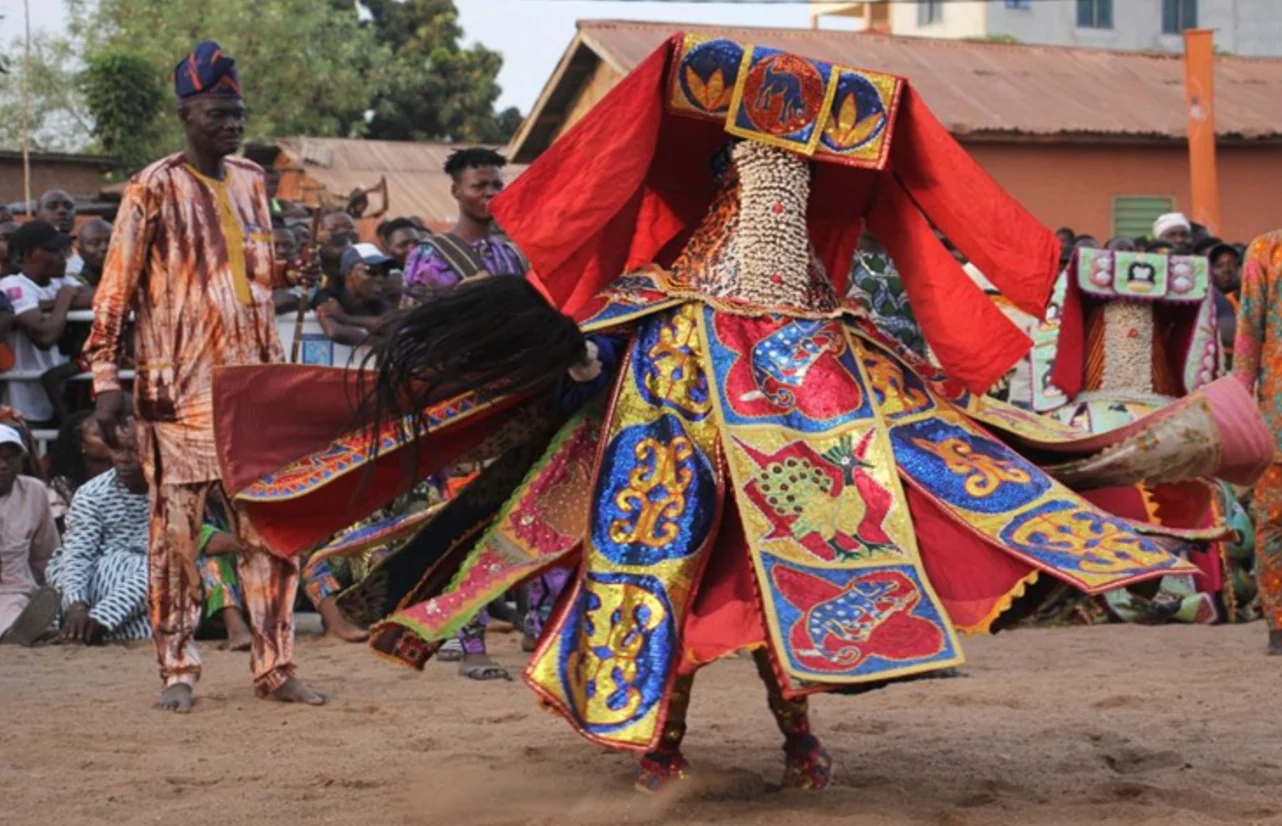
On the newly renovated streets of Ouidah, thousands of visitors gathered this week to witness Benin’s ancient voodoo traditions unfold in public celebration.
Tourists and devotees drifted through the coastal city, drawn by rituals and deities once practised quietly, now framed within a growing international festival.
For years, Benin’s government has promoted Vodun as the cultural heart of an ambitious tourism strategy, blending heritage, identity, and economic revival.
The former one-day festival on January 10 has expanded into “Vodun Days,” a three-day programme of dances, mask parades, and sacred ceremonies.
Ouidah, west of Cotonou and once a major slave trade port, became a stage where memory, spirituality, and modern tourism now converge.
Animal sacrifices remained hidden from tourist view, yet organisers insisted the ceremonies’ sacred meaning would never be diluted for spectacle.
On Fort Francais esplanade, Zangbeto guardians whirled like living straw storms, moving hypnotically before worshippers and wide-eyed visitors alike.
In the nearby sacred Kpasse forest, followers of the deity Kokou danced in trancelike circles, their bodies dusted with pale yellow powder.
Australian tourist Kate Mills said the forest rituals felt more authentic than stadium performances, describing them as ceremonies shared, not staged.
She added that the festival offered a chance to break Western stereotypes of voodoo and to encounter Benin’s culture more honestly.
Under heavy security, following a failed coup attempt last month, Ouidah’s streets and shrines remained busy from early Thursday onward.
Cultural mediator Houenagon Affokpe said the festival was dismantling clichés, transforming voodoo into a foundation for pride and development.
Ana Namendji, a nurse from Togo living in Germany, said the notion of voodoo as demonic was slowly fading.
Yet organisers stressed the festival does not replace closed initiation rites, which continue privately beyond public view.
Tourism Minister Jean-Michel Abimbola said authorities clearly separate cultural celebration from worship, to avoid turning Vodun into a theme park.
He said the event reconnects the diaspora, restores local pride, and preserves the diversity and authenticity of voodoo practices.
Queen Djehami Kpodegbe Kwin-Epo of nearby Allada welcomed the initiative, calling it an overdue moment of recognition.
Dah Zomandjeletokpon, a Thron cult dignitary, said he proudly postponed a traditional ceremony to honour the national celebration.
The government hopes to attract up to one million visitors, strengthening President Patrice Talon’s long-running drive to develop tourism.
Talon attended a ceremony where a fa oracle predicted better days for Benin, according to high priest Mahougnon Kakpo.
Officials said foreign tourism has risen sharply, alongside Afro-descendants and diaspora Beninese returning especially for the event.
Abimbola said no other festival merges spirituality, culture, and art in quite the same way.
Over the past decade, Benin has invested more than 1.2 trillion CFA francs to develop cultural tourism.
Authorities also plan further investment by 2030, alongside restoring historic slave trade sites along the West African coast.