
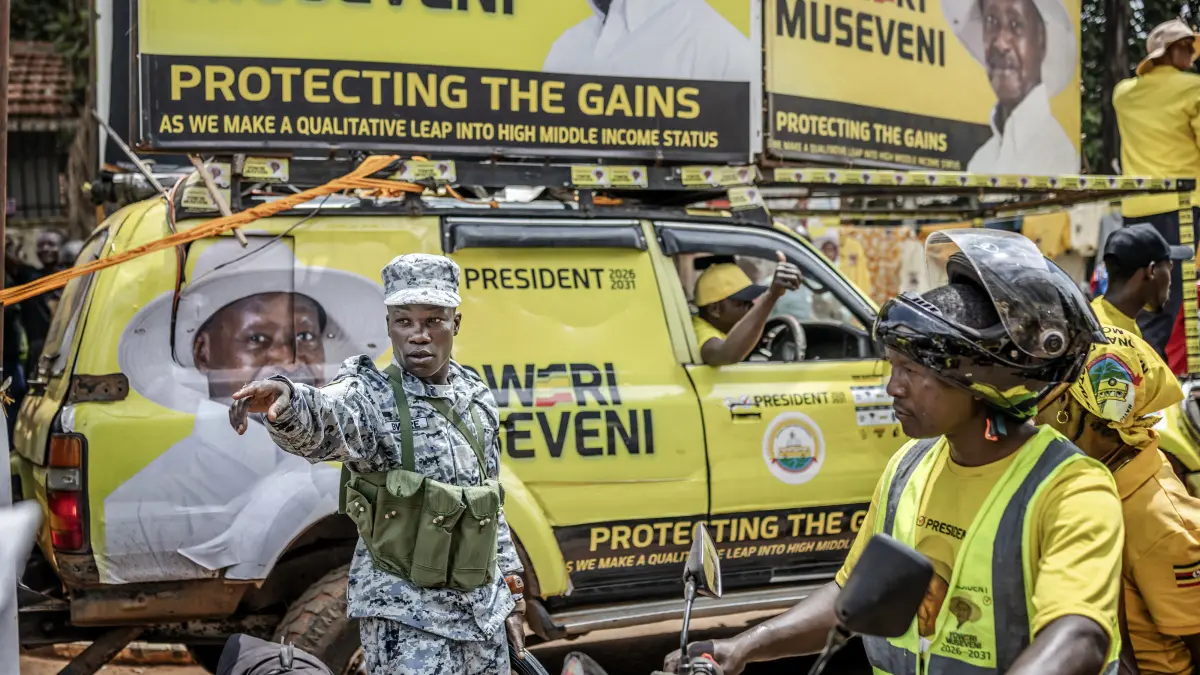
Votes are being counted across parts of Uganda following presidential and parliamentary elections marked by delays, an internet shutdown and opposition allegations of widespread rigging.
Opposition candidate Bobi Wine said there were reports of “massive ballot stuffing” across the country, though he did not provide documentary evidence. He also claimed that many polling agents and supervisors from his National Unity Platform party were abducted or chased away from polling stations. Authorities have not publicly responded to the accusations.
Voting was delayed by up to four hours in several areas, with officials blaming malfunctioning biometric machines used to verify voters’ identities. Some observers linked the problems to the nationwide network outage, shortages of voting materials and late delivery of equipment to polling stations.
As a result, several polling stations closed later than scheduled. The electoral commission said anyone who joined the queue by 17:00 local time was allowed to vote. Earlier, the commission apologised for what it described as technical glitches and said steps were being taken to address them.
President Yoweri Museveni, 81, who has been in power since 1986, is seeking a seventh consecutive term. His main challenger is Bobi Wine, a 43 year old opposition figure and former pop star. The commission said the presidential results would be announced by Saturday afternoon.
In Kampala, voting had largely finished by early evening despite the delays, though turnout figures have not yet been released. Some voters appeared to leave without casting ballots, while others expressed frustration but stayed to vote.
One voter in the capital said he was angry after waiting hours beyond the official start time, adding that ballot papers had not arrived at his polling station. Election officials later ordered the use of the national voters’ register where biometric verification failed.
The disruptions appeared to affect both government leaning areas and opposition strongholds. Casting his vote in western Uganda, President Museveni acknowledged technical difficulties but said the machines were functioning.
The campaign period was tense, with opposition activities frequently disrupted. Security forces have been accused by rights groups of detaining and assaulting opposition supporters, claims police have denied, accusing opposition activists of disorderly conduct.
Internet access was suspended earlier in the week, with regulators saying the move was intended to prevent misinformation and violence. The decision was criticised by the UN human rights office. The opposition rejected the explanation and said the blackout was aimed at limiting mobilisation and evidence sharing.
In response, the NUP launched an offline vote monitoring app using Bluetooth technology to share images of results forms without internet access.
Alongside the presidential race, voters are also choosing a new parliament, with 353 seats contested. Economic concerns, particularly youth unemployment, infrastructure and access to healthcare and education, dominated voter priorities during the campaign.