
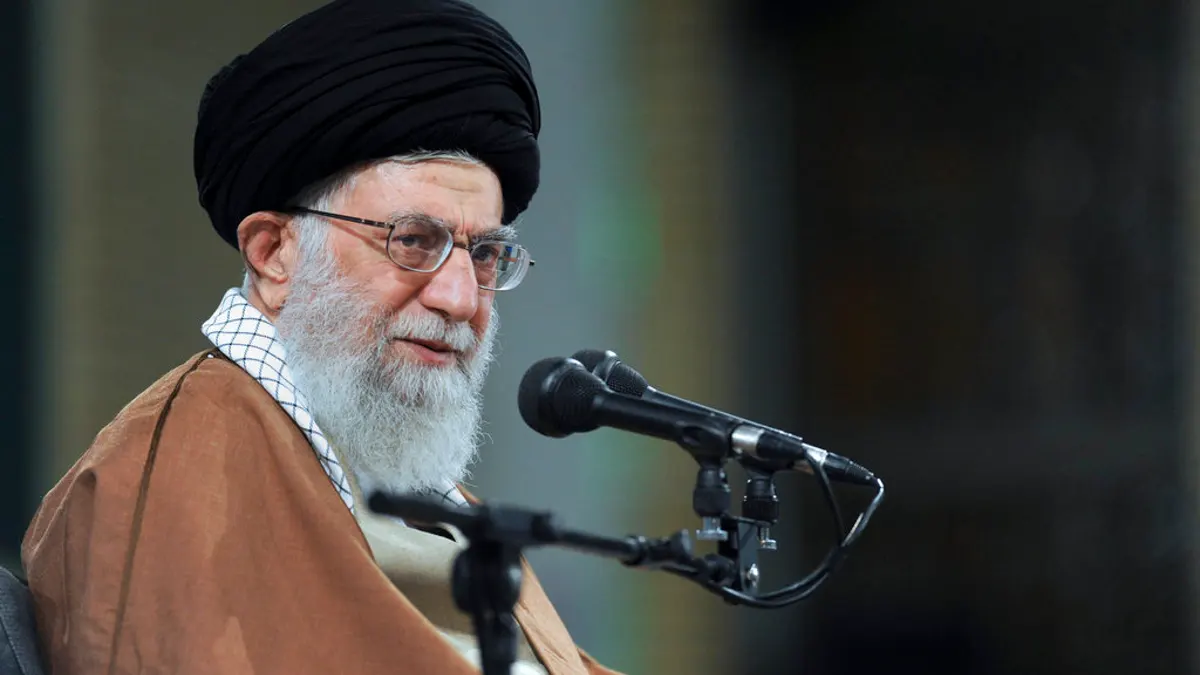
Iran’s Supreme Leader Ayatollah Ali Khamenei on Saturday accused U.S. President Donald Trump of inciting weeks of nationwide protests that rights groups say have left more than 3,000 people dead.
“We consider the U.S. president criminal for the casualties, damages and slander he inflicted on the Iranian nation,” Khamenei said, according to state media.
Protests erupted on December 28 over economic hardship and quickly expanded into widespread demonstrations demanding an end to clerical rule in the Islamic Republic.
Trump has repeatedly warned Tehran against executing protesters, threatening “very strong action” if it did so. On Friday, however, he posted on social media thanking Iran’s leaders for calling off mass hangings. Iranian officials said there had been “no plan to hang people.”
Responding to Trump’s remarks, Khamenei said Iran would not seek war but would not allow “domestic or international criminals” to go unpunished, state media reported.
In an interview with Politico on Saturday, Trump said “it’s time to look for new leadership in Iran” and called for an end to Khamenei’s 37-year rule. In a separate Reuters interview earlier this week, Trump said exiled opposition figure Reza Pahlavi “seems very nice,” but questioned whether he could command enough support inside Iran to take power.
Iran’s worst unrest in years
Khamenei said “several thousand” people had died during what he described as Iran’s worst unrest in years, blaming long-time enemies the United States and Israel for orchestrating the violence.
“Those linked to Israel and the U.S. caused massive damage and killed several thousand,” he said, accusing them of arson, destruction of public property and spreading chaos.
The U.S.-based Human Rights Activists News Agency (HRANA) said it had verified 3,090 deaths, including 2,885 protesters, and more than 22,000 arrests.
Iran’s prosecutor general said last week that detainees would face severe punishment. He said those arrested included people who aided “rioters and terrorists” and “mercenaries who took up arms and spread fear.”
“All perpetrators are mohareb,” state media quoted prosecutor Mohammad Movahedi Azad as saying, adding that investigations would proceed “without leniency, mercy or tolerance.”
Mohareb, meaning waging war against God, is punishable by death under Iranian law.
Reuters has not been able to independently verify casualty figures or details reported by Iranian authorities and rights groups. Residents and state media say the crackdown has largely quelled protests.
Internet blackout reimposed
Access to information has been hampered by widespread internet shutdowns. Monitoring group NetBlocks said connectivity briefly improved early on Saturday before being cut again later in the day.
“Internet connectivity continues to flatline in #Iran despite a minor short-lived bump in access earlier today,” NetBlocks said on X, adding the shutdown had entered its tenth day.
A resident of Karaj, west of Tehran, said internet access briefly returned at around 4 a.m. local time on Saturday. Karaj saw some of the most intense violence during the unrest, which the resident said peaked on Thursday.
Arrests and intelligence operations
State media said thousands of people described as “rioters and terrorists” have been arrested nationwide, including alleged links to opposition groups abroad advocating the overthrow of the Islamic Republic.
Among those detained was a woman identified as Nazanin Baradaran, whom state media described as a “ringleader” arrested following “complex intelligence operations.” The reports said she operated under the alias Raha Parham and worked on behalf of Reza Pahlavi. Reuters could not independently verify the claim or her identity.
Pahlavi, the exiled son of Iran’s last shah, has positioned himself as a potential leader in the event of regime collapse and has said he would seek to restore diplomatic ties with Israel.
Israeli officials have voiced support for Pahlavi. Earlier this month, Israeli Heritage Minister Amichai Eliyahu said Israel had operatives “on the ground” in Iran, aimed at weakening Tehran’s capabilities, though he denied they were working to overthrow the leadership.