
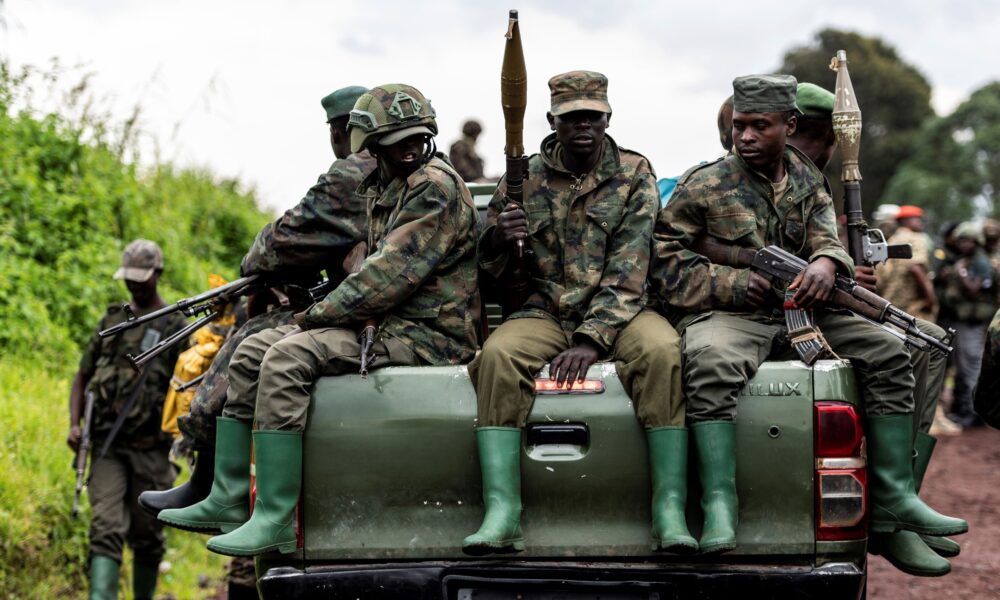
Pro-Kinshasa militiamen entered the strategic eastern town of Uvira after Rwanda-backed M23 fighters announced plans to withdraw, local sources said.
The M23 seized Uvira last month in South Kivu province, days after the Democratic Republic of Congo and Rwanda signed a US-brokered peace accord.
On December 17, the group announced an initial withdrawal, claiming it was responding to a direct request from the United States.
Despite the announcement, M23 police and military personnel remained in Uvira, maintaining control over key neighbourhoods and checkpoints in the lakeside city.
On Thursday, M23 declared its intention to leave the city entirely, urging the international community to assume full responsibility for Uvira.
Local sources reported seeing M23 troops leaving Saturday, while Sunday saw pro-Kinshasa “Wazalendo” militia entering southern Uvira neighbourhoods, witnesses said.
Sporadic gunfire erupted Sunday morning as shops and homes were looted, reflecting the chaotic atmosphere of the city’s transition.
Kelvin Bwija, head of a local civil society group, confirmed the Wazalendo had entered Uvira and were taking control of key areas.
Residents described scenes of jubilation in the streets, celebrating the arrival of the pro-Kinshasa militias after weeks of tension and uncertainty.
Jean Jacques Purusi, South Kivu governor, said army soldiers would gradually follow the militias, restoring state authority in the town.
Purusi added that some M23 fighters remained positioned on surrounding heights, aiming their weapons toward Uvira and maintaining a threatening presence.
In a January 11 letter to the UN mission in DRC, M23 requested that MONUSCO ensure the city’s security during the withdrawal process.
Uvira, a town of several hundred thousand people on the Burundi border, has been a flashpoint in the eastern DRC conflict for years.
The return of pro-Kinshasa militias marks a tense moment, as residents navigate between hope for stability and fear of renewed violence.