
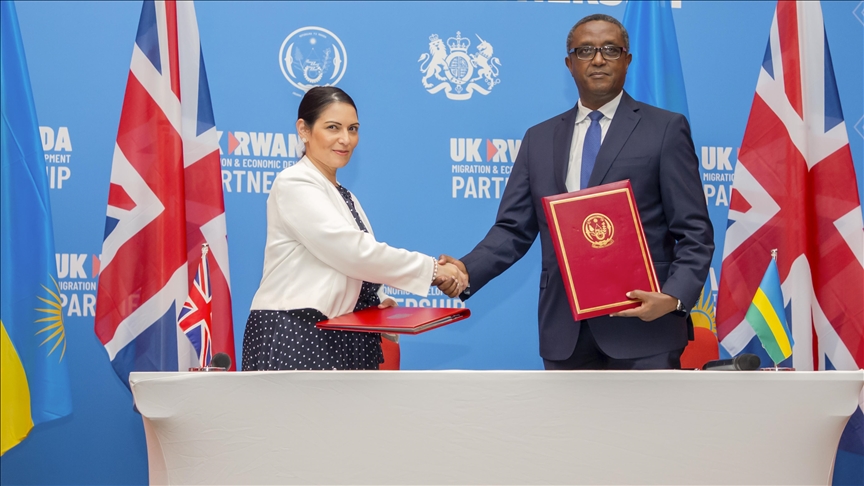
Rwanda has launched legal action against Britain after London refused to release further payments under a scrapped migrant deportation agreement, officials confirmed Tuesday.
The deal, once central to Britain’s migration strategy, was abandoned nearly two years ago after fierce political opposition and mounting legal setbacks.
Prime Minister Keir Starmer formally buried the agreement in July 2024, calling it “dead and buried” days after taking office.
Britain had already transferred £240 million to Kigali, with another £50 million scheduled, before the scheme was officially halted.
Rwandan officials say the refusal to pay breaches contractual obligations and leaves Kigali with no option but international arbitration.
“Rwanda regrets having to pursue these claims,” said Michael Butera, a senior justice ministry adviser, citing Britain’s alleged intransigence.
Butera said Kigali first sought diplomatic solutions, hoping quiet talks might resolve a dispute now unfolding in legal corridors.
Downing Street responded sharply, saying Britain would “robustly defend” its position to protect public money and national interests.
The case revives a bitter chapter in relations already strained by Britain’s suspension of most aid to Rwanda last year.
London cut support after accusing Kigali of backing the M23 offensive in eastern Democratic Republic of Congo, a charge Rwanda strongly denies.
The migration pact had faced relentless legal challenges, culminating in a 2023 Supreme Court ruling declaring it unlawful under international law.
Immigration remains a lightning rod in British politics since Brexit, with border control framed as a promise written into the country’s recent history.
Rwanda, a nation of thirteen million in Africa’s Great Lakes region, projects stability and modernity as pillars of its global image.
Yet human rights groups accuse President Paul Kagame’s government of ruling through fear, silencing dissent beneath a veneer of order.
As lawyers prepare their arguments, the dispute casts long shadows over diplomacy, money, and the moral boundaries of migration policy.