
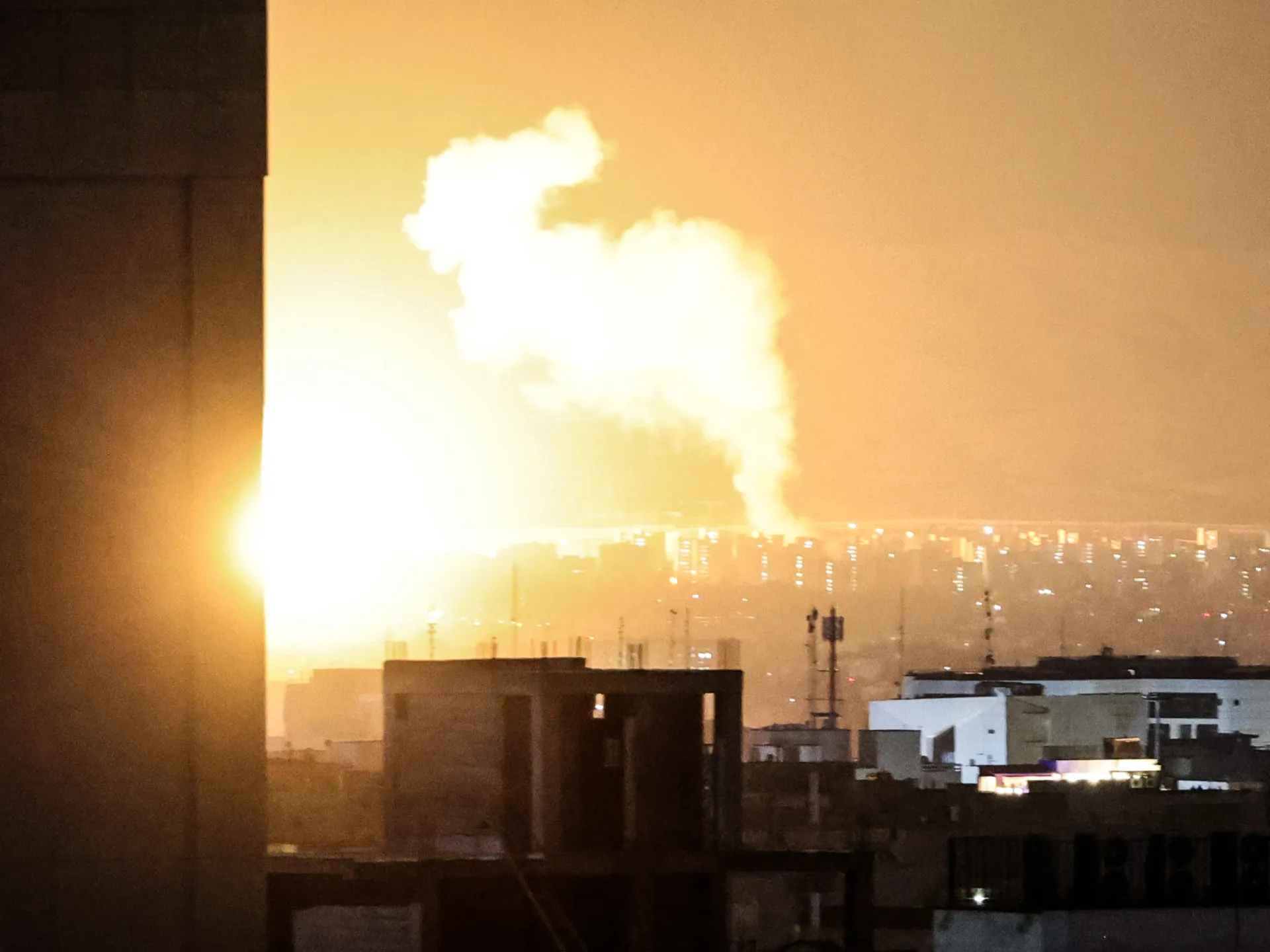
Israel and Iran exchanged fresh strikes on Saturday as the war entered its second week, while Tehran attempted to ease regional tensions by apologising to neighbouring Gulf states after a wave of Iranian attacks across the region.
Iranian President Masoud Pezeshkian said Tehran’s temporary leadership council had approved suspending attacks on neighbouring countries unless those states launched strikes against Iran, signalling a possible attempt to calm anger across the Gulf.
“I personally apologise to neighbouring countries that were affected by Iran’s actions,” Pezeshkian said.
The conflict, sparked by a U.S.-Israeli military campaign against Iran, has already spilled beyond Iranian territory. Tehran has retaliated with drone and missile strikes against Israel and Gulf states hosting U.S. military facilities, while Israel has expanded attacks against Iran and the Iran-backed Hezbollah movement in Lebanon.
The United Arab Emirates, Kuwait, Qatar, Bahrain and Saudi Arabia have all reported missile or drone attacks over the past week.
Despite Pezeshkian’s remarks, it remained unclear whether Iran intends to scale back its regional campaign, with reports of additional strikes targeting Gulf locations early on Saturday.
Iran had spent recent years repairing ties with Gulf neighbours, including a rapprochement with former rival Saudi Arabia, but the conflict has strained those relationships after Iranian drones and missiles struck civilian infrastructure including ports, oil facilities and hotels.
Gulf governments expressed outrage over the attacks, noting they had not participated in the U.S.-Israeli assault on Iran despite hosting American military bases.
The expanding war has raised energy prices, disrupted global logistics and rattled markets as fears grow over instability in the Gulf region.
Prospects for a diplomatic breakthrough appear remote, particularly after U.S. President Donald Trump demanded Tehran’s “unconditional surrender.”
“There will be no deal with Iran except UNCONDITIONAL SURRENDER!” Trump wrote on Truth Social on Friday.
He added that after Iran’s surrender and the selection of a “great and acceptable leader,” the United States and its allies would work to rebuild the country’s economy.
According to Iran’s ambassador to the United Nations, Amir Saeid Iravani, the U.S.-Israeli attacks have killed at least 1,332 Iranian civilians and wounded thousands more.
Iranian strikes have killed 11 people in Israel, while at least six U.S. service members have also died in the fighting.
Russian President Vladimir Putin called for an immediate ceasefire during a phone call with Pezeshkian, expressing condolences over civilian casualties caused by what the Kremlin described as “Israeli-American aggression.”
Iranian state media said Pezeshkian told Putin that Russia could support Iran’s “legitimate rights against aggression” using its diplomatic influence.
Early Saturday, Iran’s military said its navy carried out drone strikes against Israeli targets as well as U.S. military positions in Abu Dhabi and Kuwait, describing the operation as retaliation for the U.S. sinking of the Iranian frigate IRIS Dena earlier this week.
Iran’s Islamic Revolutionary Guard Corps also said it targeted three separatist group positions in Iraq’s Kurdistan region.
An Iranian military spokesman warned that if Kurdish militant groups threatened Iran’s territorial integrity, “we will crush them.”
Israel’s military said it detected missiles launched from Iran toward Israeli territory early Saturday, triggering air defence systems and explosions across parts of the country.
Shortly afterwards, Israel said it had begun a new wave of strikes targeting infrastructure in Tehran and Iranian-linked sites in Lebanon, including positions associated with Hezbollah.
Iran’s semi-official Tasnim news agency reported that Tehran’s Mehrabad Airport had been struck during the attacks.
The war has sent oil prices surging as traffic through the Strait of Hormuz — through which roughly one-fifth of global oil shipments pass — has effectively been disrupted.
To stabilise energy flows, the U.S. International Development Finance Corporation said Washington would provide up to $20 billion in reinsurance for shipping losses in the Gulf.
Trump also said the U.S. Navy could escort commercial vessels in the region, though Iran’s Revolutionary Guards challenged Washington to deploy ships in the strait.
Separately, Trump reiterated his demand that the United States have a role in selecting Iran’s next supreme leader, a suggestion swiftly rejected by Tehran.
Iravani said Iran’s leadership would be chosen according to constitutional procedures and “solely by the will of the Iranian people — without any foreign interference.”
Iran has described the conflict as an unprovoked attack and characterised the killing of Supreme Leader Ali Khamenei as an assassination.