
Rwanda is prepared to lift what it calls “defensive measures” linked to the conflict in eastern Democratic Republic of Congo if Kinshasa fulfills its obligations under a U.S.-brokered peace agreement, President Paul Kagame said on Friday.
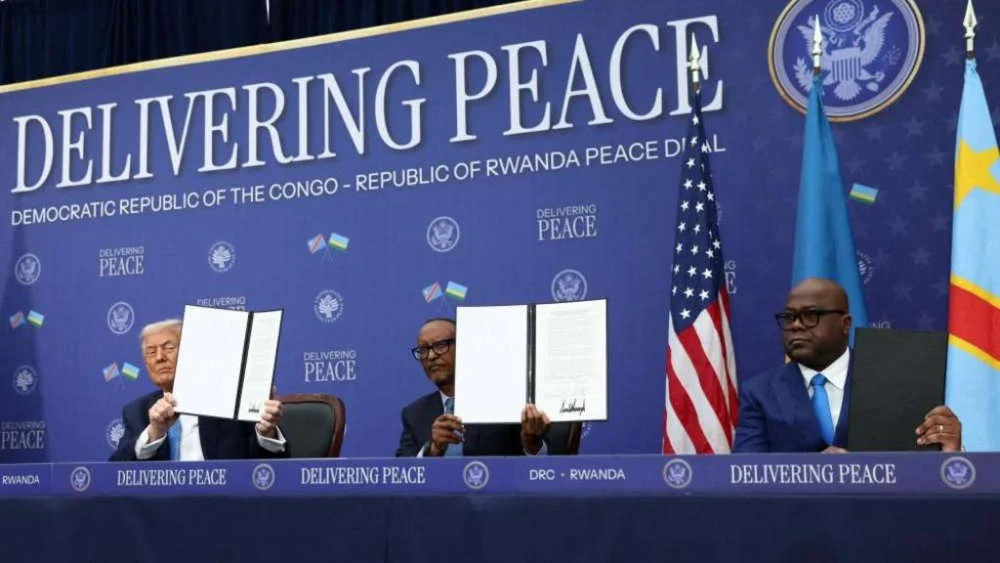
Speaking to diplomats accredited to Kigali during a dinner event, Kagame said Rwanda remained committed to the Washington peace accord signed in December with Congolese President Félix Tshisekedi. The agreement, brokered by the United States, was intended to halt violence in eastern Congo and promote economic cooperation.
Under the deal, Rwanda agreed to withdraw troops it described as defensive deployments from eastern Congo. Both countries also pledged to end support for militias and non-state armed groups operating in the region, including the Democratic Forces for the Liberation of Rwanda (FDLR), a rebel movement based in eastern Congo.
Kagame said the accord established a ceasefire and recognized the security concerns of both sides, while outlining steps toward de-escalation. However, he accused pro-government militias and Burundian forces of building up troops and launching operations in South Kivu while negotiations were ongoing.
“All parties to the agreement should be held to the same standards,” Kagame told diplomats.
He said Rwanda’s security concerns stem from the continued presence of the FDLR, which Kigali views as an extremist militia tied to the perpetrators of the 1994 genocide.
“Rwanda, because of its history and its geography, requires defensive borders,” Kagame said. “Our defensive measures are aimed at this objective, and nothing else.”
He added that Rwanda would be ready to lift those measures if the Democratic Republic of Congo fulfills its commitments under the Washington accords.
Kagame’s remarks came after the United States announced plans to impose visa restrictions on several senior Rwandan officials over allegations they are fueling instability in eastern Congo.
U.S. Secretary of State Marco Rubio said the officials were being targeted for “continuing to support M23 and violating the Washington Accords,” accusing them of driving violence in the Great Lakes region.
The measures follow earlier sanctions imposed on the Rwanda Defense Force and several of its senior commanders over alleged operational support for the M23 rebel group.
Rwanda denies backing M23, despite repeated accusations from Congo, the United Nations and Western governments.
Despite the U.S.-brokered deal and a ceasefire proposal advanced by Angola last month, fighting has intensified in recent days, triggering fresh displacement across eastern Congo.