
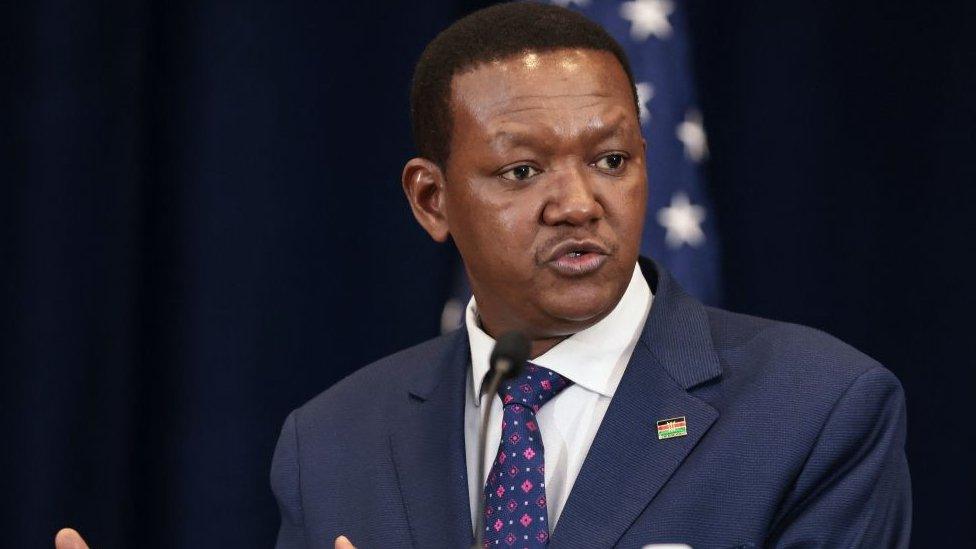
Kenya’s foreign minister is visiting Russia amid mounting pressure to halt recruitment of Kenyans into Moscow’s military, officials said.
Reports show Russia has been recruiting Africans via third parties offering civilian jobs, angering families in Kenya, Ghana, and South Africa.
Affected families demand stronger action to bring recruits home, but most African governments avoid confrontational stances toward Moscow, sources said.
“We want Kenyans stopped—they should not be enlisted at all,” Foreign Minister Musalia Mudavadi told Reuters ahead of his trip.
Mudavadi acknowledged pressure from families, but said Nairobi would remain “pragmatic and realistic” with Russia, citing long-standing diplomatic ties.
“This is not a confrontation. It is about addressing distress and seeking joint solutions for our citizens,” he added.
Russian authorities have not publicly commented on recruitment allegations, while Foreign Ministry spokeswoman Maria Zakharova highlighted talks on friendly economic and trade relations.
Ukraine says over 1,700 Africans fight for Russia, while Kenyan intelligence reports suggest more than 1,000 Kenyans may be involved in the conflict.
Ghana confirmed over 50 citizens died after being “lured into battle,” though officials believe the true toll could be higher, said Samuel Ablakwa.
South Africa is investigating the circumstances under which its citizens left, examining possible involvement by Wagner mercenaries and the Kremlin-controlled Africa Corps.
Inpact, a Geneva-based group, verified lists of recruits including 1,417 Africans from Cameroon, Egypt, Ghana, and other countries across the continent.
Experts warn this recruitment is part of a deliberate Russian strategy to overwhelm Ukrainian defenses with waves of troops, analysts said.
Ablakwa called for a collective African response to prevent citizens from being deceived into foreign wars, stressing the issue transcends individual countries.
Political consultants say relations between Russia and African states are unlikely to be affected unless recruitment sparks widespread public backlash across the continent.