
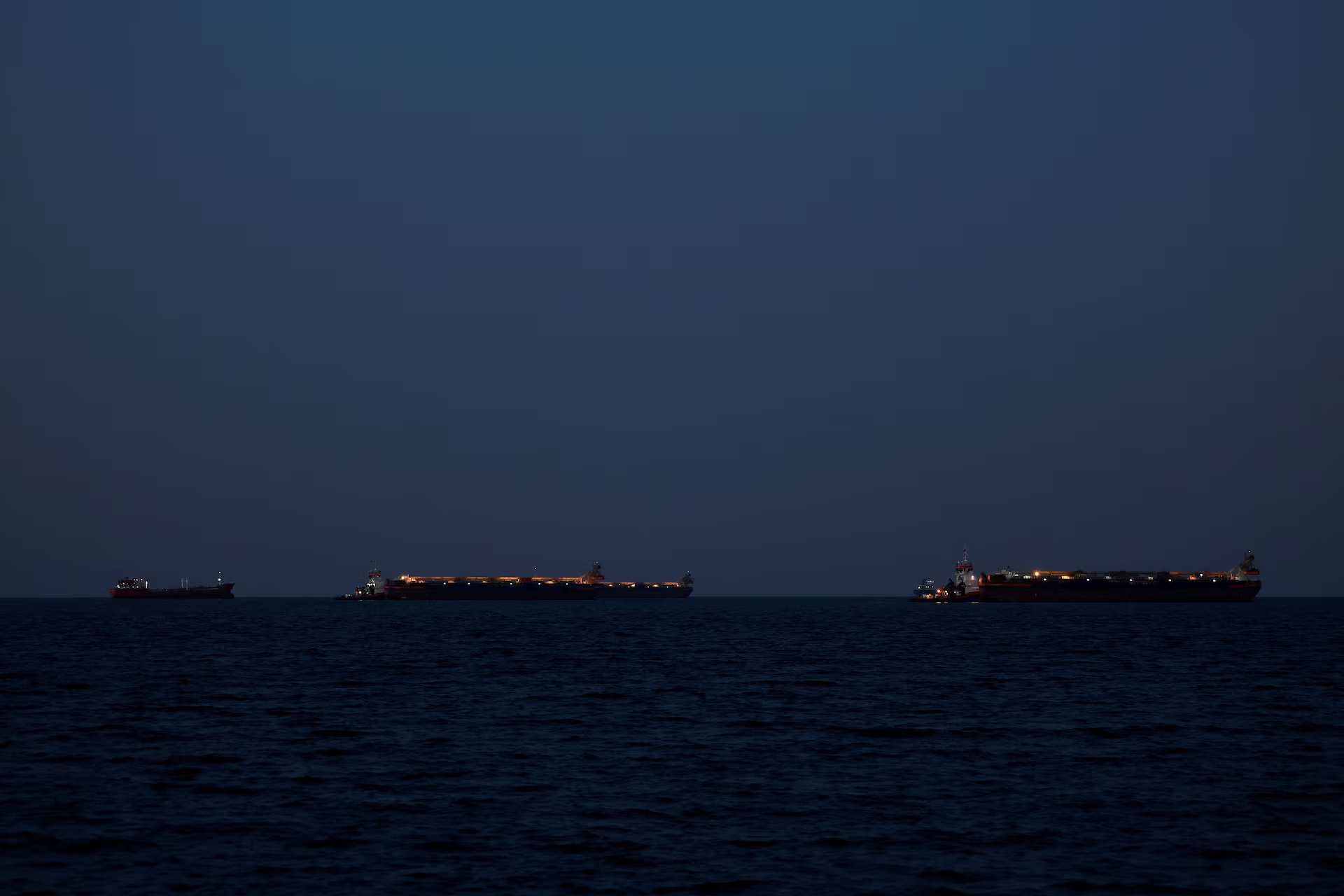
The United Nations’ maritime body urged Thursday for a safe shipping corridor in the Gulf to evacuate stranded vessels.
The International Maritime Organization held emergency talks in London after attacks disrupted the Strait of Hormuz, a key global oil route.
Secretary-General Arsenio Dominguez said the proposed humanitarian corridor would allow ships to leave the Gulf safely on a voluntary basis.
The IMO council, comprising 40 members, included the plan in a 17-point declaration addressing escalating risks to Middle East maritime trade.
Around 20,000 seafarers remain stranded on roughly 3,200 vessels, according to the UN, as Iranian attacks effectively block the crucial chokepoint.
The council strongly condemned Iran’s threats and strikes, demanding Tehran immediately cease actions endangering merchant and commercial vessels in the region.
Iran, not part of the ruling council, rejected the declaration as biased, calling it politically motivated and legally flawed.
Bahrain, Japan, Mexico, Panama, Singapore, and the UAE proposed the corridor, receiving backing from the United States and other nations.
The framework aims to protect seafarers’ lives and secure commercial navigation while preventing military attacks in the Gulf’s strategic waters.
Dominguez pledged to collaborate with relevant parties, calling the initiative operationally critical and a clear signal that seafarers’ safety matters.
Earlier Thursday, six major powers including Britain, France, Germany, and Japan offered to support efforts ensuring safe passage through the Strait.
The Cook Islands’ delegate pressed Iran to clarify the terms of a reported new ship registration system for safe transit.
Iran’s representative declined to respond, leaving unresolved questions about conditions for vessels seeking passage through the Persian Gulf.
The declaration underscores international concern over rising maritime risks, highlighting a fragile balance between geopolitics, trade, and human safety.