
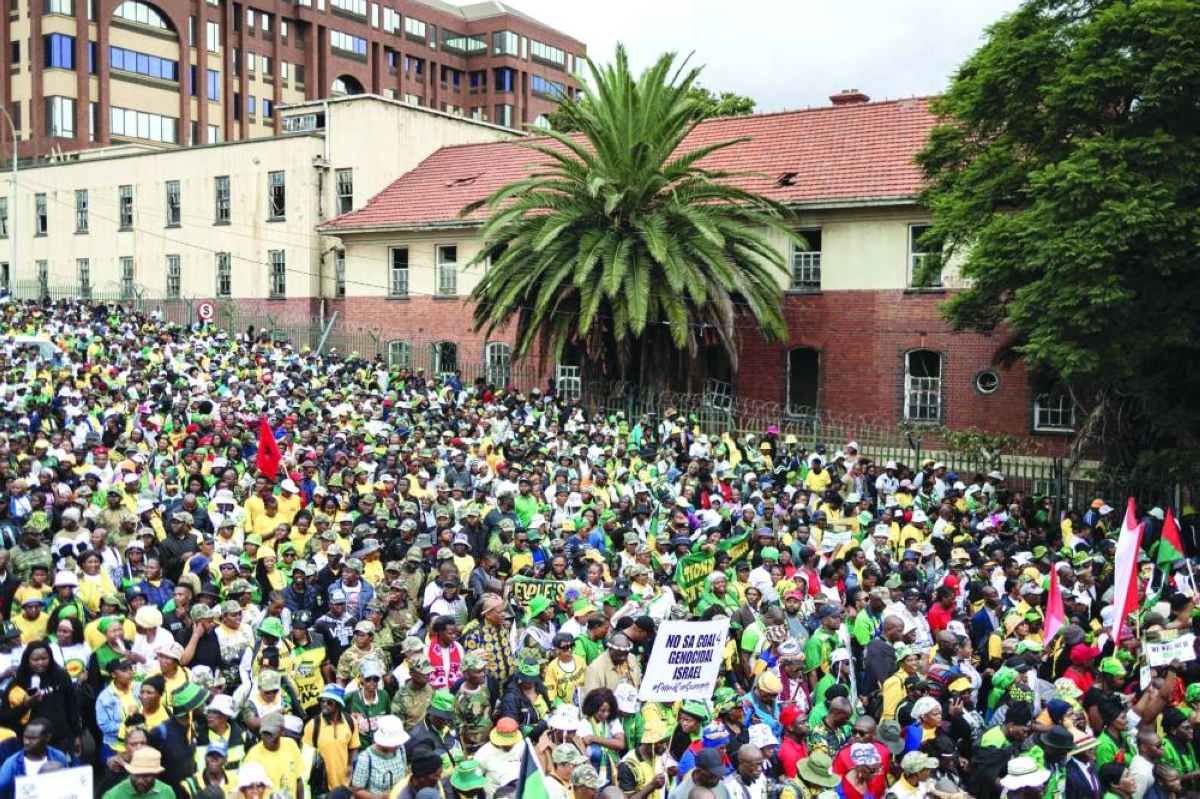
Thousands of South Africans marched Saturday in Johannesburg to defend national sovereignty amid escalating tensions with the United States government.
The protest coincided with Human Rights Day, commemorating the 1960 Sharpeville massacre where apartheid police killed 69 black demonstrators.
Demonstrators wore green and yellow, the colours of the African National Congress, filling avenues near the iconic Hillbrow communications tower.
The marches followed a recent diplomatic spat, with South Africa summoning US Ambassador Brent Bozell over remarks deemed undiplomatic.
ANC Secretary General Fikile Mbalula told the crowds that a foreign leader should not dictate policies to South Africans.
Supporters waved banners reading “Defend Our Country” while chanting slogans against perceived interference in domestic affairs and racial justice policies.
The protests respond to months of US pressure, including high tariffs on South African exports and public criticism of the government.
Earlier, former President Donald Trump had claimed white South Africans faced genocide, drawing condemnation from South African officials and civil society groups.
Trump also criticised South Africa’s racial justice programmes, calling them discriminatory against whites, prompting strong rebukes from the ANC and public.
Demonstrator Siyanda Moloi said the march aimed to protect the nation’s constitution, asserting that foreign powers should respect South Africa’s laws.
Another participant, Noxolo Skomolo, described the protests as a defence against bullying and economic coercion, stressing the country’s independence.
The ANC manifesto convening the rallies warned that national sovereignty is under attack from both domestic and foreign forces.
Additional marches were held later in Cape Town, amplifying the call for respect of South Africa’s democratic achievements and self-determination.
Observers note the symbolism of the timing, linking the protests to Sharpeville’s legacy and ongoing struggles against external influence and historical injustices.