
Armed gangs carried out fresh attacks across Haiti’s key agricultural region of Artibonite on Tuesday, days after a weekend massacre that left dozens dead, according to residents and human rights groups.
Violence has intensified around the town of Jean-Denis, where rights organisations say around 70 people were killed in an assault blamed on the Gran Grif gang. The official death toll stands at about 16.
The National Network for the Defense of Human Rights (RNDDH) said residents counted dozens of bodies following the attack, with victims including children, pregnant women and elderly civilians. Around 30 others were reported wounded.
After briefly withdrawing, armed fighters regrouped in nearby Pont Benoit and were preparing further assaults on Marchand Dessalines, roughly 19 km north of Jean-Denis, according to the RNDDH.
Videos circulating on social media appeared to show gunmen linked to the Kokorat San Ras gang, an ally of Gran Grif, distributing cash to residents in Marchand Dessalines. The Gran Grif group has been designated a terrorist organisation by both the United States and the Dominican Republic.
Residents told Reuters that local self-defence groups were unable to repel the attackers due to limited weapons and resources. Gangs were said to avoid confrontation during the day when police were present, but resumed attacks at night, setting fires and opening fire on homes.
Limited security response
The RNDDH said the attack on Jean-Denis came after weeks of threats, with residents choosing not to flee due to reliance on local self-defence brigades.
However, these groups ultimately withdrew, unable to withstand the scale of the assault.
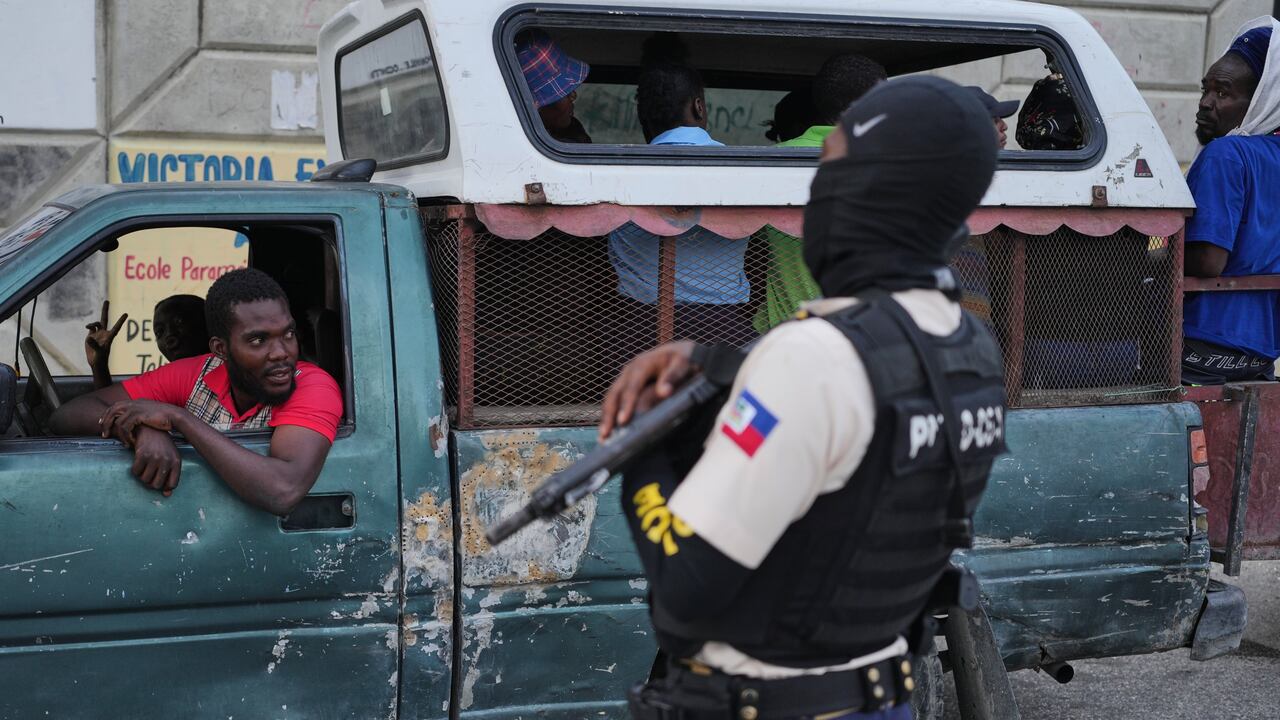
Police response has also been constrained. Armoured units that reached the area reportedly remained only briefly before pulling back, returning again the following day.
Local authorities told investigators that many police vehicles were out of service, some due to mechanical and battery failures requiring repairs from Port-au-Prince. Units from the U.N.-backed security mission have also faced delays, awaiting authorisation before deployment.
Prime Minister Alix Didier Fils-Aimé met a United Nations delegation on Tuesday to discuss the arrival of reinforcements for the international security mission, which has so far been only partially deployed and hampered by shortages of funding, personnel and equipment.
In a separate report, the Institute for Justice and Democracy in Haiti criticised both Haitian authorities and international partners, warning that current strategies rely too heavily on militarised responses while reducing humanitarian support.
The group also raised concerns over the use of non-state actors, including private security contractors and local militias, which it said have been accused of carrying out extrajudicial killings.
“Haiti’s already catastrophic social and economic conditions have deteriorated further,” the organisation said, adding that current efforts appear unlikely to address the root causes of insecurity.