
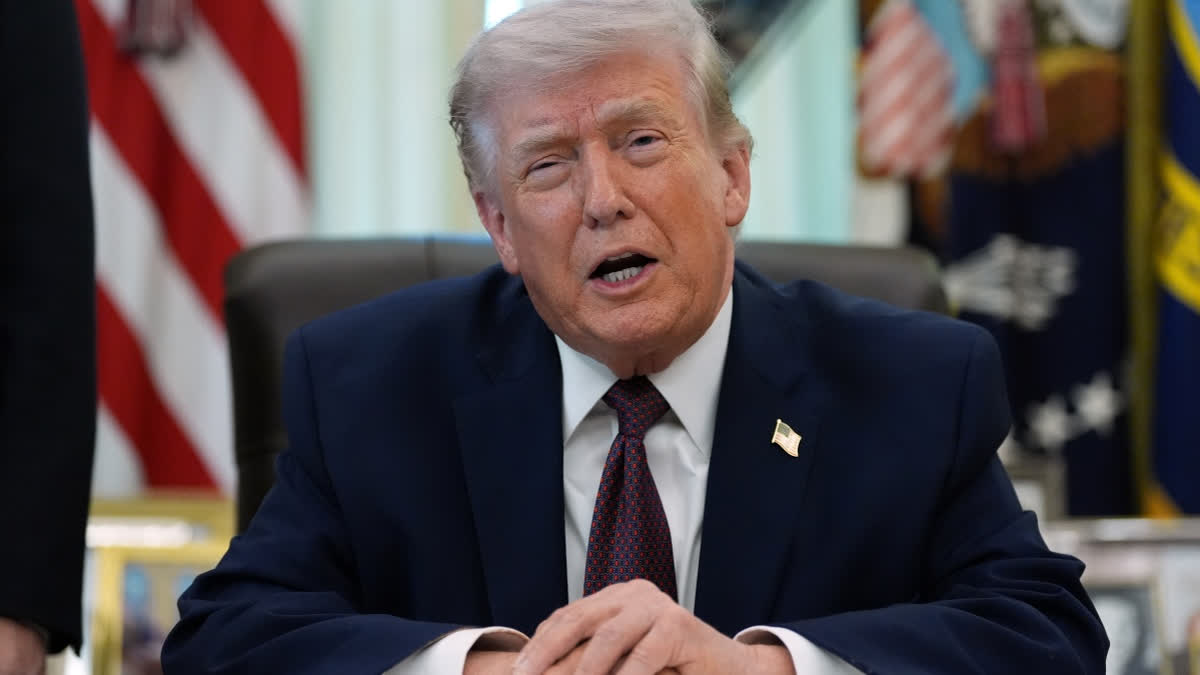
US President Donald Trump claimed on Wednesday that Iran’s new leadership had requested a ceasefire with Washington, linking any potential agreement to the reopening of the Strait of Hormuz.
In a post on his platform Truth Social, Trump said Iran’s “new regime president” had approached the United States for a ceasefire, describing the leadership as “much less radicalized” than its predecessors.
He added that Washington would only consider such a request if the strategic waterway was “open, free, and clear,” warning that US military operations would otherwise continue.
Iran rejected the claim. Foreign Ministry spokesman Esmaeil Baqaei said Tehran had not sought a ceasefire and dismissed Trump’s remarks as inaccurate.
Despite the public denial, US officials indicated that discussions are ongoing. According to Axios, which cited three American officials, talks are exploring a potential ceasefire arrangement tied to reopening the Strait of Hormuz.
Officials said Trump has been engaging with advisers and external actors on the issue, but cautioned that prospects for a deal remain uncertain. It was not clear whether contacts with Iran were direct or conducted through intermediaries, including regional players such as Pakistan.
Iranian Foreign Minister Abbas Araghchi has previously downplayed such contacts, saying exchanges with the United States are limited to message-passing rather than formal negotiations.
Trump has repeatedly described Iran’s current leadership as more pragmatic than previous governments, telling US media earlier this week that the conflict was nearing an end and that Washington had achieved what he called “total regime change.”
He also said the United States had been in contact with Iranian parliamentary speaker Mohammad Bagher Qalibaf.
The Strait of Hormuz remains a central flashpoint in the conflict, serving as a critical global oil transit route, with any disruption carrying significant implications for energy markets and regional stability.