
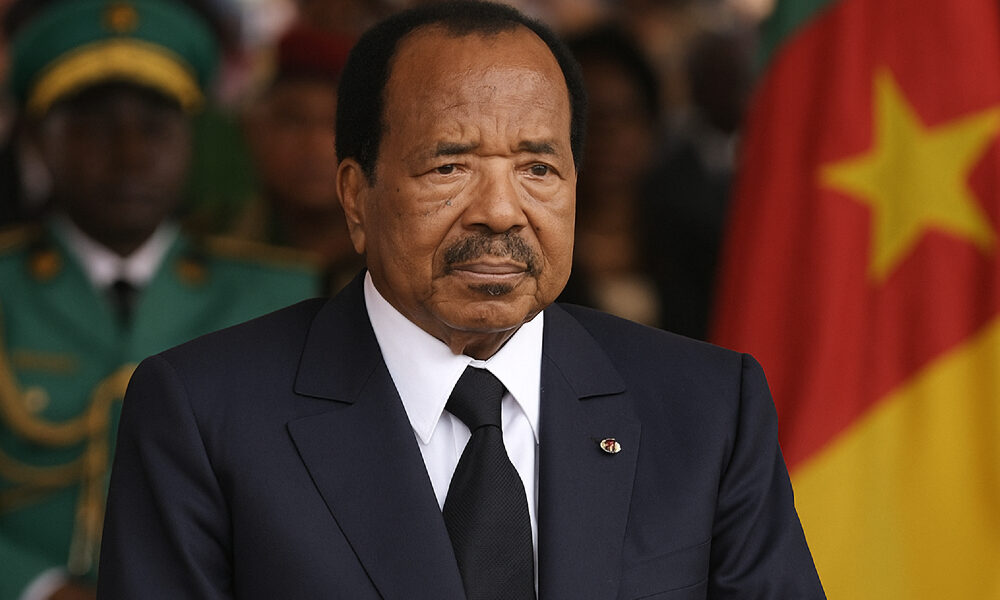
Cameroon’s parliament has overwhelmingly approved a constitutional amendment to reintroduce the post of vice president, a move the government says is aimed at ensuring continuity but which critics warn could further concentrate power around President Paul Biya.
Lawmakers in a joint session of the National Assembly and Senate voted 200 to 18, with four abstentions, to pass the bill on Saturday, according to Reuters.
Under the new provisions, the vice president would automatically assume the presidency in the event of Biya’s death, resignation, or incapacitation, ending longstanding uncertainty over succession in the Central African country.
Biya, 93, has ruled Cameroon since 1982, making him the world’s oldest serving head of state. Public discussion of his health remains restricted.
Appointed successor, limited powers
The legislation stipulates that the vice president will be appointed — and can be dismissed — by the president, and would serve out the remainder of the seven-year term if elevated to the presidency.
However, the interim leader would be barred from initiating constitutional changes or running in the next presidential election, according to the bill reviewed by Reuters.
The government has defended the reform as a safeguard against institutional instability in the event of a sudden leadership vacuum. Biya now has 15 days to sign the amendment into law.
Opposition warns of further centralisation
Opposition figures say the changes risk weakening democratic institutions by placing succession directly under presidential control.
Joshua Osih, a lawmaker and head of the Social Democratic Front, criticised the measure as a missed opportunity to strengthen democratic governance in a country facing a protracted conflict in its anglophone regions.
“This text weakens legitimacy, reinforces centralisation, and ignores a major historical grievance,” Osih said, arguing instead for a system in which the president and vice president are jointly elected to reflect Cameroon’s dual colonial heritage.
First major reform since term limits scrapped
The move marks Cameroon’s most significant constitutional change since 2008, when presidential term limits were abolished — a decision that triggered nationwide protests and a violent crackdown by security forces.
The vice presidency had previously existed but was removed in 1972 following a constitutional referendum that reshaped the country’s political system.
The latest amendment is likely to intensify debate over succession and governance in Cameroon, as questions surrounding leadership continuity grow more urgent amid Biya’s advanced age.