
Nigeria has begun prosecuting more than 500 individuals accused of links to militant violence, marking one of the country’s largest-ever terrorism trials as authorities seek to address years of impunity.
The proceedings opened on Tuesday at a high court in the capital, Abuja, where 227 suspects were arraigned before 10 judges, according to Attorney General Lateef Fagbemi. The defendants face charges including aiding and abetting terrorism, with many cases tied to the long-running insurgency led by Boko Haram in the country’s northeast.
Nigeria has battled militant violence for over 17 years, with the conflict spreading beyond the northeast into other regions. Armed groups, including jihadists and criminal gangs, have carried out attacks, kidnappings and raids, particularly in rural areas.
Despite the scale of violence, prosecutions have been rare, with many suspects held for years without trial. The mass proceedings are seen as an effort to address longstanding criticism over delays in the justice system.
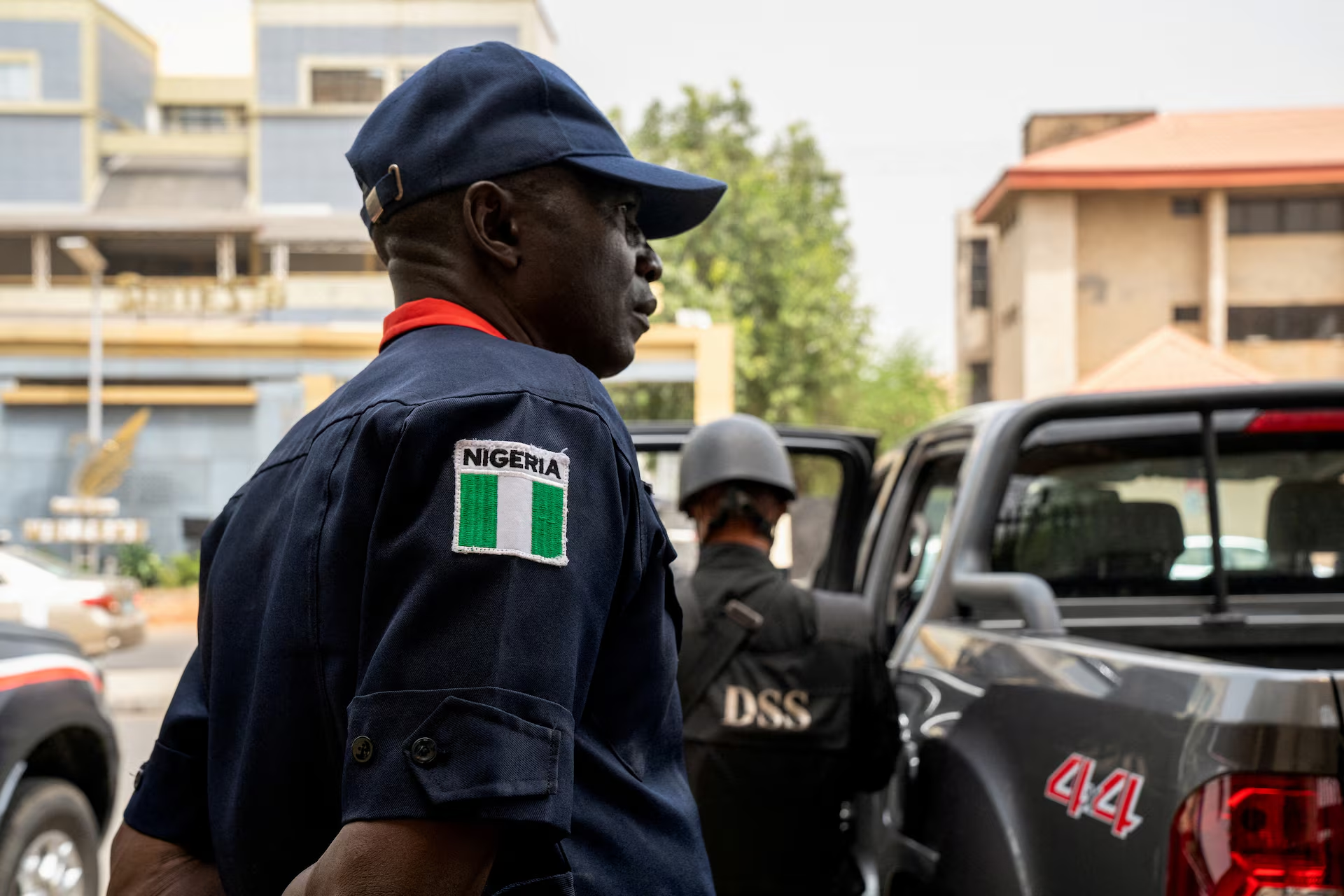
Security was heightened during the court sessions, with suspects transported under heavy military, police and intelligence escort. Observers, including human rights organisations and the Nigerian Bar Association, attended the hearings.
Authorities say the accused played various roles in militant activities, from direct involvement in attacks to providing logistical and financial support, including supplying food, weapons and intelligence.
Five defendants have already received prison sentences ranging from seven to 20 years after pleading guilty to charges such as assisting militant groups through trade and supplies.
Fagbemi said the scale of the trial underscored the government’s commitment to pursuing accountability while соблюcing legal procedures.
Security analyst Bashir Galma described the process as a “significant milestone” in Nigeria’s counterterrorism efforts, noting public frustration over prolonged detentions without trial.
However, he cautioned that some suspects could still be released, particularly those held for extended periods without prosecution, as courts weigh the circumstances of their detention.
The trial is expected to proceed in phases as Nigeria attempts to restore confidence in its justice system and respond to ongoing insecurity across the country.