
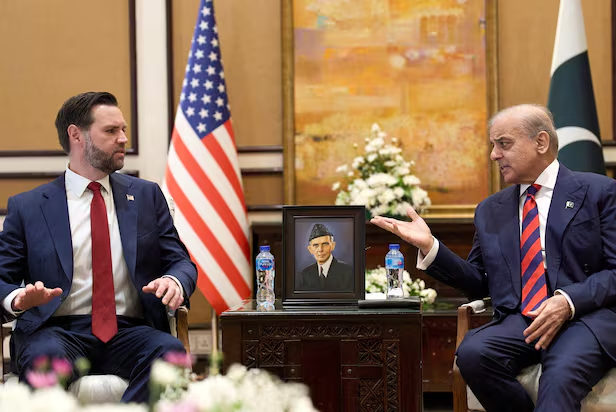
The United States and Iran failed to reach an agreement after marathon talks in Pakistan’s capital, with both sides blaming each other for the deadlock and casting doubt over a fragile ceasefire.
The negotiations, which stretched over 21 hours, marked the highest-level direct engagement between the two rivals in more than a decade but ended without a breakthrough as delegations left Islamabad on Sunday.
US Vice President JD Vance said Washington had made its position clear, insisting Iran must commit to abandoning any pursuit of nuclear weapons.
“We’ve made very clear what our red lines are,” Vance said, adding that Tehran had declined to accept US terms.
Iranian officials, however, said the failure stemmed from a lack of trust, accusing Washington of making excessive demands.
Parliamentary Speaker Mohammad Baqer Qalibaf said Tehran had presented “forward-looking” proposals, but that the United States had yet to demonstrate it could be trusted.
The talks came days after a two-week ceasefire aimed at halting a conflict that has killed thousands and shaken global energy markets since late February.
Key disputes remain centred on Iran’s nuclear programme and the Strait of Hormuz, a vital oil transit route partially disrupted during the fighting.
Tehran has demanded control over the waterway, compensation for war damage and broader regional ceasefires, including in Lebanon, while Washington has prioritised freedom of navigation and strict limits on Iran’s nuclear activities.
Pakistan’s Foreign Minister Ishaq Dar said it was “imperative” to preserve the ceasefire despite the failure to reach a deal.
The diplomatic impasse unfolded as tensions continued elsewhere in the region, with Israel pressing strikes against Hezbollah targets in Lebanon — a front Iran insists must be included in any wider truce.
Israeli minister Zeev Elkin said further talks remained possible but warned Tehran against escalation.
US President Donald Trump, meanwhile, suggested a deal was not essential, saying Washington had already achieved its objectives.
Despite the collapse in talks, limited oil tanker movement resumed through the Strait of Hormuz, although many vessels remain stranded, highlighting ongoing risks to global supply.