
Iran is weighing whether to join U.S.-mediated peace talks in Pakistan as a fragile ceasefire nears expiration, with Tehran pointing to Washington’s ongoing blockade and repeated violations as major obstacles.
A senior Iranian official said Tehran is “positively reviewing” participation in the talks, marking a shift from earlier outright rejection. But no final decision has been made, and officials stressed that U.S. actions on the ground could still derail diplomacy.
Iranian Foreign Minister Abbas Araqchi said continued ceasefire breaches by Washington remain a key barrier, while top negotiator Mohammad Baqer Qalibaf accused U.S. President Donald Trump of escalating pressure and attempting to force Iran into negotiations under threat.
The two-week ceasefire, announced by Trump on April 7, is expected to expire this week, with a Pakistani source saying the deadline falls late Wednesday. Its collapse could trigger renewed escalation in a conflict that has already killed thousands and shaken global energy markets.
Behind the scenes, Pakistan has intensified mediation efforts. A Pakistani security source said Army Chief Field Marshal Asim Munir warned Trump that the U.S. blockade of Iranian ports is undermining talks, prompting a U.S. pledge to review the policy.
Washington is pushing to launch negotiations before the truce ends, hoping to secure a rapid agreement that would stabilise oil markets and avoid further economic fallout. Trump has publicly predicted a quick deal, insisting he faces “no pressure” despite rising tensions.
Tehran, however, is leveraging its strategic position in the Strait of Hormuz — a vital artery for global energy flows — as a bargaining chip, seeking sanctions relief and safeguards for its nuclear programme.
Tensions have intensified in recent days. The U.S. military intercepted an Iranian-bound cargo vessel, prompting Tehran to accuse Washington of “armed piracy” and warn of retaliation. Iran has also signalled it would target regional infrastructure if its own facilities are attacked.
Shipping through the Strait of Hormuz has slowed to near standstill, with oil prices rising sharply amid fears the ceasefire could collapse.
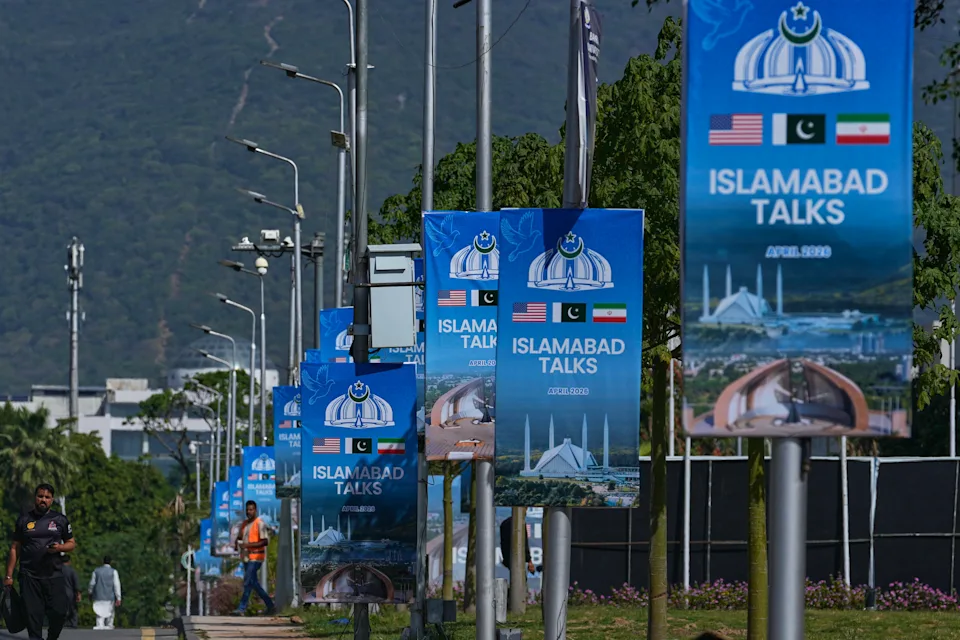
Despite uncertainty, Pakistan is pressing ahead with preparations to host talks in Islamabad, deploying nearly 20,000 security personnel.
But with conflicting signals from both sides, officials acknowledge negotiations may not materialise — raising the risk that diplomacy could give way to renewed confrontation within days.