
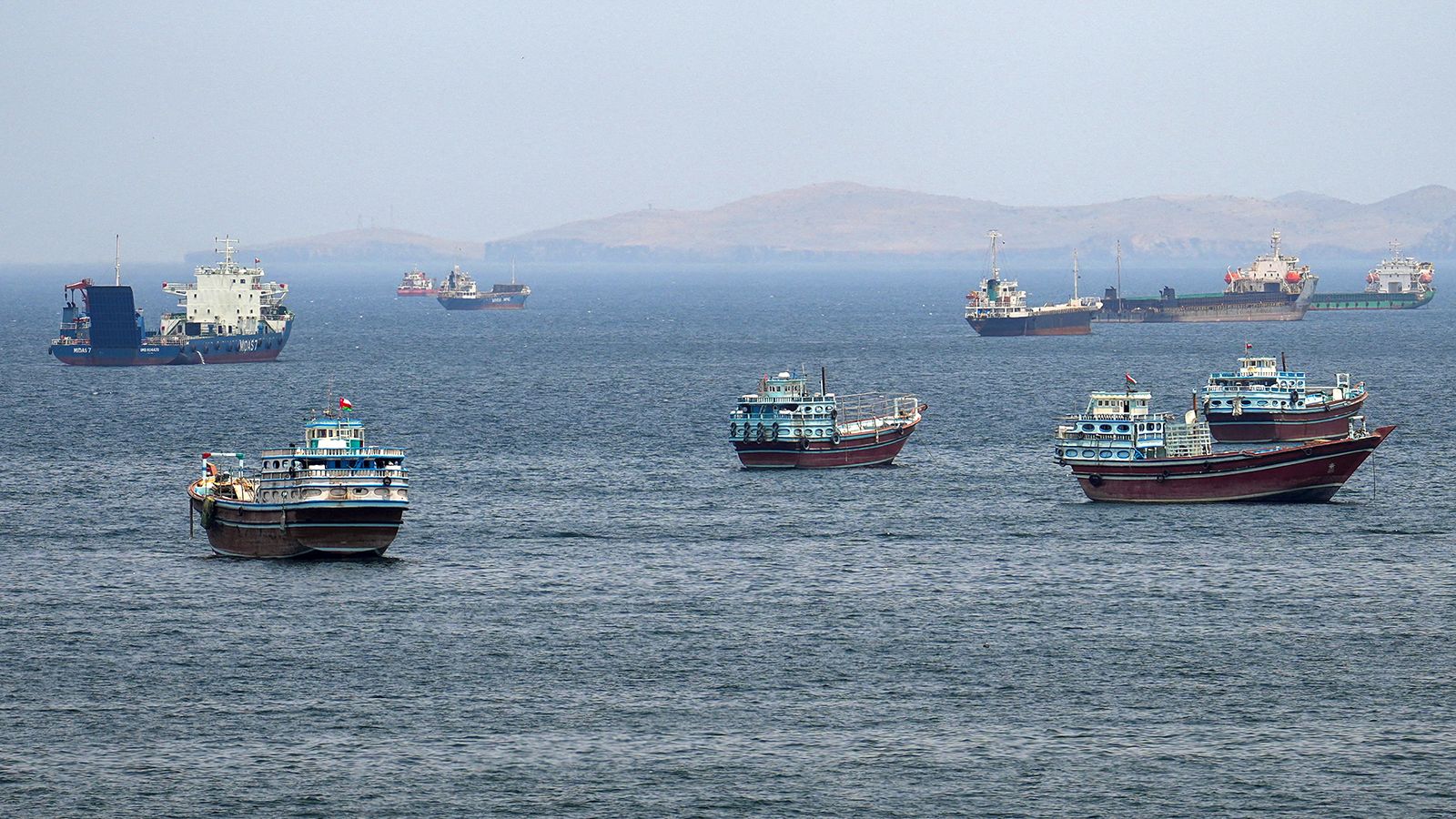
Iran seized two vessels in the Strait of Hormuz on Wednesday, escalating its control over the world’s most critical oil chokepoint just as Washington signalled a pause in military escalation.
Iran’s Revolutionary Guards said the ships were detained for alleged maritime violations and escorted to Iranian waters, marking the first such seizures since the conflict erupted in late February.
The move came hours after Trump announced he would halt planned attacks on Iran “indefinitely” following mediation efforts led by Pakistan — though he made clear the U.S. naval blockade would remain in place.
Tehran has repeatedly described the blockade as an act of war and warned it would not reopen the strait under such conditions, effectively holding global energy flows hostage.
Maritime tensions intensified further after a British security agency reported that at least three commercial vessels came under fire in the strait. One Liberia-flagged container ship sustained heavy damage to its bridge after being targeted by gunfire and rocket-propelled grenades near Oman, though no casualties were reported.
The Strait of Hormuz — through which roughly a fifth of global oil and LNG supplies pass — has effectively been shut to international traffic throughout the conflict, with Iran targeting ships attempting transit without its approval.
Despite the apparent de-escalation in rhetoric from Washington, the broader standoff remains unresolved. The U.S. continues to demand that Iran abandon uranium enrichment, while Tehran insists on lifting sanctions, securing reparations, and formal recognition of its authority over the waterway.
Pakistan, which has been mediating between the two sides, said efforts to restart negotiations are ongoing despite a failed round of talks earlier this week.
Meanwhile, Iran staged a show of force in Tehran, parading ballistic missiles alongside banners declaring the strait “under Iran’s control,” in a direct message to Washington.
Adding to regional instability, parallel ceasefire violations were reported in Lebanon, where Israeli strikes and Hezbollah retaliation signalled that tensions tied to the wider conflict are spreading beyond the Gulf.
Oil markets reacted swiftly, with prices rising as fears mount over prolonged disruption to global energy supplies.