
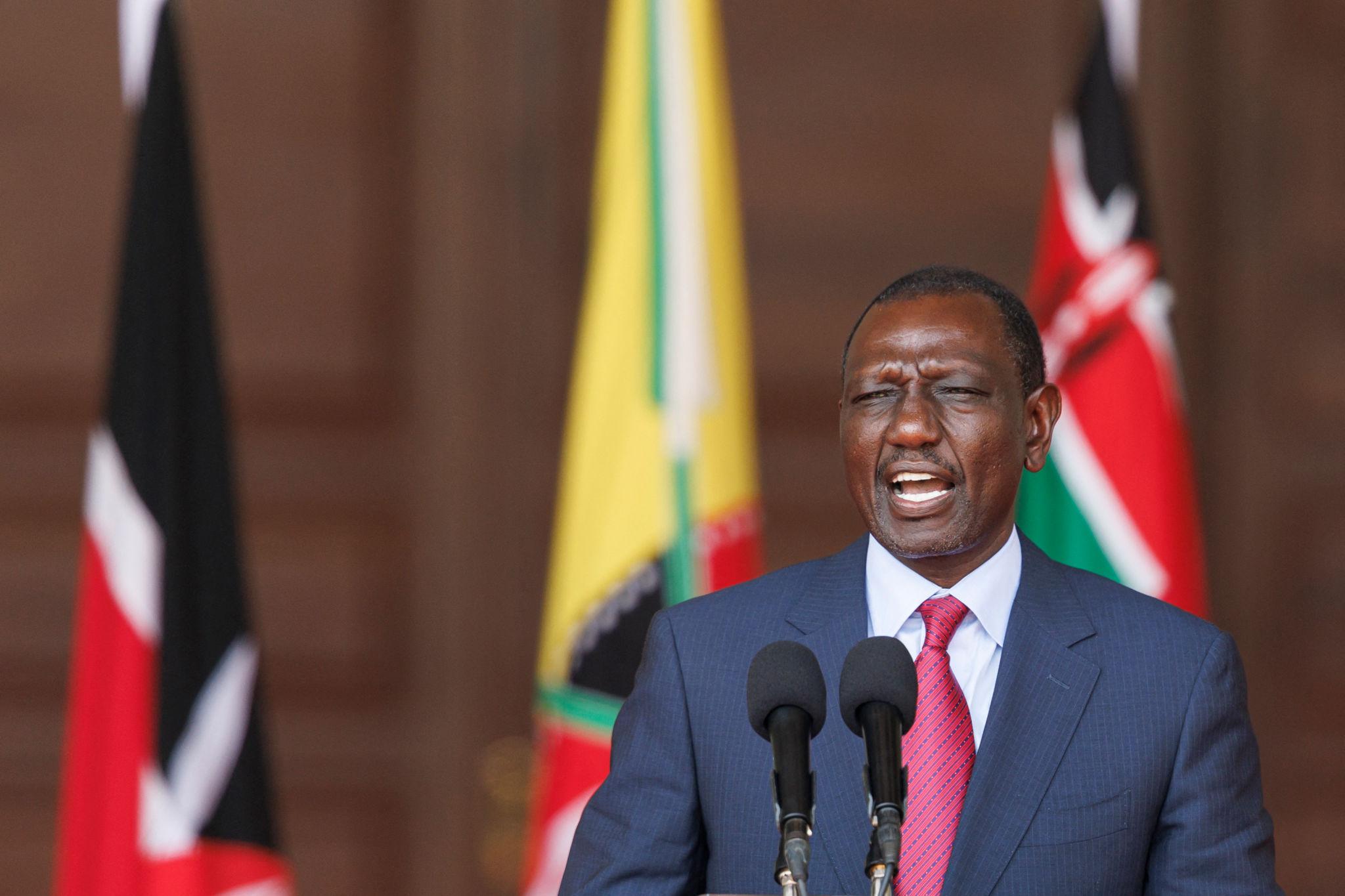
Kenyan President William Ruto has triggered a wave of backlash after remarks suggesting Nigerian-accented English can be difficult to understand, comments that critics say were dismissive and unnecessary.
Speaking to Kenyans living in Italy, Ruto praised his country’s education system and English proficiency, saying Kenya produced “some of the best English speakers in the world.” He then added that when Nigerians speak English, “you don’t know what they are saying” and may need a translator — a remark that drew laughter from the audience but quickly spread online.
The comments sparked sharp reactions across social media, particularly in Nigeria, where users accused the Kenyan leader of belittling a fellow African nation. Critics argued that English — a colonial legacy shared by both countries — should not be used as a benchmark for intelligence or national standing.
Zimbabwean journalist Hopewell Chin’ono wrote that English “is not a measure of intelligence, capability, or national progress,” echoing a broader sentiment that linguistic differences reflect cultural diversity rather than deficiency.
Both Kenya and Nigeria use English as an official language, but their spoken forms have evolved differently. Nigeria, with more than 500 local languages, has developed a distinct cadence and pronunciation, while Kenya’s mix of Bantu, Nilotic and Cushitic languages has shaped its own accents.
Prominent Nigerian voices also pushed back. Former senator Shehu Sani highlighted Nigeria’s literary legacy, referencing Nobel laureate Wole Soyinka and acclaimed authors Chinua Achebe and Chimamanda Ngozi Adichie, arguing the country’s cultural contributions undermine any suggestion of linguistic inferiority.
Others said Ruto should focus on domestic challenges such as rising living costs and unemployment rather than making controversial remarks abroad.
Online exchanges between Kenyans and Nigerians are common, often blending humour with rivalry across topics like economics, culture and politics. Earlier this month, Nigerian President Bola Tinubu faced criticism from Kenyans after suggesting Nigerians were better off economically than citizens in other African countries.
While some Kenyans defended Ruto, saying his comments were intended as humour, the incident has reignited debate over language, identity and post-colonial attitudes across the continent.
Nigeria remains the largest English-speaking country in Africa, and its locally developed form of English continues to influence global usage, with expressions and phrasing increasingly entering mainstream dictionaries and international discourse.