
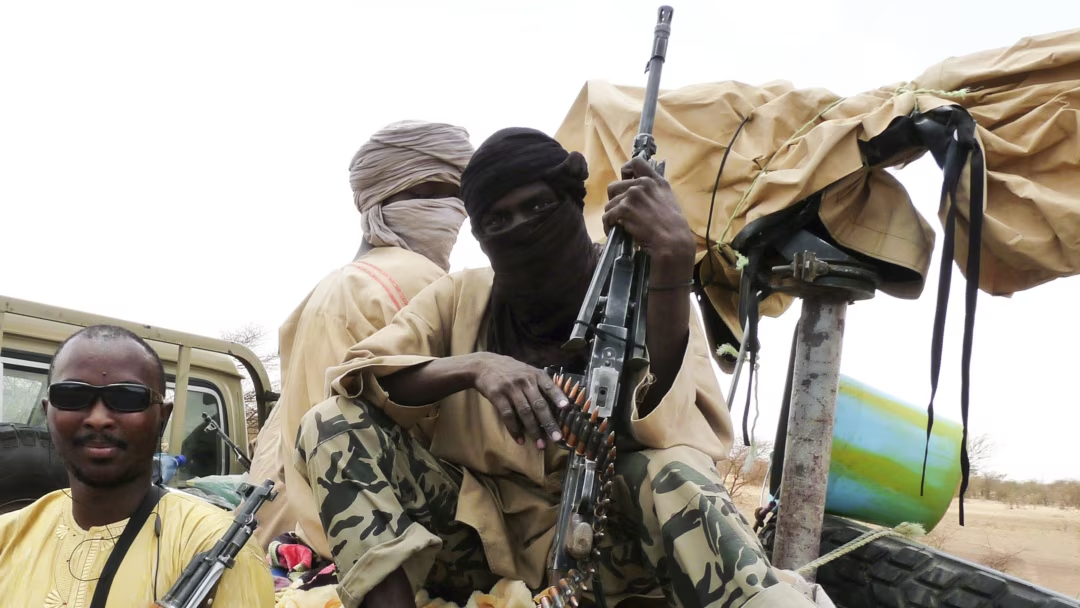
Armed insurgents launched a wave of coordinated attacks across Mali on Saturday, striking the capital and multiple northern cities in what analysts describe as one of the most significant offensives in years.
Explosions and sustained gunfire erupted near the key military hub of Kati, just outside Bamako and close to the country’s main airport, forcing authorities to shut down air traffic. A UN security alert described the incidents as “simultaneous complex attacks” spanning several regions.
Witnesses reported two explosions shortly before dawn, followed by hours of heavy gunfire as military helicopters circled overhead. Fighting continued well into the morning.
“There’s gunfire everywhere,” one witness said from the central town of Sevare, underscoring the scale and spread of the assault.
Attacks were also reported in northern and central areas including Mopti, Gao and Kidal, suggesting a coordinated nationwide operation. Unconfirmed reports indicated that the residence of Defence Minister Sadio Camara in Kati was struck and destroyed.
Mali’s army later said the situation in Bamako was “under control” but confirmed that sweeping operations were ongoing. It was not immediately clear whether control had been restored in other affected regions.
No group immediately claimed responsibility, but multiple security sources pointed to the al Qaeda-linked Jama’at Nusrat al-Islam wal-Muslimin (JNIM), a group that has repeatedly targeted military installations across the country.
Sources said JNIM may have coordinated with the Azawad Liberation Front (FLA), a Tuareg-led rebel alliance that claimed to have seized positions in Gao and parts of Kidal. Those claims could not be independently verified.
Mali has been battling jihadist insurgencies since 2012, when armed groups seized large parts of the north. Despite pledges by the military leadership—who took power following coups in 2020 and 2021—to restore stability, violence has continued to spread.
Analysts say Saturday’s attacks mark a dangerous escalation.
“This looks like the biggest coordinated attack for years,” said Ulf Laessing of the Konrad Adenauer Foundation.
Security analysts warn that even if the capital holds, the north remains vulnerable, with key positions potentially at risk of falling.
The offensive comes amid mounting pressure on the military government, which has leaned heavily on Russian security support while exploring renewed intelligence cooperation with the United States.
In recent months, insurgents have demonstrated increasing reach, including attacks on fuel supply lines and operations in areas previously considered relatively secure.
Saturday’s assault suggests those capabilities are expanding — and that Mali’s already fragile security situation may be entering a more volatile phase.