
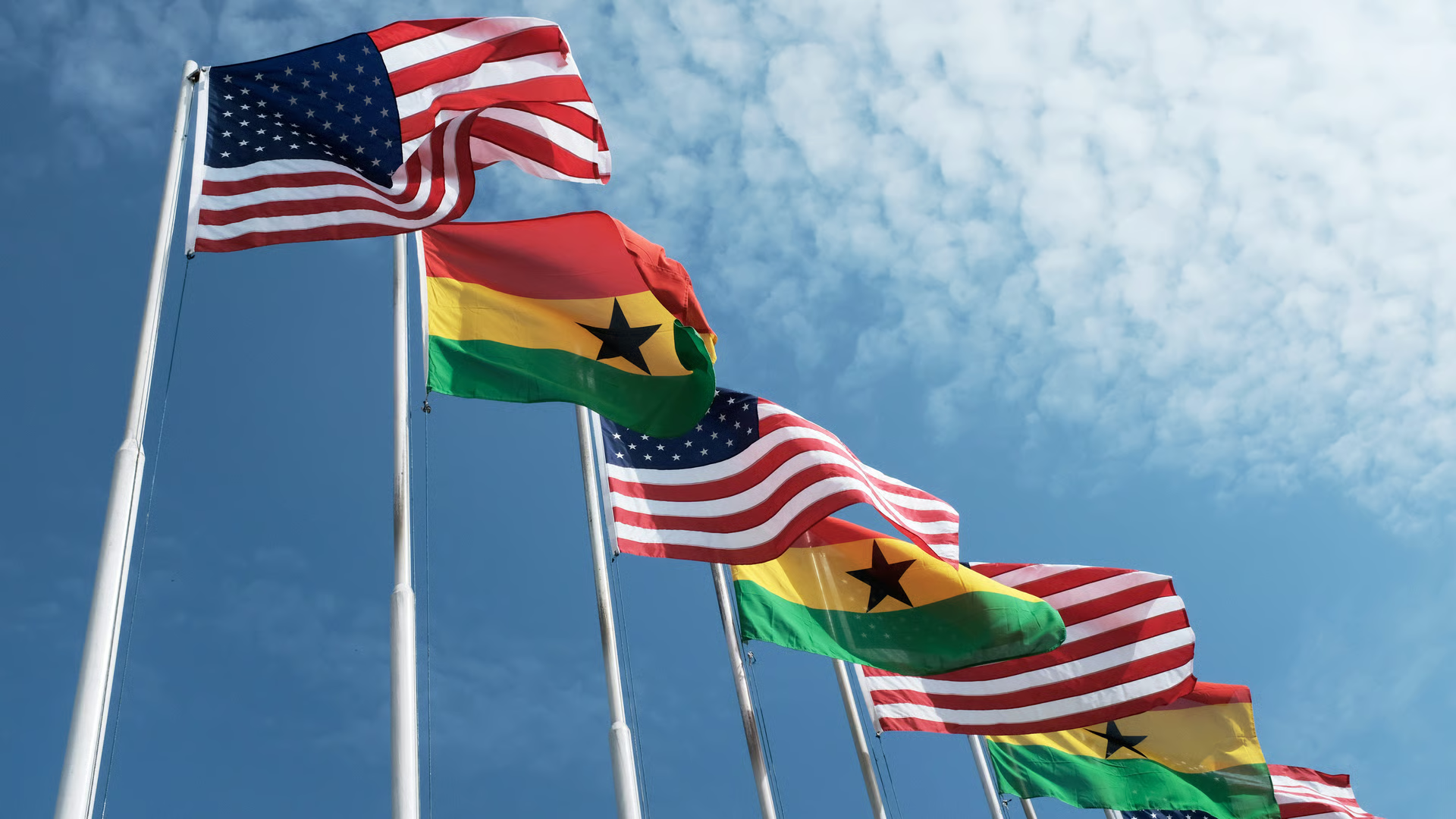
Ghana has rejected a proposed US health agreement, citing concerns over access to sensitive national health data without sufficient safeguards.
The decision marks another setback for Washington as several African countries resist similar arrangements linked to its global health funding strategy.
Arnold Kavaarpuo, executive director of Ghana’s Data Protection Commission, said the requested access “went far beyond” what was necessary for the stated health objectives.
He warned the plan risked placing Ghana’s health data infrastructure under foreign control through broad digital access provisions.
The proposed deal, worth around $300 million, included about $109 million in US funding over five years for Ghana’s health system support.
However, officials said the agreement would have allowed up to 10 US entities to access datasets, dashboards and analytical tools without prior national approval.
Kavaarpuo said this amounted to notification rather than consent, raising serious questions about sovereignty and governance oversight.
The US State Department did not immediately respond to requests for comment on Ghana’s rejection of the proposal.
The initiative forms part of a wider US approach under its “America First” global health funding framework following the restructuring of USAID.
Similar agreements have already faced resistance across Africa, including rejections or objections in Zimbabwe and Zambia over privacy and fairness concerns.
Critics say the deals often lack strong protections for sensitive health information and risk undermining national control over data systems.
The Africa Centres for Disease Control and Prevention has also raised concerns about data and pathogen-sharing frameworks within such agreements.
Ghana has formally communicated its rejection to Washington, while signalling openness to renegotiation under improved data protection terms.