
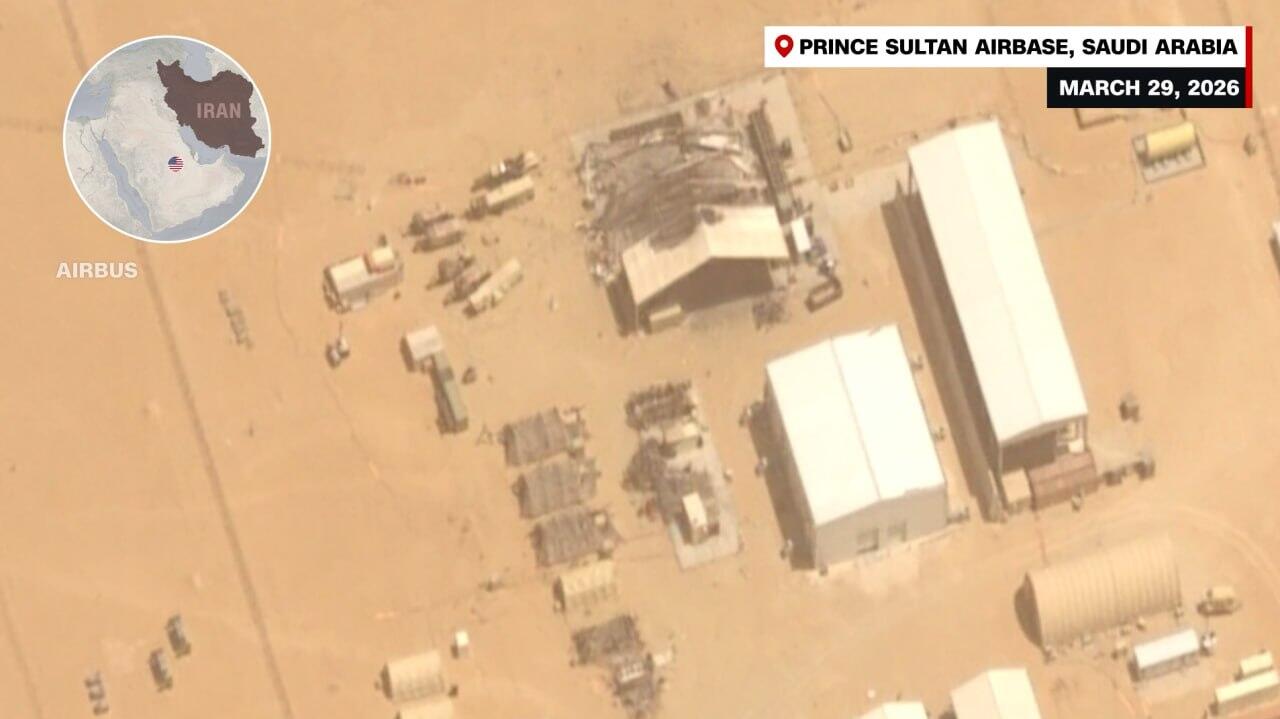
At least 16 U.S. military sites across eight countries in the region have been damaged since the United States and Israel launched their February 28 offensive against Iran, according to an investigation by CNN. Some of the facilities are now nearly unusable, the report said.
Citing a source familiar with the matter, the network reported that the strikes were “unlike anything seen before” at U.S. bases, describing them as rapid and precise attacks using advanced technology.
The damaged facilities account for a significant portion of Washington’s military footprint in the region, according to a congressional aide briefed on damage assessments. The aide noted that the sites appeared to have been selected as “cost-effective targets,” adding that U.S. radar systems are among “the most expensive and limited assets” deployed in the area.
Satellite imagery reviewed by CNN indicates that Iran’s primary targets included advanced U.S. radar systems, communications infrastructure and deployed aircraft—many of which are costly and difficult to replace. The report drew on dozens of satellite images and interviews with sources in the United States and Gulf countries.
Among the assets reportedly hit were E-3 Sentry surveillance aircraft destroyed at Prince Sultan Air Base in Saudi Arabia, communications facilities damaged at Camp Arifjan in Kuwait, and radar systems struck at Muwaffaq Salti Air Base in Jordan.
The report said U.S. allies in the region now face a strategic dilemma. While Iran’s actions may reinforce the perceived need for a continued U.S. security presence in the Gulf, they also highlight a new reality: American military installations, once seen as heavily fortified, are increasingly vulnerable.
No official comment has yet been issued by U.S. or Gulf authorities on the findings. However, a Saudi source cited by CNN said the war had demonstrated that reliance on the United States as a sole security partner “cannot be exclusive” and is not guaranteed.
CNN also referenced a report by the Financial Times stating that Tehran secretly acquired a Chinese satellite known as “TEE-01B” in 2024, enabling it to obtain high-resolution imagery of U.S. bases. The report suggested this marks the first time Washington has faced an adversary with satellite capabilities approaching its own.