
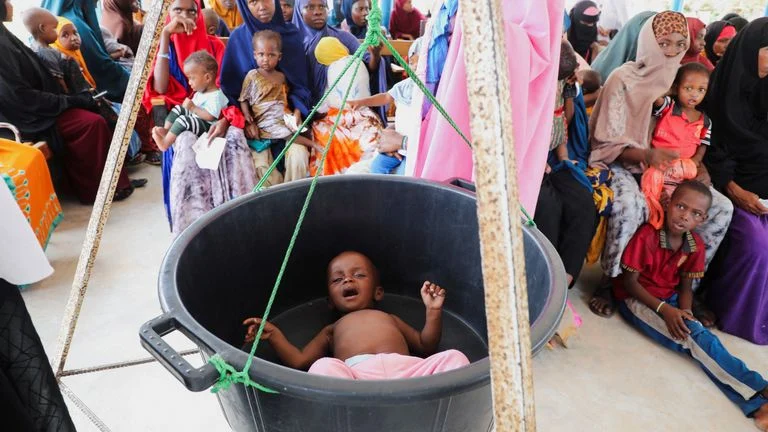
Somalia is facing a worsening malnutrition crisis and urgently requires increased humanitarian funding to prevent catastrophe, the United Nations World Food Programme (WFP) warned on Friday, cautioning that it may be forced to suspend aid operations from July without additional financial support.
The WFP said a combination of failed rainy seasons, ongoing conflict, and worsening insecurity has pushed millions of Somalis toward dangerous levels of hunger, while global aid cuts and supply disruptions linked to the war in the Middle East have severely strained relief efforts.
According to the agency, around 6 million people in Somalia — nearly one in three residents — are experiencing acute hunger, while 1.9 million children are suffering from acute malnutrition.
“Somalia faces a really severe malnutrition crisis and is one of the biggest malnutrition hotspots in the world,” Matthew Hollingworth, WFP Assistant Executive Director for Programme Operations, told reporters in Geneva via video link from Rome.
Somalia continues to grapple with multiple overlapping crises, including the long-running Al-Shabaab insurgency against the federal government, as well as political tensions between Mogadishu and regional administrations over security and governance.
The WFP said conditions are beginning to resemble those seen in 2022, when Somalia narrowly avoided famine after a prolonged drought. However, unlike that period, aid agencies now lack the resources needed for a large-scale emergency response.
The agency, which oversees around 90% of Somalia’s food security operations, said it has already reduced the number of people receiving assistance from 2 million to just 500,000 due to funding shortfalls. Hollingworth warned that services could stop entirely by July if additional support is not secured.
The humanitarian response has also been hit by supply chain disruptions, with delays of up to 40 days reported for shipments of Ready-to-Use Therapeutic Food (RUTF), a critical treatment for severely malnourished children.
Aid agencies have repeatedly warned that Somalia remains highly vulnerable to climate shocks, conflict, and economic instability, leaving millions dependent on international assistance for survival.