
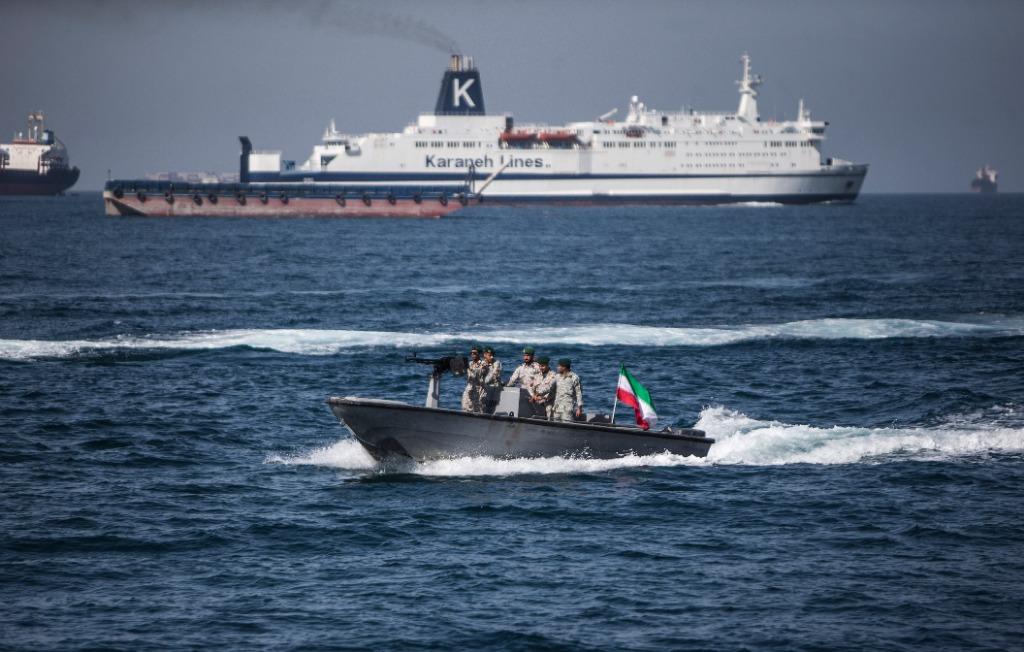
The United States and Iran appeared no closer to ending their war on Saturday as clashes continued in and around the Strait of Hormuz despite a fragile ceasefire, while reports emerged suggesting Tehran could withstand a prolonged U.S. naval blockade for months.
Fighting intensified in recent days in the Gulf region, marking the most serious escalation since the ceasefire announced on April 7. The United Arab Emirates also reported renewed Iranian missile and drone attacks on Friday.
According to Iranian media, sporadic confrontations took place between Iranian forces and U.S. naval vessels in the Strait of Hormuz. Iran’s semi-official Fars news agency reported exchanges of fire, while Tasnim later quoted a military source saying the situation had calmed, though further clashes remained possible.
The U.S. military said American forces intercepted two vessels allegedly linked to Iran as they attempted to enter an Iranian port. A U.S. fighter jet reportedly struck the vessels’ smokestacks, forcing them to retreat.
The Strait of Hormuz remains at the center of the conflict. Iran has largely restricted non-Iranian shipping through the strategic waterway since the war began following U.S.-Israeli strikes on Iran on February 28. Before the conflict, roughly one-fifth of global oil supplies passed through the strait.
Washington imposed a blockade on Iranian vessels last month in an attempt to pressure Tehran economically. However, a U.S. official familiar with intelligence assessments said a CIA analysis suggested Iran could continue functioning under the blockade for several months before facing severe economic strain.
The report raised questions about the effectiveness of President Donald Trump’s pressure campaign amid growing frustration among U.S. allies and segments of the American public over the conflict.
A senior U.S. intelligence official later dismissed claims surrounding the CIA assessment as inaccurate.
Beyond the Strait of Hormuz, the conflict continued spreading across the Gulf. The UAE said its air defenses intercepted two ballistic missiles and three drones launched from Iran on Friday. Emirati authorities said three people suffered moderate injuries.
Iran has repeatedly targeted Gulf states hosting U.S. military facilities, including the UAE. Tehran recently intensified attacks after Trump announced “Project Freedom,” a short-lived initiative aimed at escorting commercial shipping through the strait.
Despite the flare-ups, Trump said Thursday the ceasefire remained in effect, while Iran accused Washington of repeatedly violating the truce.
Iranian Foreign Minister Abbas Araghchi criticized Washington, saying the United States consistently undermined diplomatic efforts.
“Every time a diplomatic solution is on the table, the U.S. opts for a reckless military adventure,” Araghchi said Friday.
Iran’s Mehr news agency also reported casualties following what it described as a U.S. Navy strike on an Iranian commercial vessel late Thursday, saying one crew member was killed, 10 injured, and six others missing.
Diplomatic efforts to end the conflict have shown little progress. Washington is awaiting Tehran’s response to a U.S. proposal intended to formally end hostilities before broader negotiations begin on issues such as Iran’s nuclear program.
Speaking during a visit to Rome on Friday, U.S. Secretary of State Marco Rubio questioned why European allies, including Italy, were reluctant to fully support U.S. efforts to reopen the Strait of Hormuz.
Rubio warned that allowing Iran to assert control over an international waterway could set a dangerous global precedent.
At the same time, Washington expanded sanctions targeting Iran. The U.S. Treasury Department announced new sanctions Friday against 10 individuals and companies, including entities in China and Hong Kong accused of helping Iran procure materials for its Shahed drone program.
The Treasury warned it could impose secondary sanctions on foreign financial institutions involved in trade connected to Iran, including businesses linked to Chinese independent oil refineries.
The developments come days before Trump is expected to travel to China for talks with President Xi Jinping, with the Iran conflict expected to dominate discussions alongside global energy security concerns.