
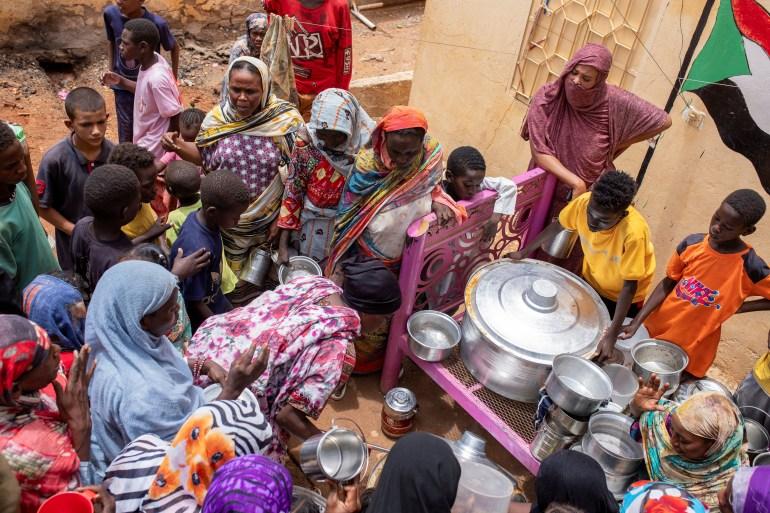
Nearly 20 million people across Sudan are facing acute hunger, according to a new report by the UN-backed Integrated Food Security Phase Classification (IPC), underscoring the worsening humanitarian toll of the country’s three-year war.
The report said around 19.5 million people — more than 40% of Sudan’s population — are currently experiencing severe food insecurity, while 14 areas across North Darfur, South Darfur and South Kordofan remain at risk of famine.
An estimated 135,000 people are already facing “catastrophic” levels of hunger, the IPC warned, with conditions especially severe in conflict-hit areas such as al-Fashir and Kadugli.
The war between General al-Burhan’s army and the Rapid Support Forces (RSF) has devastated Sudan’s economy, disrupted agriculture and displaced around 14 million people since fighting erupted in April 2023. Aid agencies and international monitors say the conflict has created the world’s largest hunger crisis.
Although the latest IPC estimate is slightly below last year’s figure of 21.2 million people facing acute hunger, humanitarian agencies warn that insecurity and the changing nature of the conflict continue to threaten millions.
The report noted that large-scale ground sieges have increasingly been replaced by drone warfare, with fighting intensifying in the Kordofan region and Blue Nile state. According to the UN human rights office, drone attacks have killed at least 880 civilians since January.
Civilian infrastructure, including hospitals, markets and power stations, has repeatedly been targeted, further disrupting humanitarian access and essential services.
“Ongoing hostilities — especially around major supply routes such as El Obeid in North Kordofan — and the possibility of renewed siege-like conditions continue to heighten risks,” the IPC said.
The agency also warned that around 825,000 children are expected to suffer from severe acute malnutrition as insecurity, access restrictions and funding shortages continue to hamper aid operations.
Humanitarian conditions are expected to deteriorate further during Sudan’s rainy season, which typically begins in July and coincides with the lean agricultural period.
Areas hosting displaced civilians fleeing al-Fashir — including Tina, Um Baru and Kernoi in North Darfur — were also identified as famine-risk zones amid ongoing fighting and drone attacks.
The IPC additionally warned that escalating regional tensions linked to the Iran crisis could worsen Sudan’s economic and food challenges by increasing the costs of fuel, fertilizer and imported food supplies, potentially undermining harvest prospects later this year.