
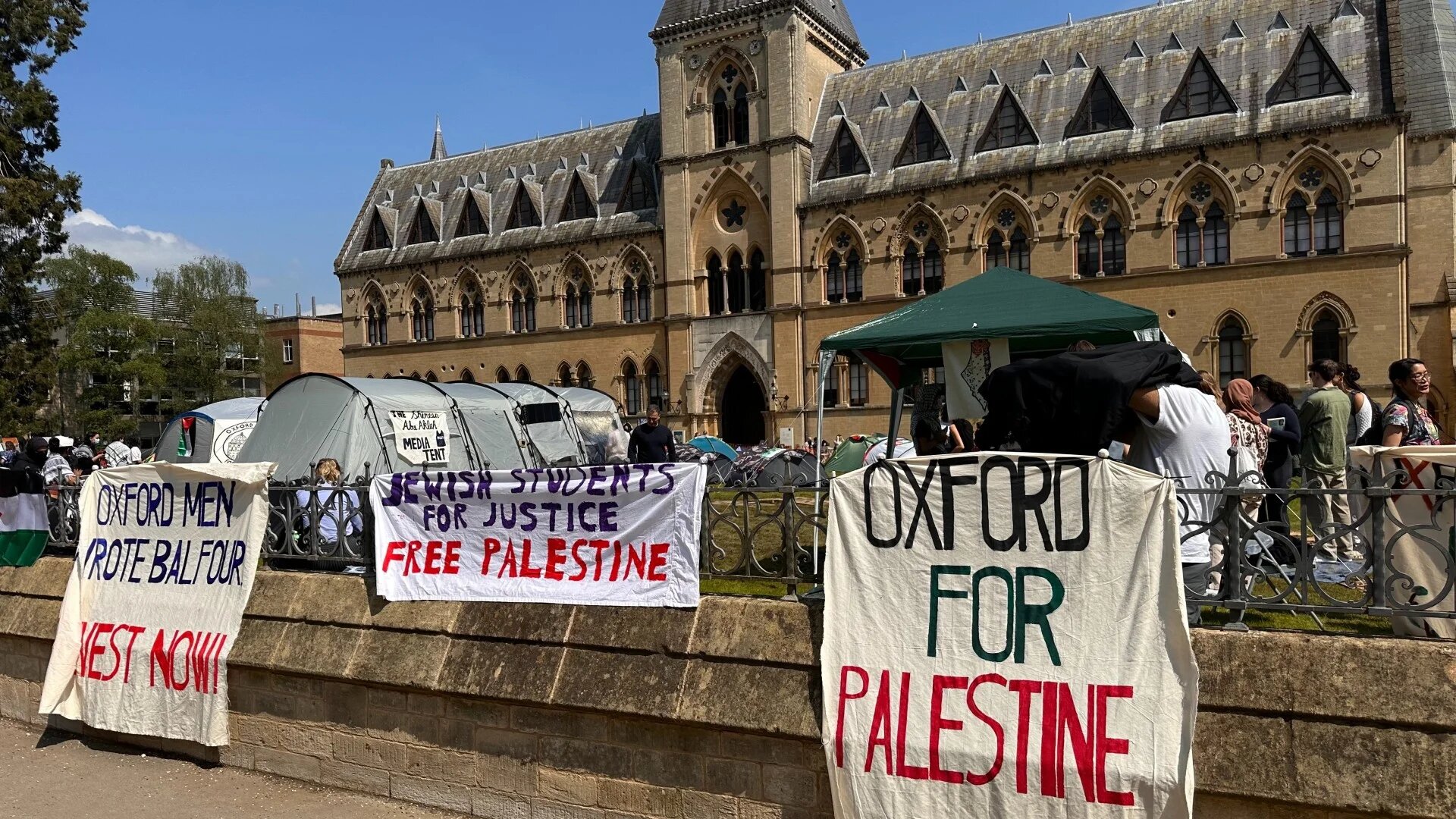
British police have reportedly opened investigations involving members of Port Sudan Prime Minister Kamal Idris’ delegation following clashes with Sudanese anti-war protesters during demonstrations near the University of Oxford in the United Kingdom.
The protests were organized by Sudanese activists and members of the Sudanese diaspora opposing the war and military rule in Sudan during Idris’ visit to Britain for meetings with academic institutions and officials.
Demonstrators, including activists linked to Sudan’s December Revolution movement, gathered outside Oxford carrying banners condemning the ongoing conflict and alleged human rights abuses in Sudan. Witnesses said protesters chanted slogans against the war and denounced what they described as efforts to rehabilitate figures linked to the former Islamist establishment under Omar al-Bashir.
Videos and testimonies circulating on social media appeared to show heated confrontations between protesters and individuals alleged to be affiliated with the Sudanese embassy in London and members of Idris’ delegation. Footage shared online showed shouting, pushing, and physical altercations between the groups.
Sources cited by Sudanese media said individuals associated with Idris’ entourage and embassy staff became involved in direct confrontations with protesters, including alleged assaults against several women participating in the demonstration. British police reportedly intervened and later launched formal investigations into the incident.
Several activists also alleged that one of the men involved in the confrontation was linked to the Al-Baraa Bin Malik Brigade, an Islamist militia fighting alongside General Abdel Fattah al-Burhan’s army in Sudan’s war. The allegations could not be independently verified, and neither the Sudanese embassy in London nor UK authorities immediately issued public comments.
The Al-Baraa Bin Malik Brigade has emerged as one of the most controversial armed groups allied with General al-Burhan’s army during the conflict. The group has faced accusations from rights organizations and analysts over alleged extremist Islamist ties and involvement in abuses during the war. The United States previously imposed terrorism-related sanctions targeting the brigade and wider Sudanese Islamist networks.
In a further development, a planned meeting between Idris’ delegation and the UK’s All-Party Parliamentary Group (APPG) on Sudan — which includes lawmakers from both the Labour and Conservative parties — was reportedly canceled following the incident and backlash generated within British political and rights circles.
Observers described the incident as a diplomatic embarrassment that could further damage Sudan’s international image, particularly because it unfolded at Oxford University, one of the world’s most prominent academic institutions known for traditions of open debate and peaceful expression.
Sudanese academic Dr. Alwaleed Adam Madibo described the events as a “moral collapse of the concept of the state,” arguing that diplomacy should protect a nation’s image rather than target its own citizens abroad.
Madibo said the incident demonstrated how Sudan’s political polarization and wartime violence were increasingly spilling into international and academic spaces. He added that while political protest is normal in democratic societies, turning demonstrations into physical confrontations — particularly incidents involving women protesters — risks further harming Sudan’s reputation and exposing deeper fractures within the country’s political culture.
No serious injuries were immediately reported.
The incident comes amid growing scrutiny in several Western capitals over the conduct of Sudanese authorities and allied Islamist factions during the war, alongside increasing international pressure for a permanent ceasefire and comprehensive political settlement to the conflict that erupted in April 2023 between General al-Burhan’s SAF and the RSF.