
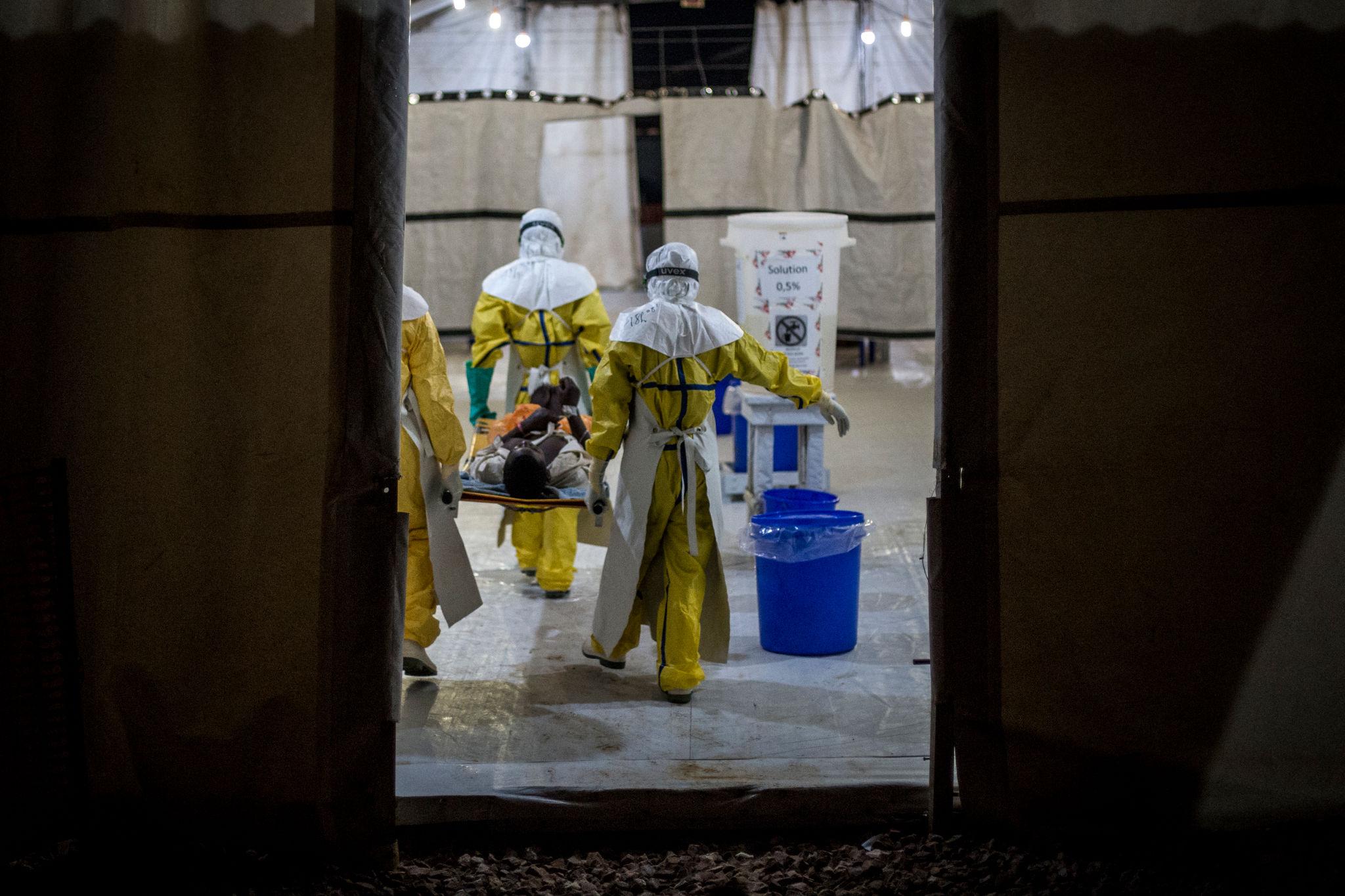
The death toll linked to the Ebola outbreak in eastern Democratic Republic of Congo (DRC) rose to 131 on Tuesday after authorities recorded 26 additional suspected deaths within 24 hours, as the World Health Organization (WHO) voiced growing alarm over the pace and scale of the epidemic.
Health authorities reported 516 suspected Ebola cases and 33 confirmed infections across the DRC, while neighbouring Uganda has confirmed two cases. The outbreak is caused by the rare Bundibugyo strain of the virus, for which no approved vaccine or targeted treatment currently exists.
WHO Director-General Tedros Adhanom Ghebreyesus declared the outbreak a Public Health Emergency of International Concern on Saturday, marking the first time a WHO chief has issued such a declaration before convening an emergency committee.
Health experts have raised concerns that the virus circulated undetected for weeks in densely populated conflict-affected areas of eastern Congo. The city of Butembo, home to hundreds of thousands of residents, confirmed its first two Ebola cases on Monday, according to Congolese health authorities.
Border controls have already begun tightening. Ugandan officials introduced movement restrictions at the Ishasha-Kyeshero crossing, while reports from Reuters correspondents indicated Congolese travellers attempting to enter Rwanda from Goma and Bukavu were being turned back. WHO had previously urged countries against border closures, warning such measures could encourage unmonitored crossings and hamper response efforts.
“I’m deeply concerned about the scale and speed of the epidemic,” Tedros told delegates attending the World Health Assembly in Geneva. WHO officials said response efforts were being hindered by limited diagnostic capacity for the Bundibugyo strain, with testing facilities only able to process six tests per hour.
The outbreak has also affected foreign nationals. The U.S. Centers for Disease Control and Prevention confirmed one American tested positive for Ebola, while six other exposed Americans are being transferred to Germany for treatment and monitoring. U.S. authorities have temporarily suspended entry for travellers recently present in the DRC, Uganda, or South Sudan, citing public health concerns.
Africa CDC warned Tuesday that travel restrictions risk damaging economies, reducing transparency and complicating humanitarian operations.
Scientists are now racing to develop treatments and vaccines for the Bundibugyo strain. WHO-led experts met Tuesday to discuss vaccine options, with officials identifying Merck’s Ervebo vaccine as one potential candidate, although it could take up to two months before deployment. The United States has pledged an initial $13 million response package and is developing an experimental monoclonal antibody therapy.
The latest outbreak revives fears of a repeat of eastern Congo’s 2018–2020 Ebola epidemic, the world’s second-deadliest outbreak, which killed nearly 2,300 people.