
The World Health Organization has warned that a vaccine for the Bundibugyo strain behind the latest Ebola outbreak in eastern Democratic Republic of Congo could take six to nine months to become available, as suspected cases and deaths continue to rise.
WHO chief Tedros Adhanom Ghebreyesus said there are now 600 suspected cases and 139 suspected deaths, with 51 laboratory-confirmed cases in DR Congo and two confirmed infections in neighbouring Uganda. He said the true scale of the outbreak in DR Congo is believed to be larger, with more cases expected as surveillance improves.
The outbreak is centred in Ituri province, with additional cases reported in North Kivu. The two confirmed cases in Uganda were recorded in Kampala among people who had travelled from DR Congo. One of them has died.
The WHO declared the outbreak a public health emergency of international concern on Sunday, but said it had not reached pandemic level. Tedros said the agency assesses the risk as high at national and regional levels, but low globally.
Health officials say the outbreak is particularly difficult because it involves the Bundibugyo species of Ebola, a rarer form of the virus for which there is no approved vaccine. Two candidate vaccines are under development, but neither has completed clinical trials.
WHO adviser Dr Vasee Moorthy said the most promising candidate could take between six and nine months to be ready. A second vaccine, based on the same platform used for AstraZeneca’s COVID-19 vaccine, may be available for clinical trial in two to three months, but officials said there is still significant uncertainty over its effectiveness.
The lack of approved vaccines and drugs for Bundibugyo has raised concern among health workers, especially as the outbreak spreads through a region already weakened by conflict and fragile health infrastructure.
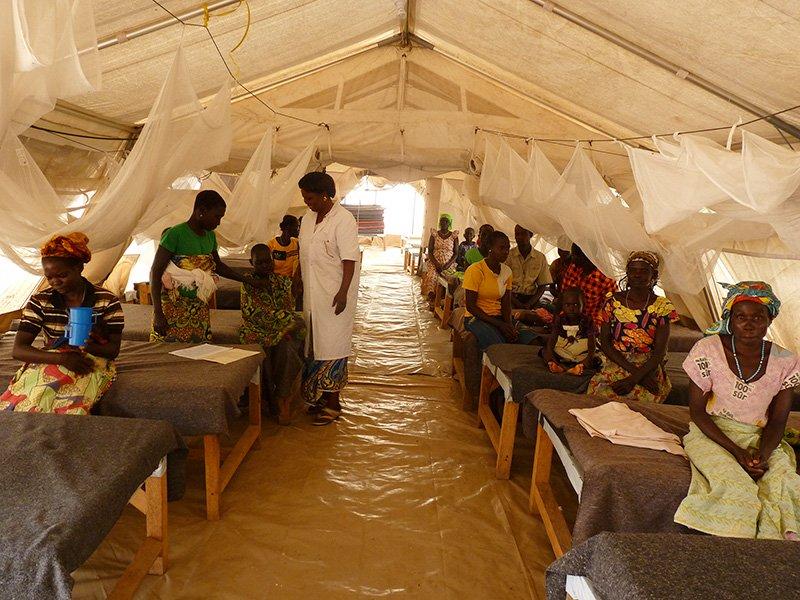
Medecins Sans Frontieres emergency programme manager Trish Newport said some health facilities are already overwhelmed by suspected cases and lack enough protective equipment.
“We are full of suspect cases. We don’t have any space,” health facilities have told MSF, Newport said, describing the situation as increasingly severe.
The first known case was a nurse who developed symptoms and died on April 24 in Bunia, the capital of Ituri province. The nurse’s body was later taken to Mongwalu, a gold-mining town where many cases have since been reported.
The UK government has announced up to £20 million in support to help contain the outbreak, including funding for frontline health workers, infection control and disease surveillance.
Ebola spreads through direct contact with bodily fluids and can cause severe bleeding, organ failure and death. Early symptoms can resemble malaria or typhoid, both common in DR Congo, making detection more difficult.
DR Congo has faced repeated Ebola outbreaks since the virus was first identified in 1976. This is the country’s 17th recorded outbreak, but Bundibugyo has been seen only rarely, with previous outbreaks in Uganda in 2007 and DR Congo in 2012.