
Jihadist fighters have set fire to dozens of vehicles on key roads leading to Mali’s capital, Bamako, as an al-Qaeda-linked group intensifies a blockade ahead of Eid al-Adha.
The vehicles, including fuel tankers, minibuses and trucks, were burned on a road about 45 km west of Bamako, according to videos verified by the BBC. No casualties were reported, with those inside the vehicles reportedly ordered to get out before the vehicles were torched.
The attack comes as Jama’at Nusrat al-Islam wal-Muslimin (JNIM), an al-Qaeda-linked jihadist group, expands pressure on Bamako through a fuel blockade imposed last year and tightened after attacks on the capital last month.
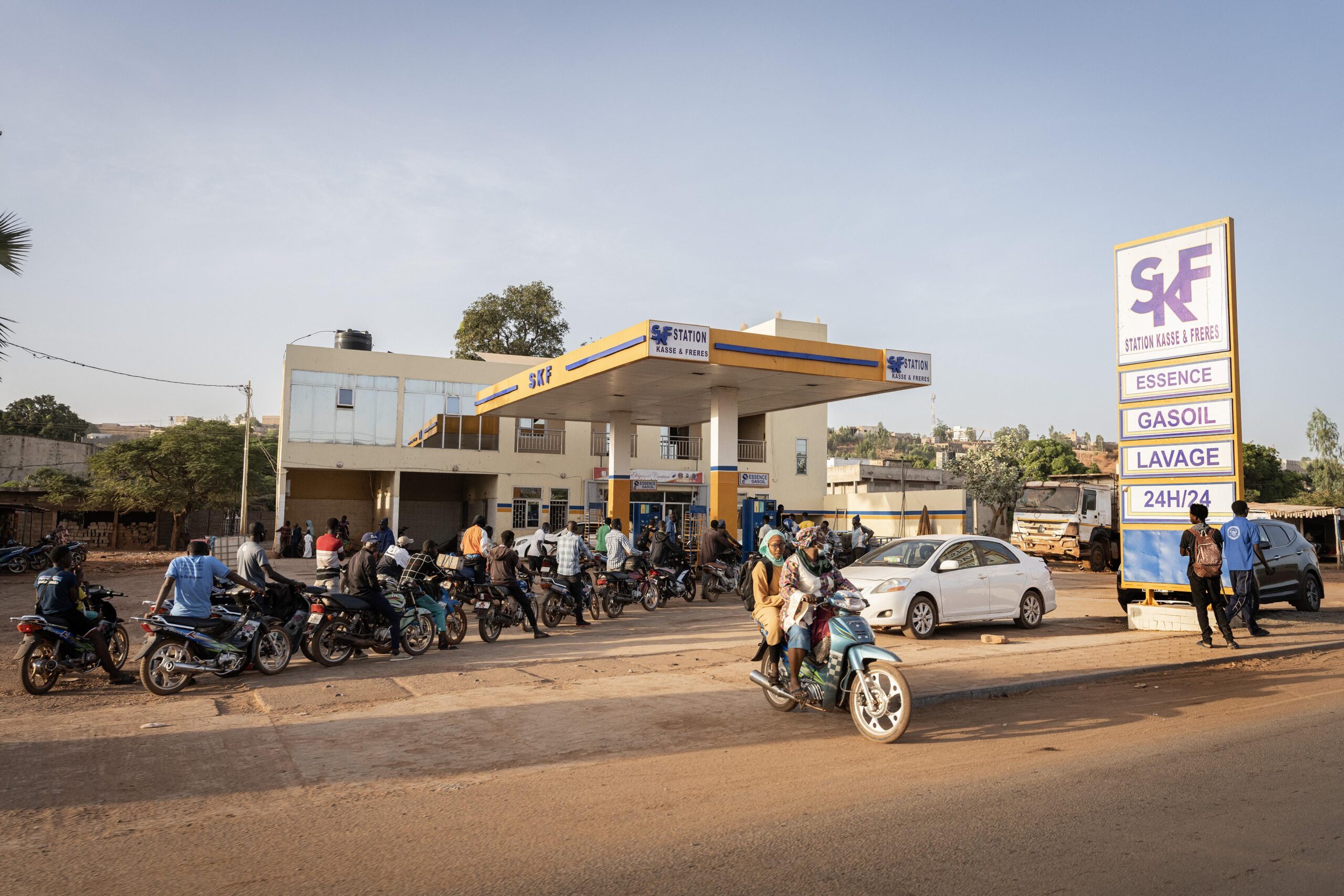
Mali, a landlocked country, relies heavily on fuel transported from coastal neighbours including Senegal and Ivory Coast. Since last year, militants have kidnapped drivers and burned more than 100 fuel trucks on major highways, although some convoys have reached Bamako under military escort.
The blockade has triggered shortages and pushed up prices of basic goods as Malians prepare for Eid al-Adha next week. Residents say food and livestock prices have risen sharply, while the movement of sheep and other animals into the capital has become increasingly difficult.
A sheep seller told BBC Afrique that many traders were stuck on the road and feared jihadists would seize their animals. Others in Bamako said they would remain in the capital rather than risk travelling to home villages for the holiday.
The BBC said it verified the latest videos by matching buildings visible in the footage with satellite imagery and checking for signs of artificial manipulation. NASA’s Firms satellite fire-detection platform also recorded a heat signature at the same location on Tuesday.
Analysts say the fuel blockade is aimed at strangling Mali’s economy and undermining the military government led by Gen. Assimi Goïta, who seized power in 2020 after promising to restore security.
Goïta’s government has turned to Russian forces, including Africa Corps, which evolved from the Wagner Group, to help fight Islamist militants. Russian helicopters have been seen escorting fuel and goods convoys into Bamako, while Africa Corps has posted daily patrol videos in recent weeks.
Despite the military campaign, attacks on fuel convoys have continued. In January, the junta appointed Brig. Gen. Famouké Camara to lead a special operation against the blockade, but the latest vehicle burnings show the route into Bamako remains vulnerable.
The crisis has added to pressure on Mali’s military rulers, who initially enjoyed broad support after taking power but have struggled to contain the insurgency. Much of northern and eastern Mali remains unstable, while jihadist attacks have expanded into areas closer to the capital.
Last month, Tuareg separatists and JNIM launched coordinated attacks across the country, including near Bamako, deepening concerns over the junta’s ability to secure supply routes and protect civilians.