
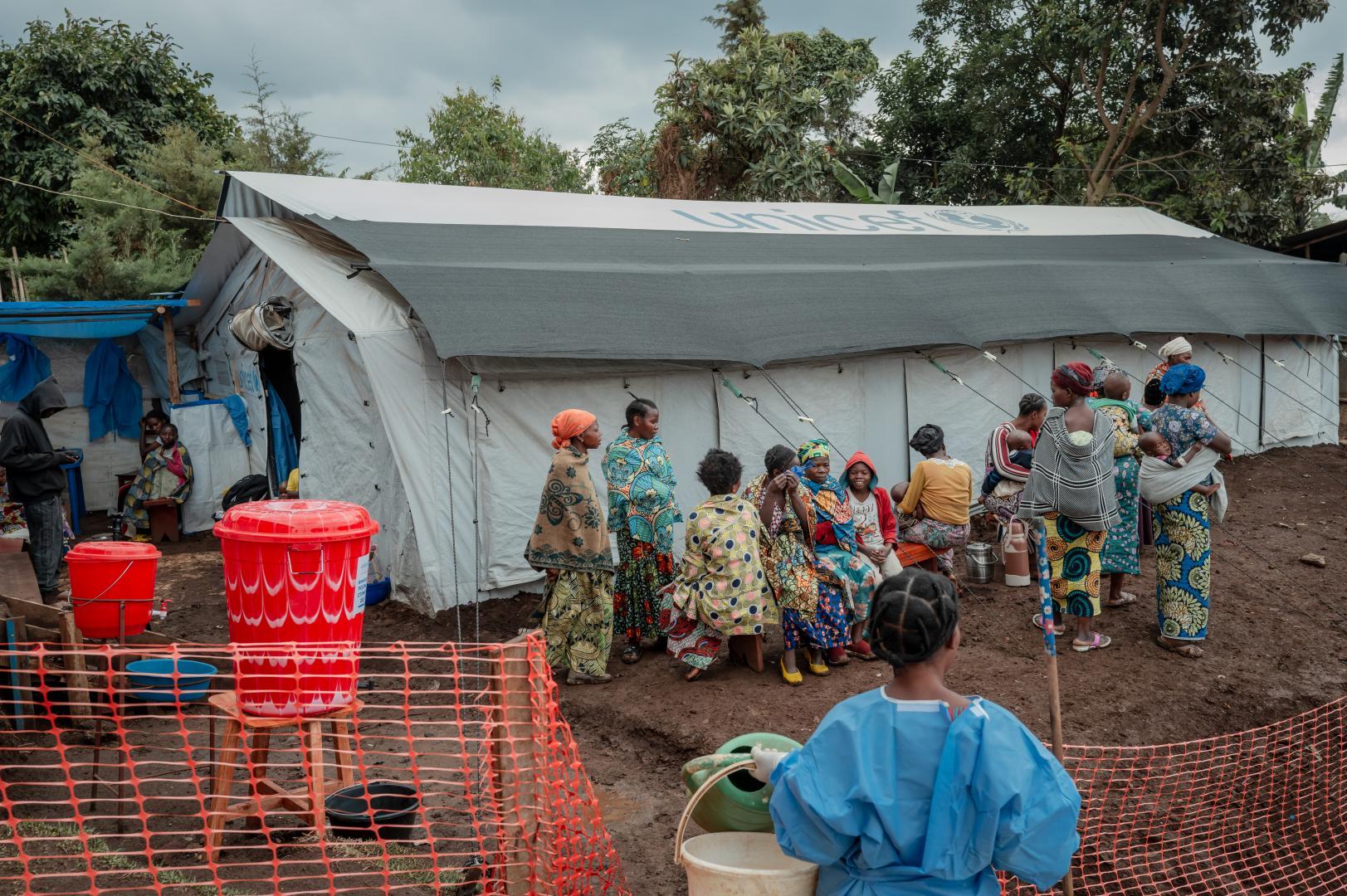
A confirmed Ebola case in eastern Democratic Republic of Congo’s South Kivu province has raised fears that the outbreak is spreading far beyond its original epicentre, as health workers struggle with insecurity, shortages and public mistrust.
The Alliance Fleuve Congo, a rebel coalition that includes the Rwanda-backed M23 movement, said a 28-year-old patient had died in a rural area near Bukavu, the provincial capital. The group said the patient had travelled from Kisangani in northern DRC but did not provide further details about his movements.
The case was detected hundreds of kilometres from Ituri province, where health experts believe the outbreak circulated undetected for about two months before it was identified last week.
According to DRC health ministry figures released Thursday, the outbreak has resulted in 160 suspected deaths out of 670 suspected cases. Sixty-one cases have been confirmed. Two cases have also been reported in neighbouring Uganda, which said it would suspend flights to DRC within 48 hours as a precaution.
The World Health Organization declared the outbreak, caused by the Bundibugyo strain of Ebola, a public health emergency of international concern over the weekend. There is currently no approved vaccine for that strain.
South Kivu health spokesperson Claude Bahizire said earlier Thursday that two suspected cases had been identified in the province, including the fatal case. The second patient was placed in isolation while awaiting test results.
The spread into rebel-held areas has complicated response efforts in eastern DRC, where armed groups control large territories and aid access remains limited. A case was also confirmed last week in Goma, the capital of North Kivu province, which is also under M23 control.
In Ituri’s Rwampara town, one of the outbreak’s hotspots, clashes erupted Thursday after relatives of a suspected Ebola victim disputed the cause of death and demanded the body. Witnesses said protesters gathered outside a hospital and set fire to tents operated by the medical charity ALIMA, prompting police to fire warning shots and tear gas.
Health workers faced hundreds of attacks by armed groups and angry civilians during DRC’s 2018–2020 Ebola outbreak, the second-deadliest on record, which killed nearly 2,300 people.
Jane Halton, chair of the Coalition for Epidemic Preparedness Innovations, warned that the confirmed cases so far were likely only “the top of the iceberg.” CEPI is assessing possible vaccine candidates, though Halton said developing a safe and effective vaccine quickly would be difficult.
Aid groups have also warned of shortages of basic supplies, with some blaming foreign aid cuts for weakening local health services and disease surveillance.
Britain said Thursday it would provide up to 20 million pounds, or about $27 million, to support the response. The United States has committed $23 million and said it would help open up to 50 clinics in DRC and Uganda, though Uganda said it had not been consulted on the plan.
Washington has also tightened travel measures. The State Department said Americans who have been in DRC, Uganda or South Sudan within the past three weeks must return to the United States through Washington Dulles International Airport for enhanced screening.
Ugandan Information Minister Chris Baryomunsi accused the U.S. of overreacting by imposing restrictions on travellers from Uganda, DRC and South Sudan, saying Uganda had experience containing Ebola outbreaks.
The African Union said the India-Africa Forum Summit, scheduled for May 28–31 in New Delhi, would be rescheduled because of the emerging public health situation on the continent.