
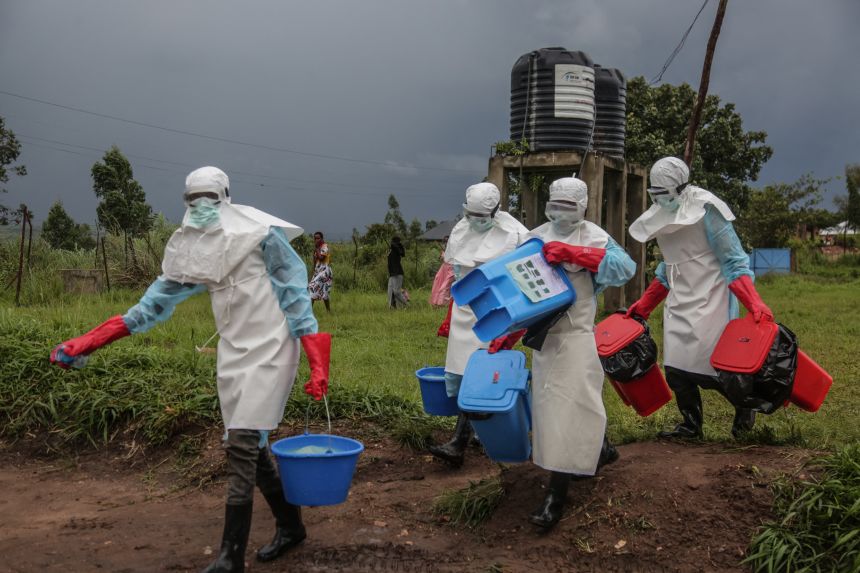
The Ebola outbreak in the Democratic Republic of Congo is spreading faster than response efforts, with 220 suspected deaths now reported, the head of the World Health Organization said on Monday.
WHO Director-General Tedros Adhanom Ghebreyesus said more than 900 suspected Ebola cases have been identified in DR Congo, including 101 confirmed cases, as health teams struggle to contain the epidemic in the country’s conflict-hit east.
“We are playing catch-up,” Tedros said, warning that delayed detection had allowed the outbreak to expand before containment measures could fully take hold.
The outbreak, caused by the rare Bundibugyo strain of Ebola, was declared in DR Congo’s Ituri province on May 15. WHO later classified the epidemic in DR Congo and Uganda as a public health emergency of international concern, while saying it did not meet the criteria of a pandemic emergency.
The latest figures mark a sharp rise from WHO’s May 21 update, when DR Congo had reported 746 suspected cases and 176 suspected deaths. WHO said at the time that infections had expanded beyond Ituri into North Kivu and South Kivu.
Uganda has also confirmed seven Ebola cases, after two more infections were reported on Monday among health workers at a private facility in Kampala. Authorities there are tracing contacts, while WHO has urged neighboring countries to strengthen preparedness because of the risk of cross-border spread.
The Bundibugyo strain poses particular challenges because there is no approved vaccine or specific treatment, though WHO says work is ongoing to test possible candidates. The agency says early supportive care can improve survival, but insecurity, population movement and fragile health services are complicating the response.
Aid operations have also been disrupted by attacks on health facilities in eastern DR Congo. Reuters reported Monday that Ebola patients fled after violence at treatment sites, further hampering containment efforts in affected areas.
WHO says it is scaling up surveillance, contact tracing, case management, delivery of supplies, community engagement and cross-border preparedness in both DR Congo and Uganda. Tedros is expected to travel to DR Congo with WHO emergencies official Chikwe Ihekweazu to support the response.