
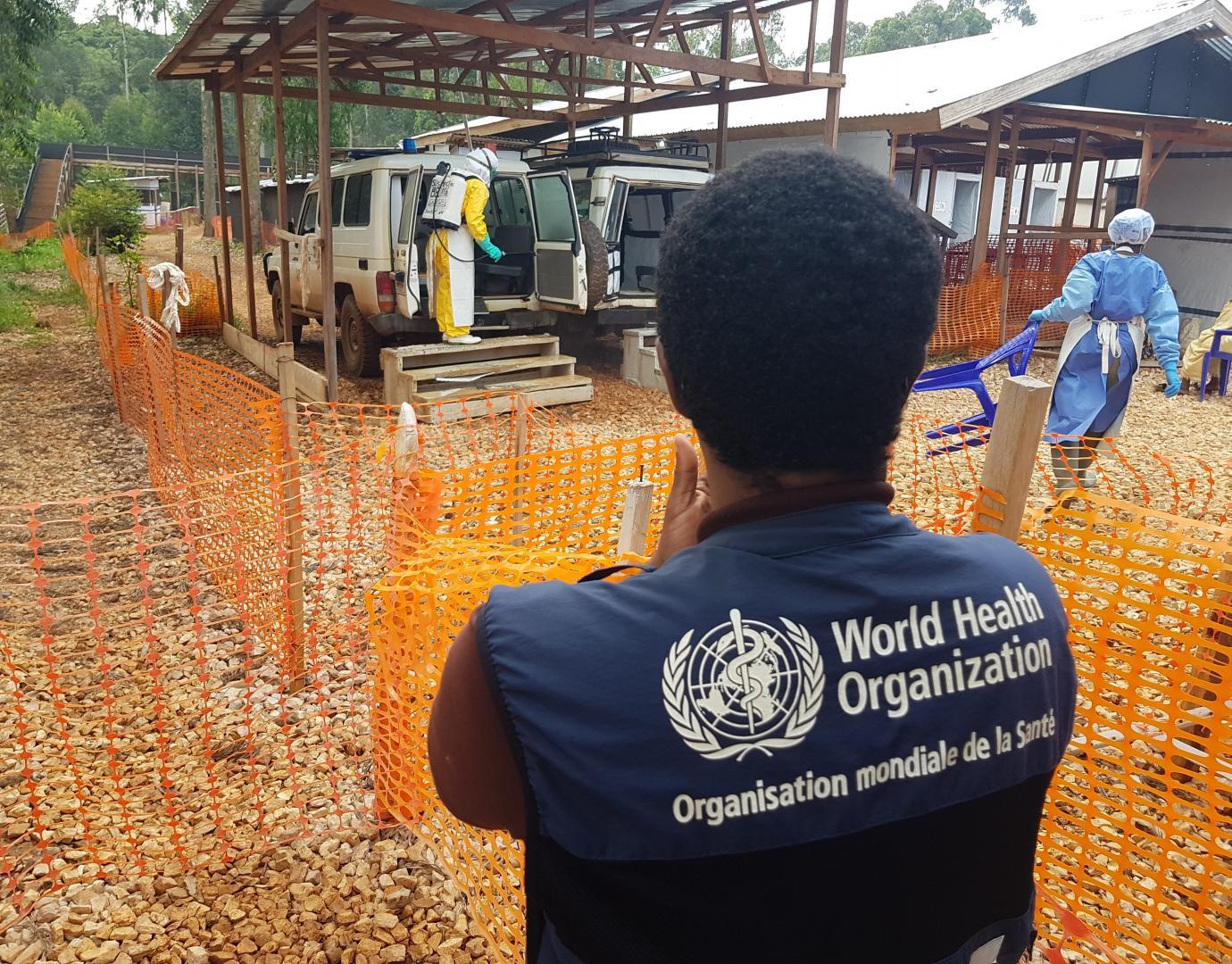
The World Health Organization said Friday it is investigating 906 suspected Ebola cases in the Democratic Republic of Congo, including 223 suspected deaths, as an outbreak of the rare Bundibugyo strain continues to spread in the country’s east.
The outbreak is ongoing in DRC, with cases also reported in neighbouring Uganda. WHO said the situation remains under close investigation as health authorities work to expand testing, trace contacts and improve surveillance in affected areas.
In DRC, officials have confirmed 125 Ebola cases, including 17 deaths, across Ituri, North Kivu and South Kivu. Uganda has also recorded confirmed cases, including infections imported from DRC, though WHO said there has been no evidence of community transmission in Uganda.
Uganda’s health ministry later reported nine confirmed cases.
The outbreak likely began about two months before it was formally detected, WHO said earlier in May. The delay has raised concern among health experts because the virus had time to spread across a densely populated region, complicating efforts to identify and isolate contacts.
WHO has declared the outbreak a public health emergency of international concern. The Bundibugyo strain is especially worrying because there is currently no approved vaccine against it.
Anais Legand, from WHO’s High Threat Pathogens Team, said the death rate among confirmed cases is estimated at between 30% and 50%, though she stressed that the figures remain preliminary.
“It’s huge. It means that up to five out of 10 people are likely to die,” Legand said, adding that early medical care could help reduce fatalities.
WHO said the first recovered patient in DRC had been discharged from a health centre after receiving two negative tests. Legand said she hoped more patients would recover as access to early care improves.
Health authorities are also working to clear a backlog of samples from suspected cases. WHO said testing capacity is being strengthened and expects most pending samples to be processed in the coming days.
Legand said the number of suspected cases is likely to rise as surveillance improves, but added that this could indicate that detection systems are beginning to work more effectively.
She said it was too early to determine whether the outbreak had passed its peak.
“As for whether the peak has passed, investigations are still ongoing. I don’t think we can say that at this stage,” she said.