
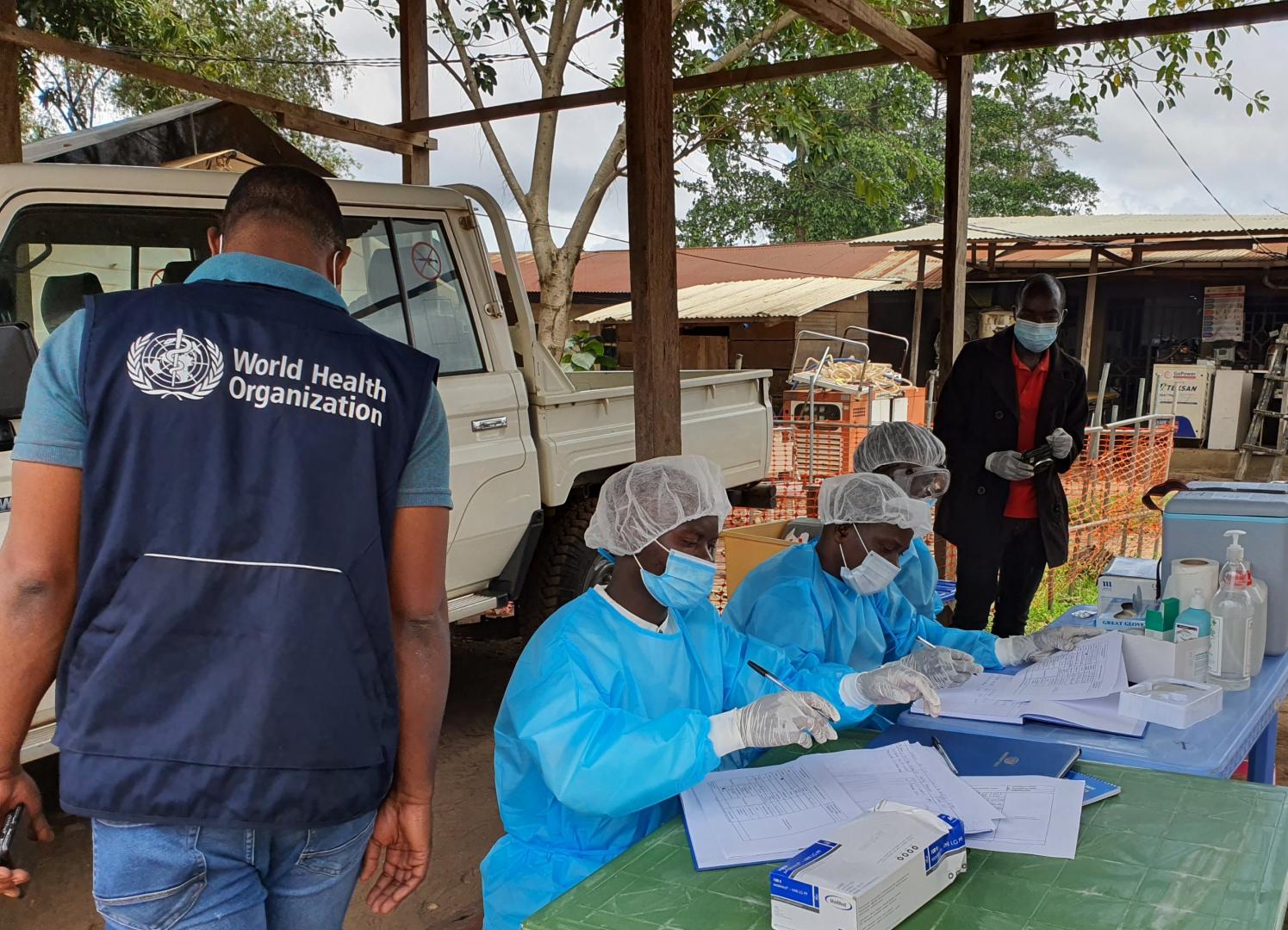
The World Health Organization said Wednesday that efforts to contain the Ebola outbreak in Democratic Republic of Congo are beginning to catch up, after confirmed cases rose to 344 and confirmed deaths reached 60.
WHO Director-General Tedros Adhanom Ghebreyesus said the outbreak had gained a significant early advantage, but that response teams were making progress under the leadership of Congo’s government.
“The outbreak had a big head start, and we’re still behind, but under the leadership of the government of DRC, we’re catching up,” Tedros told a press briefing.
The outbreak, caused by the Bundibugyo strain of Ebola, has also spread to neighbouring Uganda, where 15 cases and one death have been confirmed, according to the WHO.
Officials said access to testing has improved, allowing hundreds of suspected Ebola cases to be ruled out. The agency said a backlog had developed because the most commonly used Ebola tests do not detect the Bundibugyo strain involved in the current outbreak.
Abdirahman Mahamud, WHO’s director of health emergency alert and response operations, said laboratories had carried out 1,445 tests, clearing almost all of the earlier backlog. He said 116 suspected cases were still awaiting testing, while teams were also reviewing 220 suspected deaths to determine whether they were likely caused by Ebola.
The WHO said six people had recovered in Congo and two in Uganda, showing that patients can survive if they receive care early and seek treatment as soon as symptoms appear.
Despite the progress, the agency warned that major challenges remain, including expanding testing capacity, improving contact tracing and overcoming supply disruptions caused by blanket travel restrictions imposed by some countries.
Tedros said only about 45% of contacts had been followed up, far below the level needed to stay ahead of the outbreak. He said that figure must rise above 90% to bring transmission under control.
The WHO also said the outbreak may have begun as early as January, although teams are still investigating its origins. Tedros said the immediate priority was containing the spread of the disease.
WHO officials said the agency needs at least $115 million over the next three months for the response, with about 35% of that amount currently funded.
Chikwe Ihekweazu, WHO’s emergencies chief, said a broader response and fundraising plan would be launched Friday with partners including the Africa Centres for Disease Control and Prevention and the governments of Congo and Uganda.