
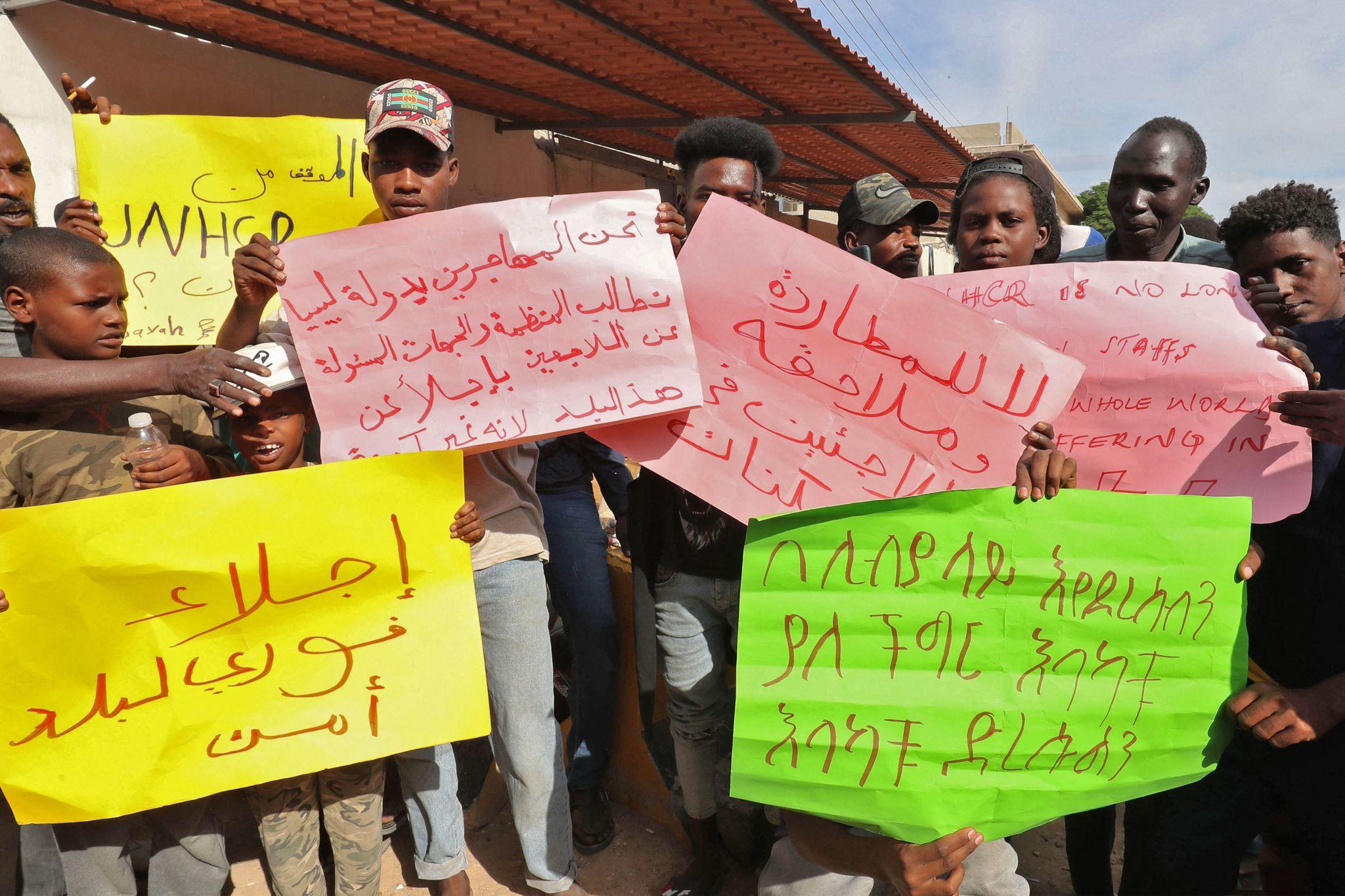
Hundreds of Libyan protesters blocked the entrance to the U.N. refugee agency’s office in Tripoli on Thursday, in the latest and largest demonstration against migrants in the country.
The protesters gathered outside UNHCR’s main office in the Sarraj neighbourhood of the capital, chanting slogans against the presence of migrants and rejecting what they described as any plan to settle them in Libya.
Demonstrators erected tents outside the building and later used a truckload of sand to block the main gate. Some carried signs calling for migrants to be removed from the country, while others marched toward the office of the U.N. mission in Libya.
Libya has become a major transit route for migrants and refugees since the NATO-backed uprising that toppled Muammar Gaddafi in 2011. Hundreds of thousands of people, many from sub-Saharan Africa, have travelled through the country while fleeing conflict, poverty or unemployment, with some attempting dangerous journeys across the Mediterranean to Europe.
The country’s oil-based economy has also drawn migrants seeking work, particularly in low-paid sectors such as construction and cleaning.
The protest reflected growing public frustration in Libya, where years of political division, insecurity and economic pressure have fuelled anger toward migrant communities. Some Libyans accuse migrants of contributing to crime and social problems, though officials have also pointed to the country’s wider political and security failures.
One protester, Ahmad al-Ghasa, said migrants were sleeping in the streets and blamed them for break-ins and assaults. “These phenomena were not present in Libyan society before,” he said.
UNHCR did not immediately respond to a request for comment.
The United Nations estimates that Libya, a country of about 7 million people, hosts more than 900,000 migrants.
Taher al-Baour, acting foreign minister in Libya’s internationally recognised government, said on Wednesday that there was no plan to settle migrants permanently in the country.
“Libya is not capable of handling these numbers,” he told Libya Alahrar television, while adding that Libyans should not blame others for the political and security problems that have contributed to the rise in migrant numbers.