
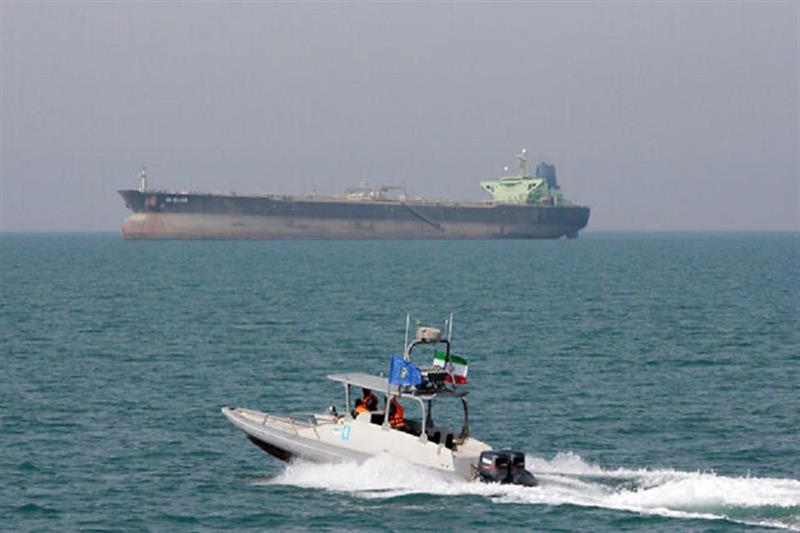
The European Union on Monday imposed sanctions on two Iranian figures and a unit of the Islamic Revolutionary Guard Corps over actions it said threatened freedom of navigation in the Strait of Hormuz, a critical waterway for global oil shipments.
The measures mark the first time the bloc has used its new sanctions framework aimed at responding to restrictions on maritime traffic.
In a statement, the EU said it had added the IRGC Navy’s Hormozgan Provincial Command to its sanctions list, along with Mohammad Akbarzadeh, deputy commander for political affairs of the IRGC Navy, and Hamid Hosseini, a representative of Iran’s Oil, Gas and Petrochemical Products Exporters’ Union.
The Strait of Hormuz is one of the world’s most important maritime chokepoints, with around one-fifth of global oil flows passing through the narrow passage.
Iran rejected the EU decision, with Deputy Foreign Minister Kazem Gharibabadi describing the move as “political and hypocritical.” He said Tehran would continue to defend what it views as its sovereignty over the strategic strait.
The EU said Iran moved to close the Strait of Hormuz after U.S.-Israeli strikes on Iran began on February 28.
“Iran’s actions are unacceptable,” EU foreign policy chief Kaja Kallas said at a news conference in Cyprus. “In response, member states have approved sanctions against Iranian entities and individuals involved in disrupting transit through the Strait of Hormuz.”
Kallas said the decision was the first use of the EU’s new freedom of navigation sanctions regime, adding that the bloc would use it again “when necessary.”