
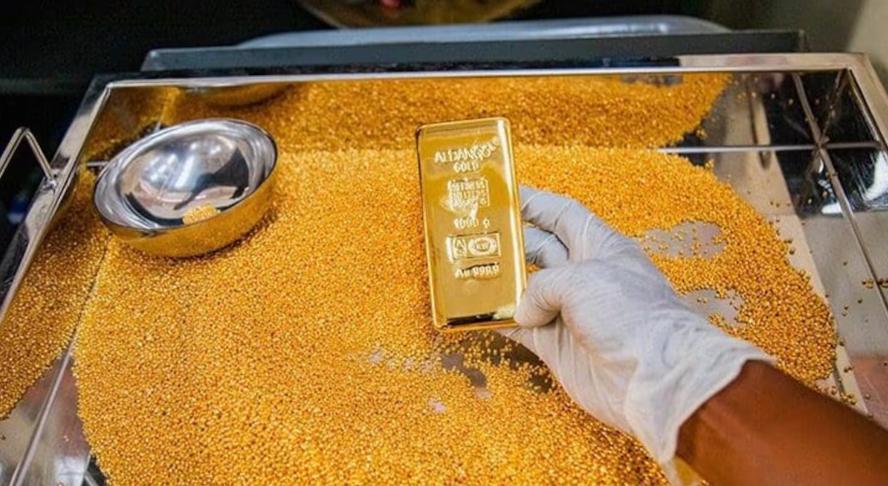
Guinea has banned the export of unrefined gold as part of a wider effort to keep more value from its mineral wealth inside the country and strengthen domestic processing.
The measure, which takes effect immediately, was announced after President Mamadi Doumbouya met with industrial and artisanal gold producers, traders and buyers. The government says the move is aimed at boosting the economy, creating jobs and ensuring that Guinea benefits more directly from its natural resources.
“Guinea will now require its gold to be processed within its own borders. Raw gold will no longer leave Guinea,” Doumbouya said, arguing that other countries have long captured the economic benefits of refining, processing and trading African raw materials.
Guinea is Africa’s sixth-largest gold producer, according to the World Gold Council, and gold remains one of the country’s main exports. Authorities say the country shipped more than 22 tonnes of gold in the first quarter of this year.
A new gold refinery nearing completion in the capital, Conakry, is expected to play a central role in the policy. The facility reportedly has an annual capacity of 250 tonnes, enough to handle Guinea’s current level of production.
Foreign companies operating in Guinea have been warned that violations of the ban could result in the loss of mining licences or the termination of contracts.
The decision follows similar moves by other African governments seeking to increase local processing and reduce dependence on raw mineral exports. Tanzania and Uganda already restrict exports of unprocessed minerals and metals including gold and copper, while Ghana plans to ban raw gold exports by 2030. Zimbabwe, Africa’s top lithium producer, has also announced a ban on lithium concentrate exports from 2027.
Guinea is also the world’s largest producer of bauxite, the ore used to make aluminium, making the country one of Africa’s most important mining economies.