
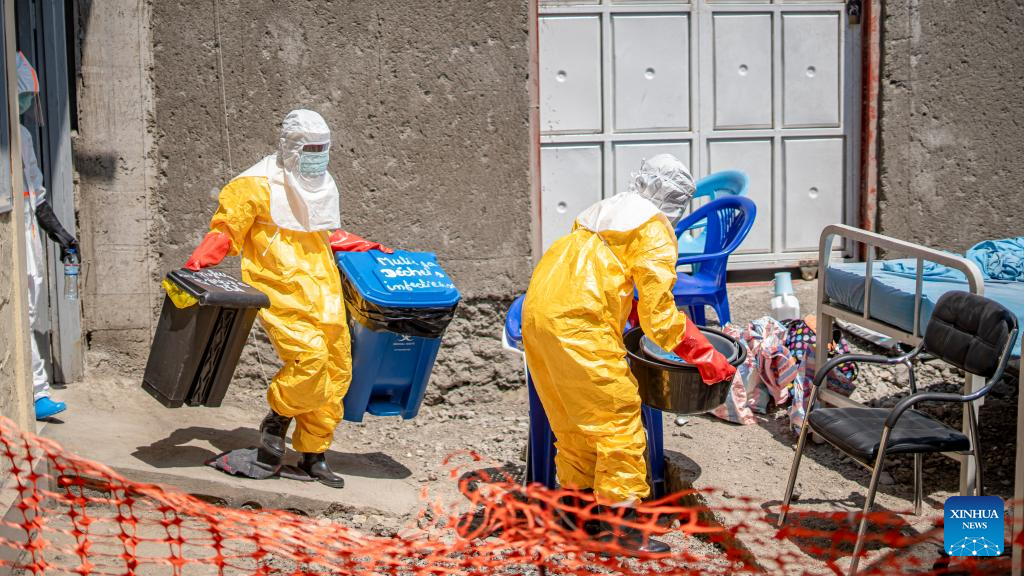
Ebola cases in the Democratic Republic of Congo have risen to more than 1,000, marking the fastest first-month spread recorded in any outbreak of the disease, as health authorities race to contain infections that have also crossed into neighbouring Uganda.
Congo has reported 1,048 confirmed cases, including 267 deaths, according to the latest government figures cited by Reuters on Tuesday. The outbreak, declared on May 15, has spread rapidly through eastern Congo, including in urban centres and overcrowded displacement camps where poor sanitation, conflict and limited health services have complicated the response.
The World Health Organization said the current outbreak has recorded the highest number of confirmed cases in the first month of any Ebola outbreak, a sign that the virus may have been spreading undetected before authorities formally declared the emergency.
The outbreak involves the Bundibugyo strain of Ebola, a rare form of the virus for which there is no approved vaccine. Health officials say the early spread into cities such as Bunia and Mongbwalu has made containment more difficult than in outbreaks that begin in remote rural areas.
Cases have also been reported in at least three displacement camps in eastern Congo. Reuters reported on Monday that the virus had killed an 18-month-old girl in a third camp after she suffered symptoms for more than a week and came into contact with more than 100 people.
Aid groups have warned that crowded camps for people fleeing violence in eastern Congo could become major transmission zones if testing, isolation and sanitation efforts do not expand quickly. The International Organization for Migration has reported at least 25 cases and 14 deaths in displacement camps, while aid workers have raised concern over suspected Ebola deaths among children.
Uganda, which borders eastern Congo, has reported 20 confirmed cases and two deaths as of June 23, according to the European Centre for Disease Prevention and Control. Most of Uganda’s cases have travel links to Congo, though several were linked to local transmission. The most recent case was reported on June 21.
WHO officials said there were some signs of progress, including expanded Ebola treatment capacity, with more than 500 beds now available, and lower community resistance in some affected areas. But the outbreak remains under severe pressure from insecurity, population movement and weak health infrastructure.
The WHO declared the Congo and Uganda outbreak a public health emergency of international concern in May, warning that countries bordering Congo were at high risk and urging rapid regional coordination.
The outbreak has also affected wider regional planning. In Kenya, Health Minister Aden Duale said construction of a U.S.-backed Ebola quarantine facility near Nanyuki had been halted after a court found him in contempt for allowing work to continue despite an earlier suspension order.