
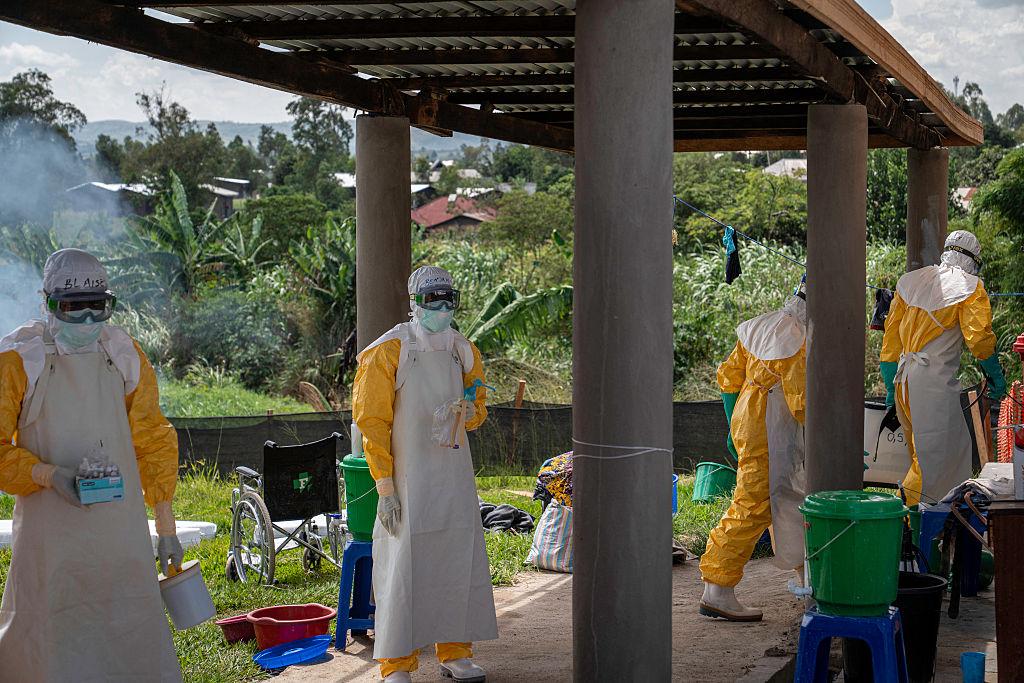
The Democratic Republic of Congo has reported a further rise in confirmed Ebola cases, with government data showing 1,333 infections and 399 deaths as of Tuesday, deepening concern over one of the country’s most serious health emergencies in years.
The latest figures mark an increase from 1,307 confirmed cases and 377 deaths reported earlier in the day, underlining the speed at which the outbreak continues to expand.
Health authorities say the confirmed cases have so far been recorded in the eastern provinces of Ituri, North Kivu and South Kivu, areas already strained by insecurity, displacement and limited access to healthcare.
The outbreak, declared on May 15, is caused by the Bundibugyo strain of Ebola, a rarer form of the virus for which there is currently no licensed vaccine or approved treatment. The case fatality rate, based on the latest confirmed figures, is now close to 30 percent.
Congolese health teams are also tracing possible exposure in Tshopo and Haut-Uele provinces, raising fears that the virus could spread beyond the eastern outbreak zone. Reuters reported that concerns grew after the body of a pregnant woman who died of Ebola in Ituri’s Niania health zone was transported hundreds of kilometres to Kisangani in Tshopo before testing positive.
Authorities are also following contacts linked to two people who reportedly left isolation in Niania for Haut-Uele, a province bordering South Sudan and the Central African Republic.
The response has been complicated by armed conflict, community mistrust and difficult access to affected areas. Eastern Congo has long been affected by militia violence and mass displacement, conditions that make contact tracing, safe burials and patient isolation harder to enforce.
The United Nations Development Programme warned this week that the outbreak could push nearly one million more people into poverty and cost Africa billions of dollars if it spreads further, urging governments and donors to scale up both emergency health measures and support for vulnerable communities.
Ebola is a severe and often fatal disease transmitted through direct contact with the blood, bodily fluids or tissues of infected people or animals. Outbreak control typically depends on rapid testing, isolation of suspected cases, contact tracing, safe burials and public trust in health teams.