
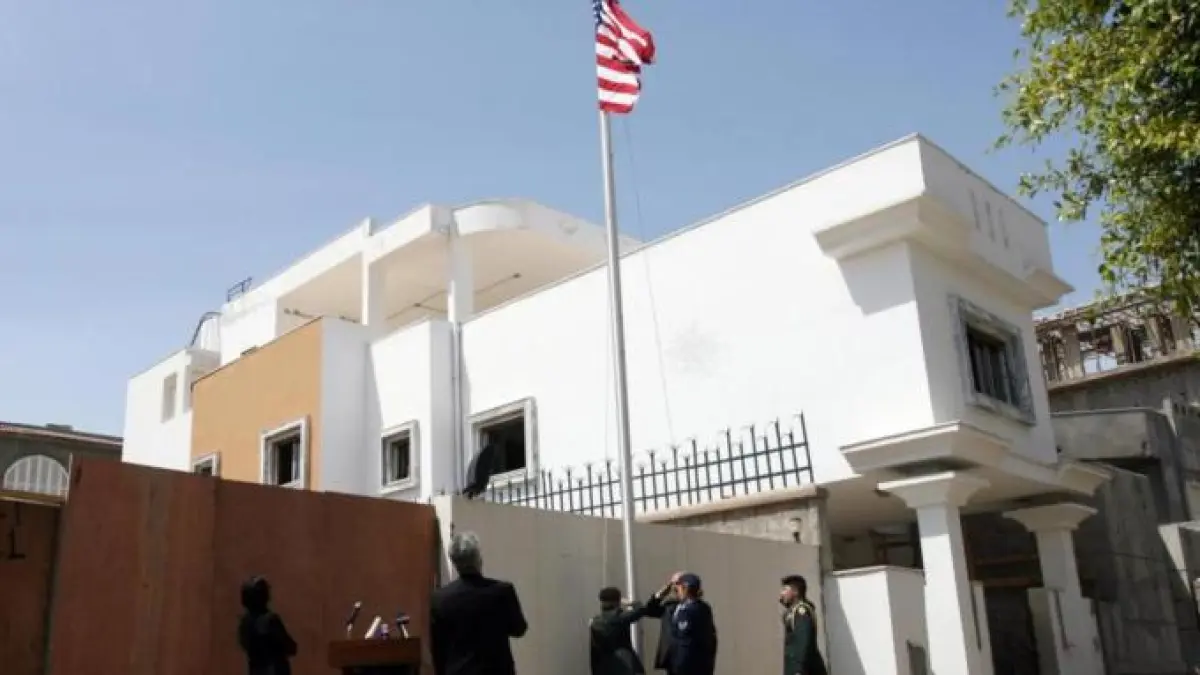
The US State Department notified Congress of plans to breathe life back into its shuttered diplomatic mission.
A proposed $41 million surge in funding aims to restore America’s formal, physical presence in the fractured North African nation.
This financial injection will fortify security at a Tripoli satellite office, anchoring a permanent and secure base for future diplomats.
The strategic gambit seeks to counter rising Russian influence and secure crucial Mediterranean energy markets and migration corridors.
American diplomats have operated remotely from neighboring Tunisia and Malta since violent conflict forced the embassy to close in 2014.
Libyan leaders from competing eastern and western factions recently brokered talks with high-ranking Washington officials to discuss the transition.
The diplomatic push mirrors recent Trump administration efforts to reclaim influence by reopening embassies in Caracas, Venezuela and Damascus, Syria.
However, the unfolding Mediterranean mission unfolds beneath a shadow of heightened warnings regarding potential Iranian-related threats to American assets.
Israel’s ongoing regional conflicts and military posturing continue to heavily influence the broader Middle Eastern security landscape facing these installations.