
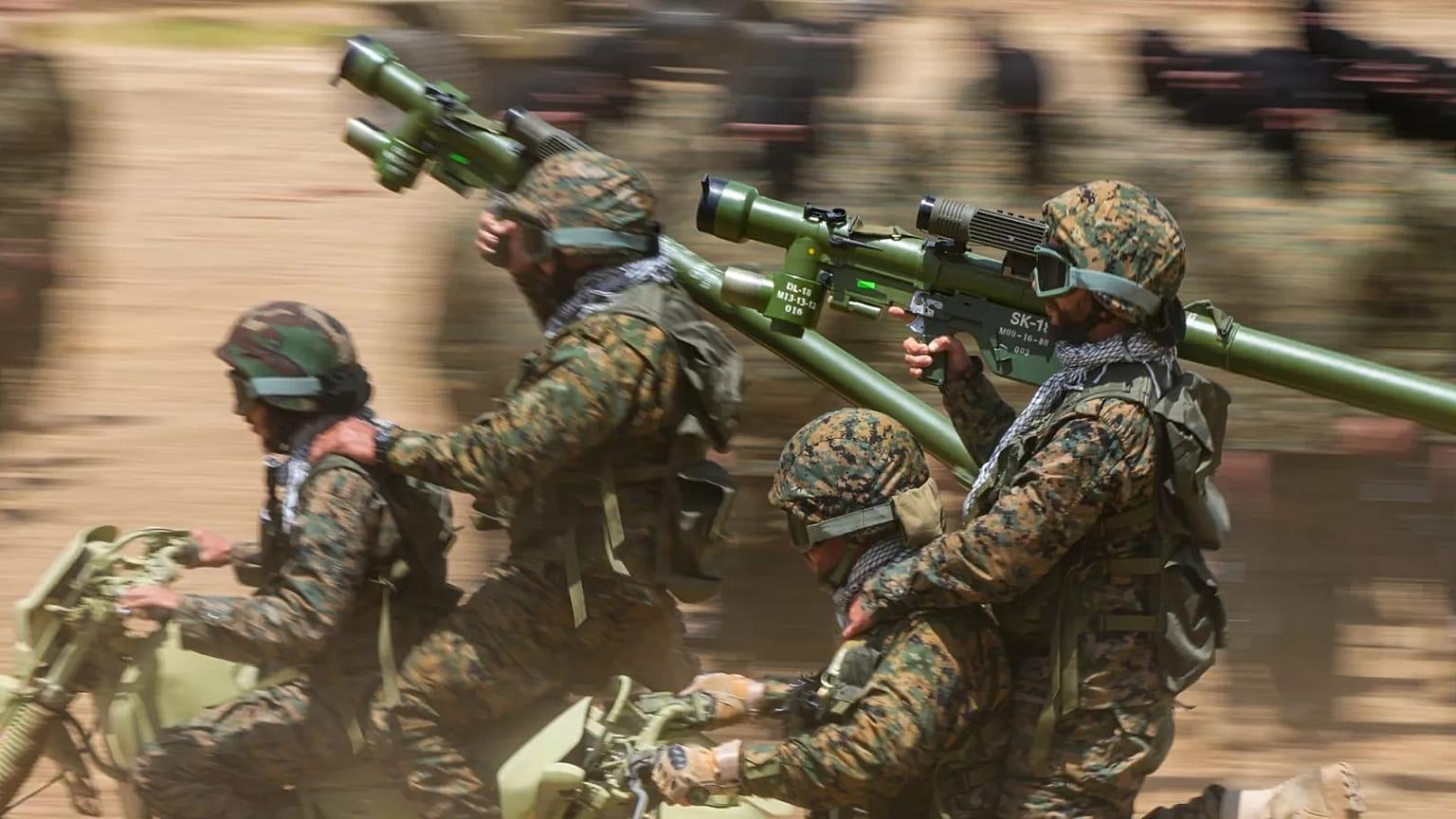
Hezbollah is facing mounting military and logistical pressure in southern Lebanon as weapons supplies decline, recruitment slows and the Lebanese army tightens its control over key roads and border areas, according to Lebanese military and political sources.
The sources told Erem News that Hezbollah was struggling to deliver weapons, supplies and other logistical support to several positions described as increasingly isolated after traditional supply routes were disrupted.
They said the Lebanese army had expanded its deployment along major roads, secondary routes and village entrances as part of preliminary measures linked to the implementation of a security framework in the south.
Weapons smuggling from Syria had also fallen by about 30% over the past two months, the sources claimed, amid closer security and intelligence coordination between Lebanese forces and authorities in Damascus.
Iranian advisers seek to rebuild capabilities
According to the report, officers linked to Iran’s Islamic Revolutionary Guard Corps have been working from several Hezbollah-controlled locations in southern Lebanon.
Their activities reportedly include improving the range and targeting accuracy of Hezbollah’s remaining missiles and drones, as well as retraining personnel who previously handled food, water and routine supply deliveries to perform more direct military roles.
The measures are intended to compensate for losses suffered during recent Israeli strikes, including attacks that destroyed weapons depots, tunnel networks and other military infrastructure.
A Lebanese military source said Hezbollah units in the south were experiencing shortages of certain weapons following tighter surveillance of smuggling routes extending from Iraq through Syria and into Lebanon.
Iranian experts were therefore concentrating on upgrading existing missiles and drones rather than relying on the delivery of significant quantities of new weapons, the source added.
Shortage of fighters
Hezbollah is also reportedly struggling to recruit and deploy new fighters in southern Lebanon.
A senior Lebanese political source said tighter screening of civilians returning to border villages had made it more difficult for Hezbollah members to enter the area while posing as displaced residents.
The group’s financial problems were also affecting its ability to pay salaries, benefits and compensation, weakening recruitment efforts at a time when it is attempting to replace fighters lost during recent confrontations with Israel.
The Lebanese army’s expanded presence in the south is said to be part of security arrangements linked to the implementation of an agreement with Israel and coordinated with the United States, particularly in areas being used to test new deployment and monitoring procedures.
Political pressure intensifies
The reported military difficulties come as political pressure on Hezbollah continues to grow.
Lebanese Foreign Minister Youssef Rajji recently described Hezbollah as Iranian in its identity and said it could not be treated as a purely Lebanese resistance organisation.
He argued that separating the group’s political and military wings was impossible while it retained its weapons, and said the Lebanese army was capable of extending state authority across the entire south.
Lebanese political researcher Qassem Youssef said Hezbollah had suffered significant damage to its military structure and field leadership over recent months, forcing it to focus on rebuilding its operational capabilities.
He said the group was facing not only logistical problems but also increasing dissatisfaction among parts of its traditional support base, particularly among Lebanese who believe its military decisions are increasingly shaped by Iranian interests rather than national priorities.
“The shortage of weapons and fighters reflects the scale of the attrition Hezbollah has suffered,” Youssef said, warning that a new confrontation with Israel under the current conditions could carry an exceptionally high cost.
He added that Hezbollah had lost several field units and commanders in the south, while repeated assassinations of senior military officials had weakened the cohesion of its command structure.
Pressure is also growing for Hezbollah to withdraw from advanced positions and transfer its facilities to the Lebanese army, Youssef said.
However, he argued that the final decision remained closely tied to Tehran, which continues to regard Hezbollah’s weapons as a central instrument of Iranian influence in Lebanon and across the wider region.
The claims concerning Hezbollah’s weapons stocks, recruitment difficulties and the presence of Iranian officers could not be independently verified.