
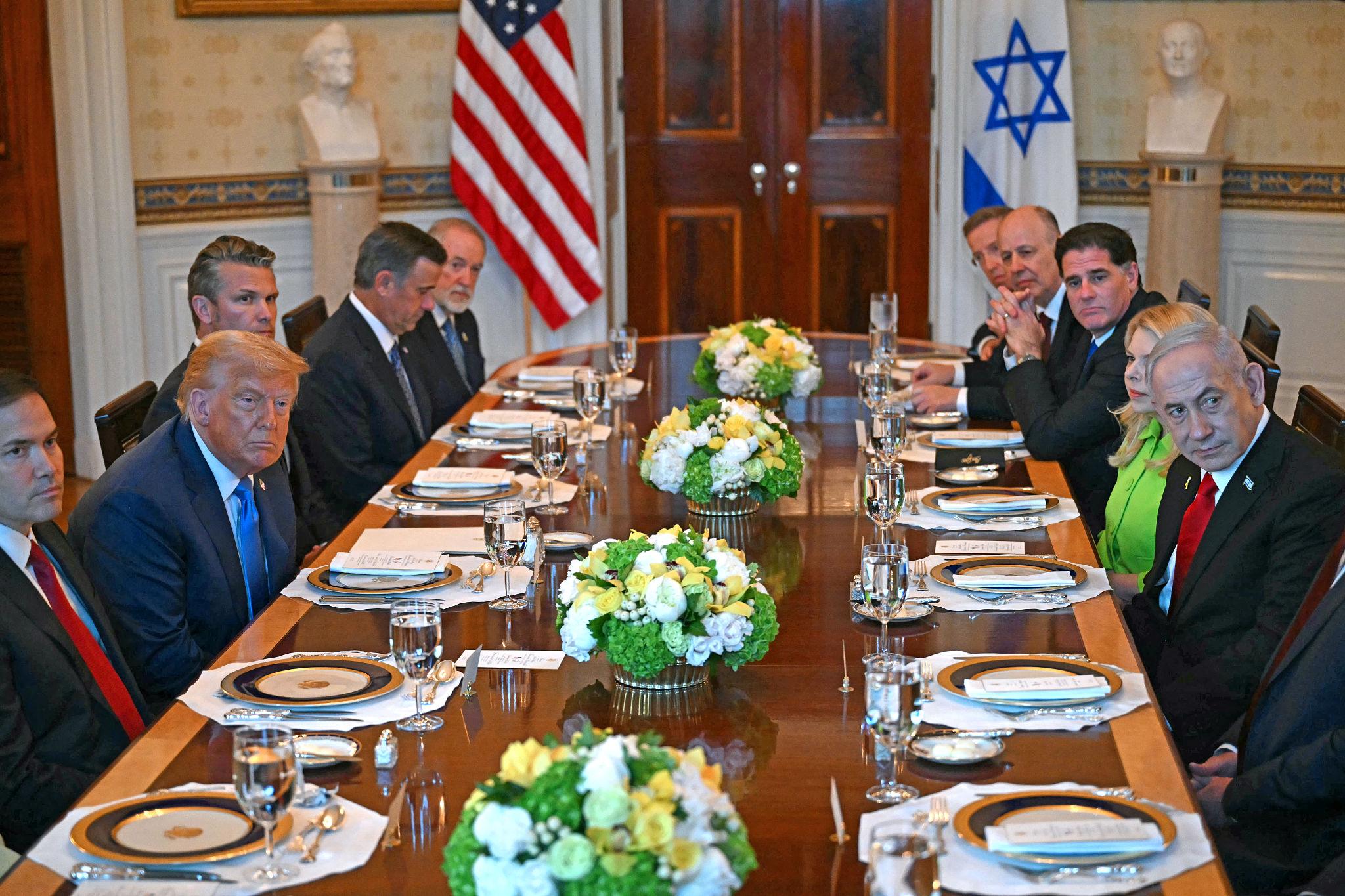
Israeli Prime Minister Benjamin Netanyahu’s discreet arrival at the White House, away from cameras and without the usual diplomatic ceremony, reflected growing tensions between Washington and Tel Aviv, according to diplomatic sources familiar with the visit.
Netanyahu reportedly entered through a rear entrance, while journalists and photographers were barred from covering his arrival. No official photo opportunity was held, and the customary joint press conference following a high-level summit was cancelled.
Sources said the unusually low-profile arrangements were intended to deny Netanyahu the political spectacle normally associated with a White House visit and turn the meeting into a private working session focused on US demands and regional red lines.
Resistance within Trump’s inner circle
According to senior Western diplomatic sources, the meeting initially faced quiet resistance from members of US President Donald Trump’s inner circle.
Officials were reportedly concerned that Netanyahu could use the presidential platform to strengthen his declining political position in Israel as his governing coalition faces mounting domestic pressure and possible electoral challenges.
The sources said the meeting was approved only after coordination involving US national security and military advisers.
Netanyahu was already in Washington to attend the funeral of Senator Lindsey Graham, allowing officials to arrange a brief, closed-door meeting without the ceremonial treatment normally given to an Israeli prime minister.
Warning against unilateral action on Iran
The discussions reportedly became tense when Trump and Netanyahu addressed Iran and the management of military operations across the region.
According to Western intelligence leaks cited in the report, Trump issued a direct warning against any unilateral or unexpected Israeli decision to launch extensive attacks on Iranian nuclear or strategic facilities.
Trump reportedly told Netanyahu that the United States was leading the broader regional strategy and would not accept military action that had not been coordinated with Washington.
The US president also raised concerns over dwindling American ammunition stocks amid simultaneous confrontations across several fronts.
American officials fear that an uncoordinated Israeli operation could further drain US military resources and undermine diplomatic efforts aimed at securing a wider regional settlement through back-channel negotiations.
Pressure over Gaza and the West Bank
The meeting also reportedly included sharp exchanges over Gaza and the occupied West Bank.
US officials pressed Netanyahu’s government to accept a clear timetable for Gaza and to give preliminary approval to the deployment of a multinational security force to administer the territory following an end to the fighting.
Washington also expressed frustration over Israeli attempts to expand agricultural settlement outposts and intensify security operations in the West Bank.
The Trump administration reportedly believes such policies are directly damaging US efforts to integrate Israel more deeply into the region and normalise its relations with Arab states.
Trump warned that continued Israeli actions in Gaza and the West Bank were placing US diplomacy in an increasingly difficult position and deepening Washington’s international isolation.
Rules for regional fronts
Despite the strained atmosphere, the meeting reportedly ended with a set of tactical understandings imposed by Washington and accepted by Netanyahu.
The agreements included the establishment of a senior joint military committee that would meet regularly to assess arms supplies, ammunition levels and potential targets.
The mechanism is intended to prevent escalation from spiralling out of control, particularly along Israel’s northern front.
Israel also reportedly agreed to comply with US-backed security arrangements in southern Lebanon and to immediately facilitate the unrestricted entry of international humanitarian aid convoys into Gaza.
The sources said Washington views greater humanitarian access as essential to easing the legal and diplomatic pressure facing the United States over its support for Israel.
A changing relationship
Political analyst Yassin al-Duwaish said the secrecy surrounding Netanyahu’s reception and the decision to ban media coverage pointed to a significant change in the management of the longstanding US-Israeli alliance.
He argued that bringing Netanyahu into the White House through a rear entrance and avoiding a press conference suggested that Washington was moving away from unconditional support and towards a relationship governed by stricter conditions.
“The current US approach shows that Washington will not allow itself to be dragged into an uncalculated regional war of attrition serving Israel’s domestic political calculations,” he said.
Al-Duwaish added that keeping the meeting away from cameras was a deliberate message to the American public and regional partners that Washington, rather than Tel Aviv, remained in control of the broader strategic agenda.
The unusual treatment, he said, placed Israel in the position of a subordinate partner rather than the leader of regional decision-making at a critical stage of the Middle East conflict.