
The Board of Peace has published a 15-point roadmap outlining how the Gaza peace agreement between Israel and Hamas would be implemented, including arrangements for disarmament, Israeli troop withdrawals, governance and reconstruction.
The roadmap is intended to complete implementation of US President Donald Trump’s comprehensive Gaza peace plan and covers the main political, security and administrative elements of the agreement.
Under the first provision, all parties reaffirm their commitment to Trump’s peace plan and UN Security Council Resolution 2803, with the stated aim of ending the war, addressing its consequences and creating a credible political path for resolving outstanding disputes.
Israel would be required to fulfil its remaining commitments under the Sharm el-Sheikh agreement, including halting military operations in Gaza. Hamas and other Palestinian factions would be expected to take corresponding steps.
Within 14 days of all parties approving the roadmap, negotiators would prepare a detailed implementation timetable and establish mechanisms for carrying out the agreement.
During the same period, the National Committee for the Administration of Gaza would enter the territory and begin assuming its governing responsibilities.
The Board of Peace would also establish a joint committee bringing together representatives from Hamas, Israel, the board, the International Stabilisation Force and the mediators.
That committee would verify whether both sides had met their obligations under the roadmap before implementation moved to the second phase.
Progress from one phase to another would be conditional on all commitments from the previous phase being completed. Any violations would be documented through an expanded monitoring mechanism.
Civil administration
Hamas and other Palestinian factions would agree to transfer all civilian governance and internal security functions in Gaza to the National Committee for the Administration of Gaza.
The factions would also pledge not to interfere in the committee’s work, allowing it to operate independently and exercise full authority over civilian affairs.
Once it assumes control, the committee would be responsible for maintaining public institutions and services and ensuring that civilian employees are treated legally, fairly and with dignity, including in relation to their employment and financial rights.
With international support, the committee would carry out a comprehensive review of Gaza’s financial and administrative systems.
It would also protect, recover and manage public assets and resources through a phased process lasting up to three years, based on priorities set by the committee.
Security arrangements
The roadmap states that Gaza would be governed according to the principle of “one authority, one law and one weapon”.
Newly trained police officers would be incorporated into existing Palestinian policing structures.
All police personnel would undergo a comprehensive vetting process. Those who meet the required standards would remain in service, while others could be assigned alternative civilian roles suited to their experience or retire under Palestinian law with their financial rights protected.
All police weapons would be transferred to the authority of the National Committee once it enters Gaza and begins carrying out its duties.
Disarmament process
The eighth and most complex provision addresses the disarmament process.
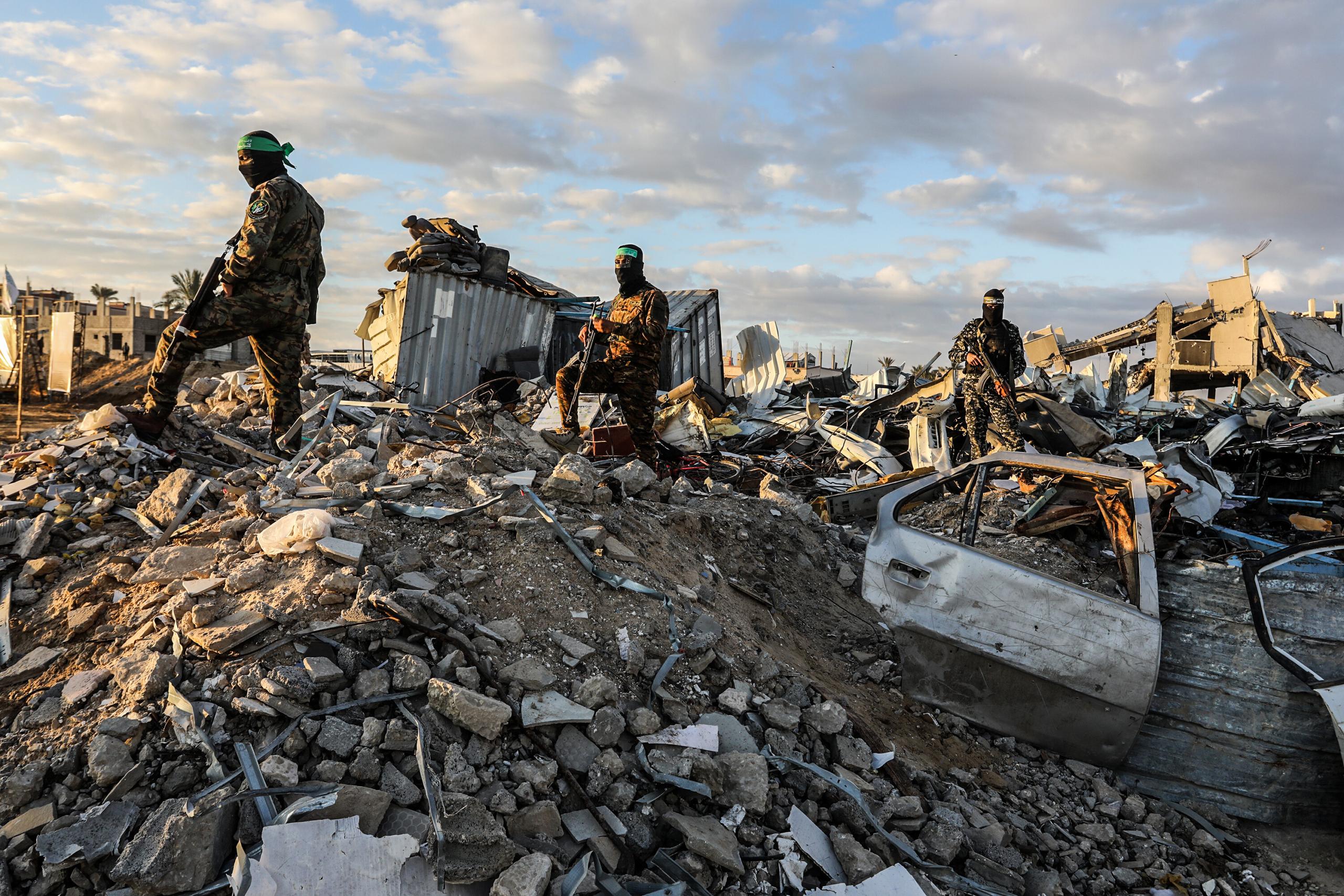
The removal and storage of heavy weapons, military production facilities, arms depots and tunnels would begin only after the outstanding terms of the Sharm el-Sheikh agreement had been completed, the National Committee had entered Gaza and the International Stabilisation Force had been deployed.
The National Committee would manage and implement the process gradually according to a fixed timetable, which would be finalised within 14 days of all sides approving the roadmap.
The process would be linked to a phased Israeli withdrawal from areas under its control in Gaza.
It would also include the disarmament of armed militias operating in Israeli-controlled areas.
Palestinian factions would participate in the process, but no weapons would be handed over to Israel or to any non-Palestinian party.
Instead, weapons would be placed under the control of the National Committee, which would become the only authority in Gaza permitted to possess or control arms.
Privately owned weapons would be regulated under relevant Palestinian laws.
The committee would be solely responsible for registering weapons, issuing or revoking licences and enforcing the law, in cooperation with Palestinian factions, clans and other social groups in Gaza.
Militias operating in Israeli-held areas would also be disarmed, with their weapons stored under the committee’s authority. Members of those groups would not be incorporated into the police or security services.
International force
The roadmap provides for the deployment of an International Stabilisation Force to separate Israeli troops from areas controlled by the National Committee.
Direct policing duties and interaction with the Palestinian public would remain the responsibility of the Palestinian police operating under the committee.
The international force would monitor compliance with the ceasefire, train Palestinian police, protect humanitarian aid deliveries and help secure essential supplies entering Gaza.
It could also support the National Committee in other non-policing tasks when requested.
Reconstruction
The final elements of the roadmap call for the implementation of a comprehensive reconstruction programme for Gaza.
The plan would include securing the necessary funding and resources and carrying out reconstruction according to a defined timetable and internationally recognised standards.