
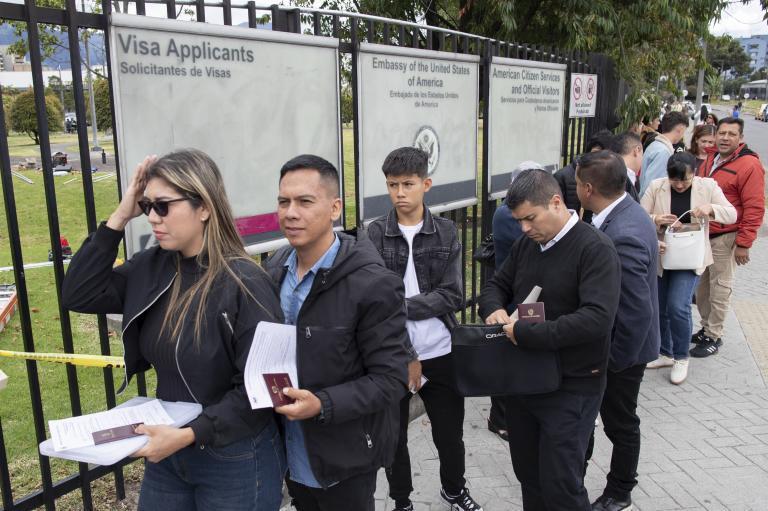
The United States will make permanent a visa bond program requiring some business and tourist visa applicants from 50 countries, most of them in Africa, to pay bonds of up to $20,000 before being allowed to enter the country.
According to a notice published by the US State Department, consular officers will be permitted to impose the bonds on applicants seeking B1 business visas or B2 tourist visas.
“Consular officers may require covered nonimmigrant visa applicants to post a bond of up to $20,000 as a condition of visa issuance,” the notice said.
The measure follows a pilot program introduced in 2025, under which applicants could be required to pay bonds of $5,000, $10,000 or $15,000.
Under the permanent regulations, the $5,000 option will be removed, while the maximum bond will rise to $20,000.
The State Department said information collected during the pilot indicated that visa bonds were an effective way of encouraging travelers to comply with the terms of their visas and leave the United States before their authorized stay expired.
The new rule is due to take effect on August 3, when it is scheduled to be formally published in the Federal Register.
Thirty of the 50 countries covered by the program are in Africa.
US officials say the policy is intended to reduce the number of travelers who remain in the country after their visas expire. Immigration advocates, however, argue that the high financial requirements could prevent legitimate visitors, including families and business travelers, from traveling to the United States.
The measure forms part of President Donald Trump’s wider immigration crackdown, which has included higher visa fees, increased scrutiny of applicants’ social media activity and tighter restrictions on both legal and irregular migration.
Civil rights groups have accused the administration of undermining due process and creating conditions that could encourage racial and ethnic profiling. Trump has defended the policies as necessary to strengthen national security and enforce US immigration laws.