
Armed opposition groups in Niger are reorganising after months of relative inactivity, with a newly formed movement of Tuareg and Toubou fighters announcing its entry into a coalition seeking to overthrow the country’s military-led government.
The Nigerien Popular Movement, led by Mohamed Tinaimi, said in a statement that it had joined the Coordination of Armed Forces for the Liberation of Niger, headed by rebel leader Mahmoud Salah.
The movement said its decision reflected the seriousness of the crisis facing Niger and the need to unite armed factions involved in what it described as the country’s “liberation.”
It also endorsed an initiative led by Salah’s Patriotic Liberation Front aimed at bringing rebel groups under a unified structure, coordinating operations on the ground and improving their military effectiveness.
Under the agreement, the movement’s fighters formally joined the coalition’s joint operational bases on August 1, shifting its participation from political support to direct military coordination.
The Armed Forces for the Liberation of Niger was established in 2024 by several armed factions, including the Patriotic Liberation Front, with the stated goal of removing the military government and restoring constitutional rule.
The addition of the new group appears to be part of a broader effort to restructure Niger’s armed opposition at a time when the authorities in Niamey are also under growing pressure from Daesh and Al Qaeda-linked Jama’at Nusrat al-Islam wal-Muslimin.
The announcement came days after Salah declared the resumption of what he called the Patriotic Liberation Front’s armed struggle against Niger’s military authorities.
Salah had been detained in Libya for about 16 months before being released in June alongside 13 other members of his movement.
The announcement marked the rebel group’s most prominent public appearance in months. The movement says it remains loyal to Niger’s ousted and detained president, Mohamed Bazoum, and has previously claimed responsibility for attacks on the oil pipeline linking the Agadem fields in eastern Niger with Benin’s Seme-Kpodji terminal.
The group’s recent silence was largely attributed to Salah’s arrest in the southern Libyan city of Qatrun on February 23, 2025. He was released on June 23, 2026, in Sabha.
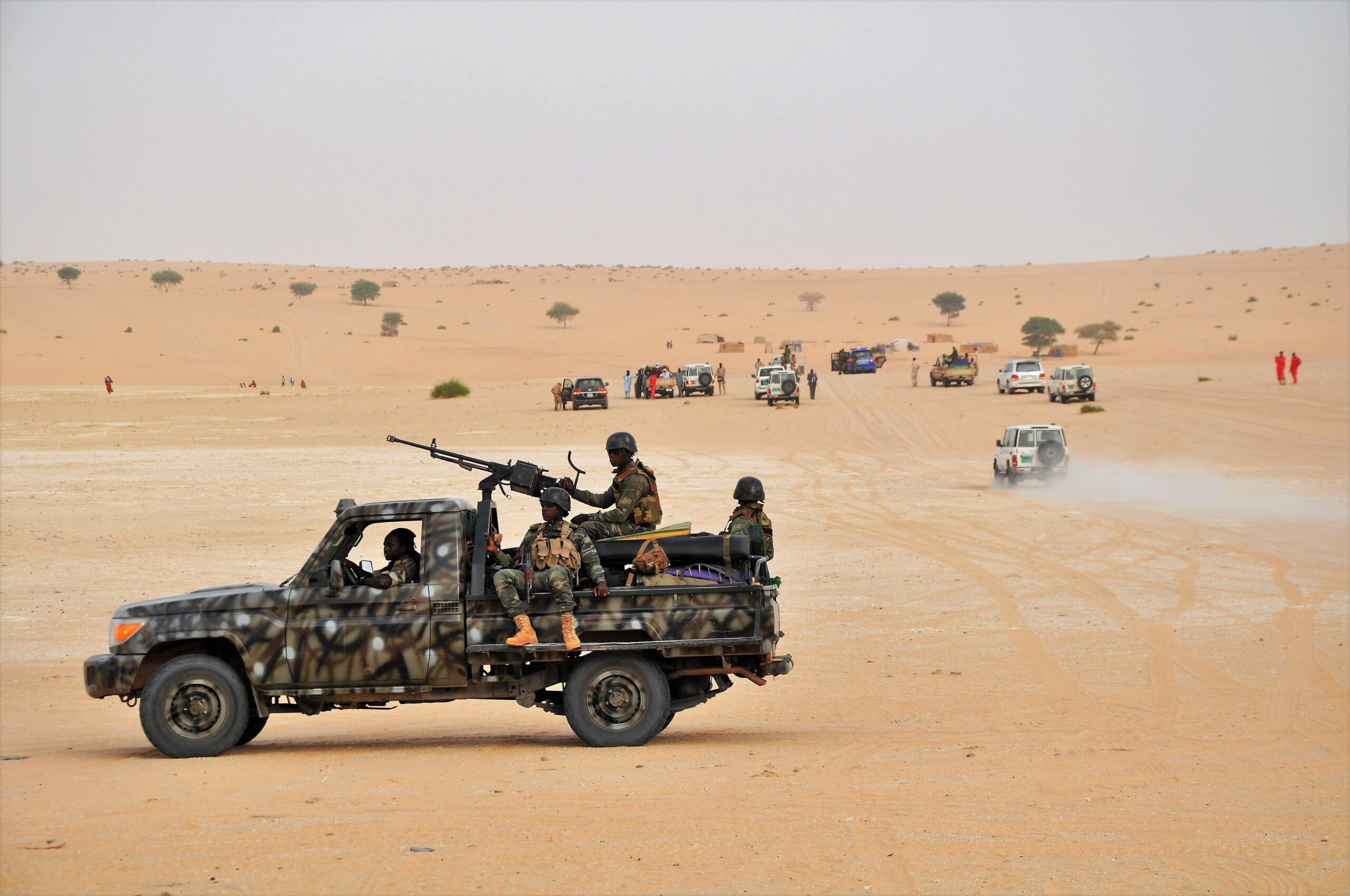
A video released on July 25 showed about 100 fighters assembled beside 18 pickup trucks at Ahahe, a mountainous plateau near the borders of Libya, Chad and Niger.
The gathering took place ahead of the third anniversary of the July 2023 coup led by General Abdourahamane Tiani. Rebel commanders pledged to continue fighting until the fall of the National Council for the Safeguard of the Homeland, the military body that now governs Niger.
Salah is from the Agadem basin in northeastern Niger and belongs to the Toubou ethnic group, whose communities extend across Niger, Libya and Chad.
He also has extensive knowledge of the oil sector, having previously worked as a local relations director for a Chinese oil company. That position gave him direct familiarity with oilfields, pipelines and grievances among surrounding communities.
Salah ran in Niger’s 2016 elections and later established an armed movement in 2020. Following the July 2023 coup, he formed the Patriotic Liberation Front to demand Bazoum’s release and the restoration of constitutional government.
His forces have previously targeted Niger’s oil export infrastructure. In June 2024, the group claimed responsibility for blowing up part of the nearly 2,000-kilometre Agadem-Benin pipeline, which carries crude oil to the Atlantic coast.
Sources close to the rebels said Salah had recently obtained pickup trucks and other equipment that could allow his fighters to resume operations against the military authorities in Niamey.
Further support is expected in the coming months, including additional weapons and as many as 150 vehicles, according to the sources.
Tiani’s government has repeatedly classified Salah’s organisation as an extremist group and revoked the rebel leader’s Nigerien citizenship.
Tiani has publicly dismissed the rebels’ threats. In a recent interview with state media, he accused France and other Western powers of being behind attacks on Niamey airport on January 28-29 and June 18.
He described the attackers as mercenaries working for France and, more broadly, for the European Union or the West. He rejected suggestions that they were militants fighting for an ideological cause, calling that interpretation deeply naive.